



KS2 Space Lesson: Visualise planet distances with a 3-metre Play-Doh scale model! Includes 3 worksheets, PPT, and guide to how scientists measure distance.
How far away is Neptune? Help your pupils visualise the vastness of space with Part 2 of our Solar System series! This lesson moves beyond ordering and focuses on scale and distance. It addresses the common misconception that planets are evenly spaced by having pupils create a precise 3-metre scale model using Play-Doh and measuring tapes.
What’s Included?
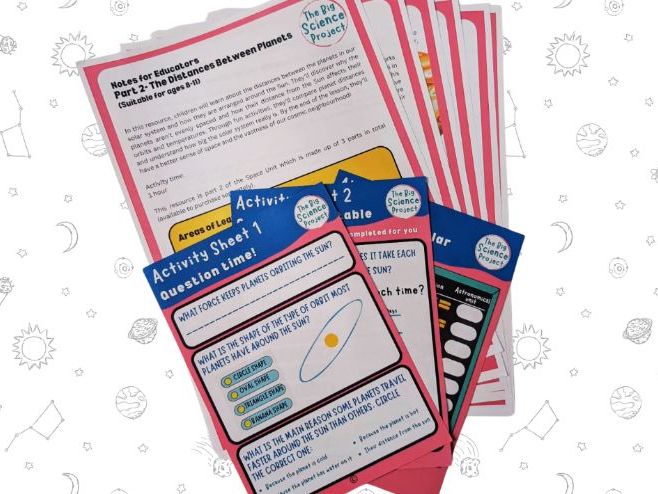
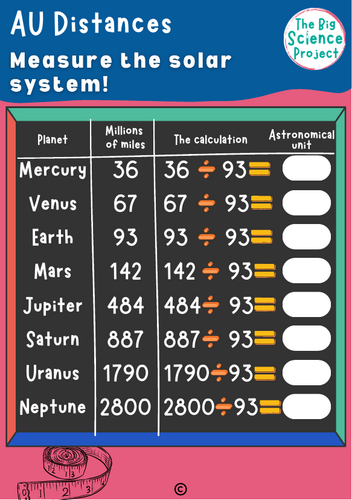
Teacher Support Notes (.pdf): A comprehensive guide explaining Astronomical Units (AU), how gravity effects the speed of a planets orbit, and how to facilitate the scale modelling activity.
Classroom Presentation (.pptx): Engaging slides that walk pupils through the distances from the Sun, including the data needed for the 3-metre scale task.
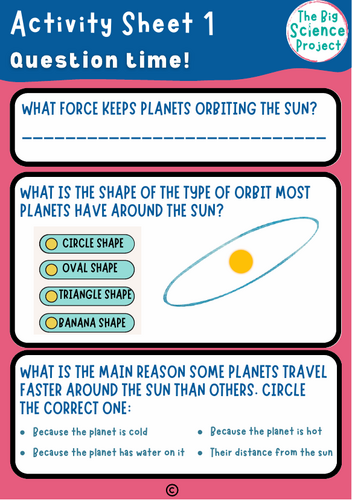
Worksheet 1: A “True or False” activity to challenge existing knowledge about space distances.
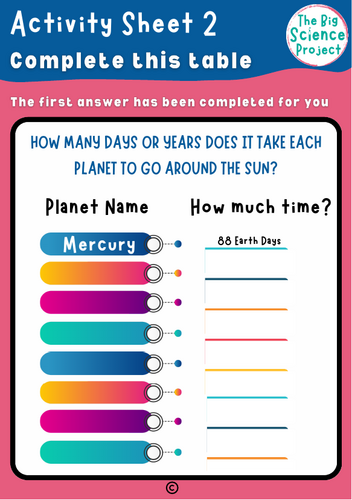
Worksheet 2: A data-entry sheet for pupils to record distances between planets.
Worksheet 3: A guided activity sheet for plotting the planets at correct centimetre intervals from the “Play-Doh Sun”.
Classroom Application & Skills
- Mathematics & Measurement: Pupils use rulers and measuring tapes to plot distances precisely in centimetres.
- Scientific Enquiry: Using physical models to represent astronomical distances that are too large to observe in reality.
- Fine Motor Skills: Using different coloured Play-Doh to represent planets of varying sizes (from the tiny Mercury to the giant Jupiter).
- Data Handling: Interpreting table data from the presentation to complete a physical task.
How to Use This Resource
This lesson is ideal for a 1-hour session. Start with the PowerPoint to introduce gravity and its effects on the individual planets in our solar system. Then, clear 3 metres of space (on desks or the floor). Pupils create their Play-Doh planets and, using the “Centimetres from the Sun” data on Slide 8, plot their positions accurately. This hands-on approach perfectly illustrates why the outer planets are known as the “lonely giants.”
File Types Included: .pdf and .pptx
Something went wrong, please try again later.
This resource hasn't been reviewed yet
To ensure quality for our reviews, only customers who have purchased this resource can review it
Report this resourceto let us know if it violates our terms and conditions.
Our customer service team will review your report and will be in touch.
£5.00