


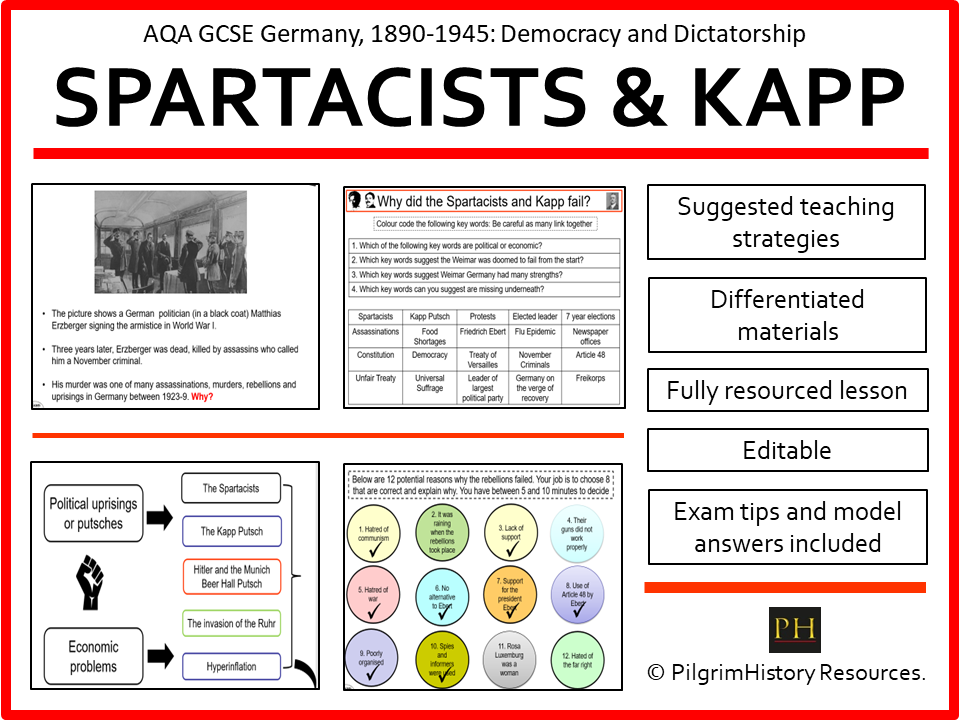
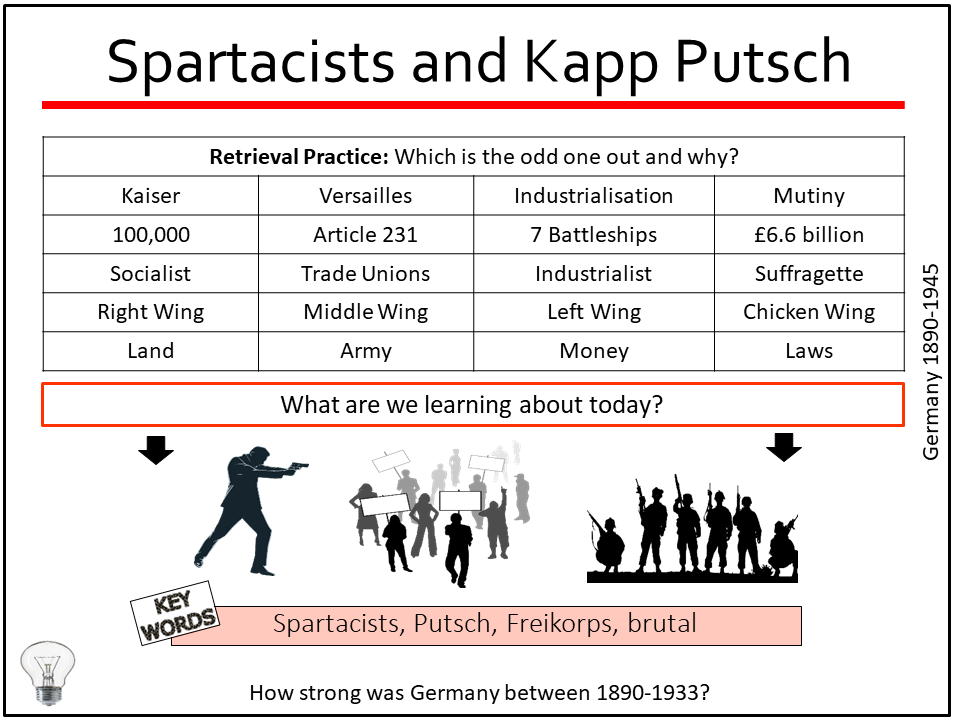
The aim of this lesson is to evaluate why the new Weimar Government was so unpopular and why Germany experienced a series of political uprisings in its early years.
Students explore the challenges facing the new government and consider whether opposition to the Weimar Republic was mainly political or whether economic problems also played an important role.
The lesson focuses on two key threats to the new democracy: the Spartacist Rising of 1919 and the Kapp Putsch of 1920. Students investigate the causes of each uprising, identify who was involved and analyse why both ultimately failed.
Through a range of engaging activities, students compare the different political groups opposed to the Weimar Government and consider why the new democracy struggled to gain widespread support.
The lesson includes excellent video links, source material and a colour-coded Thinking Quilt designed to develop students’ literacy, recall and evaluation skills.
An enquiry question is introduced at the start of the lesson and revisited throughout, allowing students to track their progress and reach a supported judgement about the threats facing the Weimar Republic.
Included in this lesson:
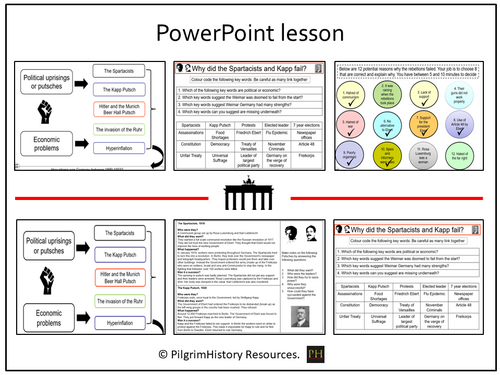
Fully editable PowerPoint
Political and economic opposition
Source and analysis
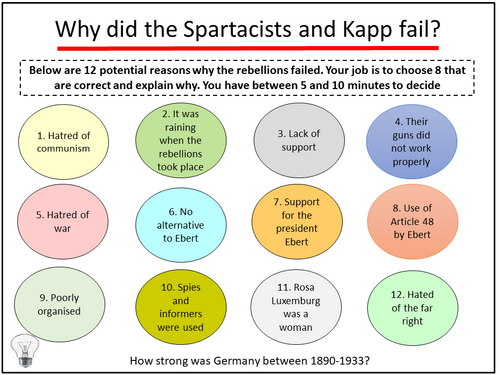
Colour-coded Thinking Quilt
Retrieval practice
GCSE question practice and model answer
Differentiated activities
Suggested teaching strategies
Please leave a review if you find this resource useful. Your feedback will be gratefully appreciated.
Something went wrong, please try again later.
This resource hasn't been reviewed yet
To ensure quality for our reviews, only customers who have downloaded this resource can review it
Report this resourceto let us know if it violates our terms and conditions.
Our customer service team will review your report and will be in touch.
£0.00