


Hiroshima
by John Hersey
About_
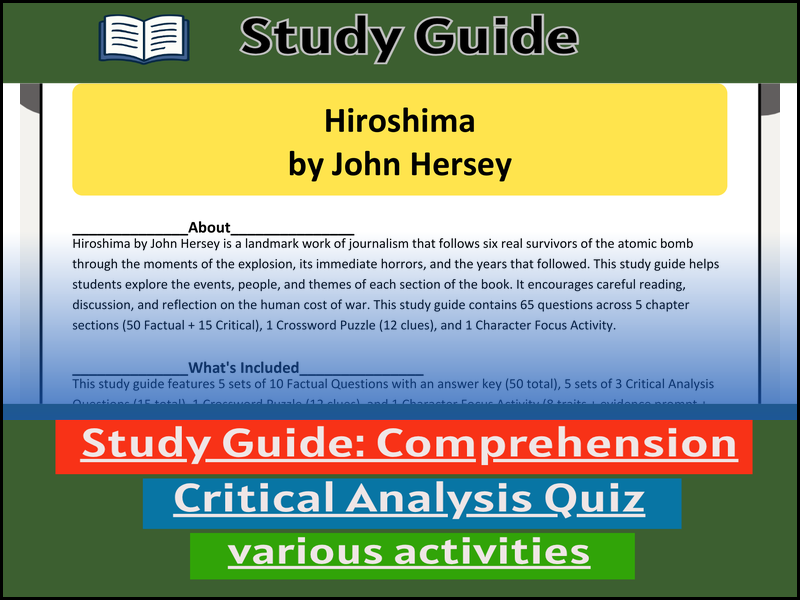
Hiroshima by John Hersey is a landmark work of journalism that follows six real survivors of the atomic bomb
through the moments of the explosion, its immediate horrors, and the years that followed. This study guide helps
students explore the events, people, and themes of each section of the book. It encourages careful reading,
discussion, and reflection on the human cost of war. This study guide contains 65 questions across 5 chapter
sections (50 Factual + 15 Critical), 1 Crossword Puzzle (12 clues), and 1 Character Focus Activity.
What’s Included_
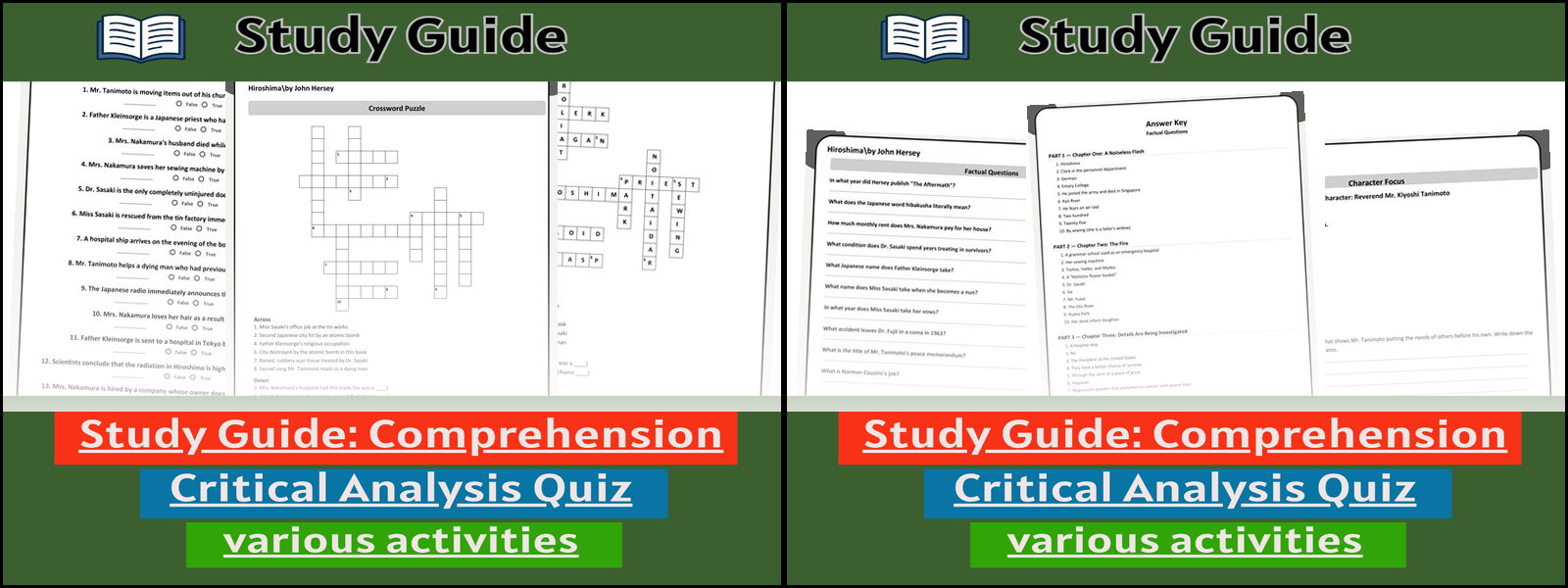
This study guide features 5 sets of 10 Factual Questions with an answer key (50 total), 5 sets of 3 Critical Analysis
Questions (15 total), 1 Crossword Puzzle (12 clues), and 1 Character Focus Activity (8 traits + evidence prompt +
critical thinking question).
Target Grades_
Grades 9-11
Teacher Note_
This guide turns a powerful and sensitive text into structured, approachable learning, building comprehension
through factual questions and deeper thinking through critical analysis. It saves you valuable preparation time so
you can focus on guiding meaningful classroom conversations. Thank you for helping students engage with history
through such human stories.
About the Author and the Book
John Hersey was an American journalist and novelist who interviewed survivors of the Hiroshima bombing in 1946. His
account first appeared in The New Yorker magazine and was soon published as a book. Hersey tells the story through the real
experiences of six ordinary people rather than through politicians or generals.
Japan and the Second World War
By 1945, Japan had been at war for several years, and daily life was shaped by rationing, air-raid warnings, and fear. Cities
across the country had been bombed, and many families had lost loved ones in the fighting. Understanding this background
helps readers see why people in Hiroshima reacted as they did.
Reporting Style and Why It Matters
Hersey writes in a calm, factual style with very little outward emotion, which lets the events speak for themselves. This kind of
writing is called narrative journalism because it uses storytelling techniques to present true events. As you read, notice how
plain language can make a story even more powerful.
Something went wrong, please try again later.
This resource hasn't been reviewed yet
To ensure quality for our reviews, only customers who have purchased this resource can review it
Report this resourceto let us know if it violates our terms and conditions.
Our customer service team will review your report and will be in touch.
£2.90