


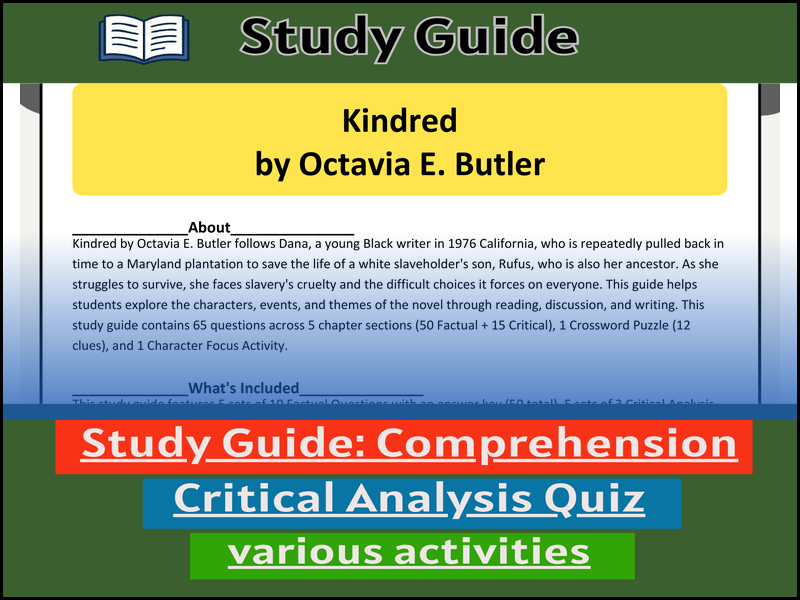

Kindred
by Octavia E. Butler
About_
Kindred by Octavia E. Butler follows Dana, a young Black writer in 1976 California, who is repeatedly pulled back in
time to a Maryland plantation to save the life of a white slaveholder’s son, Rufus, who is also her ancestor. As she
struggles to survive, she faces slavery’s cruelty and the difficult choices it forces on everyone. This guide helps
students explore the characters, events, and themes of the novel through reading, discussion, and writing. This
study guide contains 65 questions across 5 chapter sections (50 Factual + 15 Critical), 1 Crossword Puzzle (12
clues), and 1 Character Focus Activity.
What’s Included_
This study guide features 5 sets of 10 Factual Questions with an answer key (50 total), 5 sets of 3 Critical Analysis
Questions (15 total), 1 Crossword Puzzle (12 clues), and 1 Character Focus Activity (8 traits + evidence prompt +
critical thinking question).
Target Grades_
Grades 9-11
Teacher Note_
This study guide helps students build comprehension by moving from recall to deeper analysis, while its critical
questions invite thoughtful discussion about difficult history. It also saves you valuable preparation time so you can
focus on guiding meaningful conversations. We hope it makes teaching this powerful novel a rewarding
experience.
Meet the Author
Octavia E. Butler was an American writer known for blending science fiction with serious questions about race, power, and
survival. She published Kindred in 1979, and it remains her most widely read novel. Her work often puts strong Black women
at the center of difficult and unusual situations.
A Story That Bends Genres
Kindred uses time travel, but it is not a typical adventure story. It is often called a neo-slave narrative, a modern novel that
imagines the lived experience of slavery. The story is told in first person, so readers experience events through one character’s
eyes and feelings.
Slavery in the Antebellum South
The novel is set partly in Maryland in the early 1800s, when enslaved people had no legal rights and could be bought, sold, and
punished by their owners. Laws and customs, including passes and slave patrols, tightly controlled where Black people could
go. Understanding this history helps readers see why the choices the characters make are so limited and so risky.
Something went wrong, please try again later.
This resource hasn't been reviewed yet
To ensure quality for our reviews, only customers who have purchased this resource can review it
Report this resourceto let us know if it violates our terms and conditions.
Our customer service team will review your report and will be in touch.
£2.90