


Leviathan
by Thomas Hobbes
About_
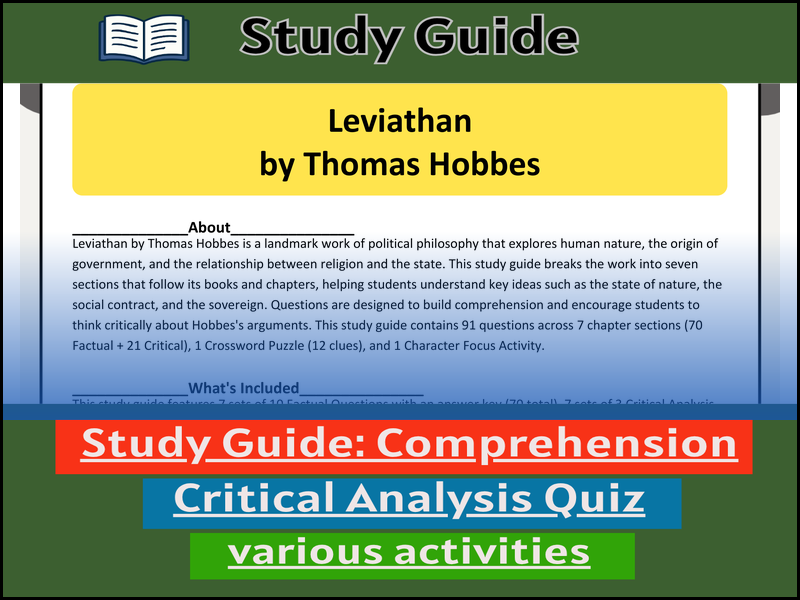
Leviathan by Thomas Hobbes is a landmark work of political philosophy that explores human nature, the origin of
government, and the relationship between religion and the state. This study guide breaks the work into seven
sections that follow its books and chapters, helping students understand key ideas such as the state of nature, the
social contract, and the sovereign. Questions are designed to build comprehension and encourage students to
think critically about Hobbes’s arguments. This study guide contains 91 questions across 7 chapter sections (70
Factual + 21 Critical), 1 Crossword Puzzle (12 clues), and 1 Character Focus Activity.
What’s Included_
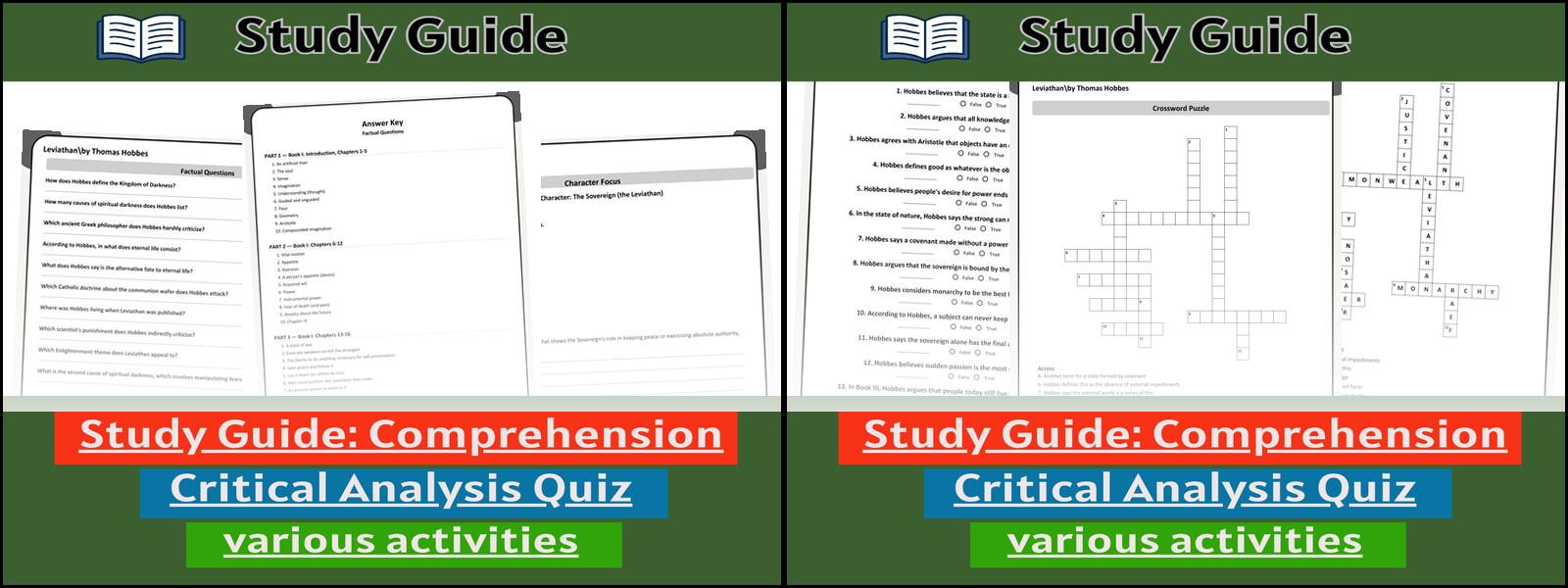
This study guide features 7 sets of 10 Factual Questions with an answer key (70 total), 7 sets of 3 Critical Analysis
Questions (21 total), 1 Crossword Puzzle (12 clues), and 1 Character Focus Activity (8 traits + evidence prompt +
critical thinking question).
Target Grades_
Grades 10-12
Teacher Note_
This guide turns a challenging philosophical text into clear, manageable sections that build comprehension step by
step. Its critical questions invite students to debate, question, and form their own views, while the ready-made
activities and answer key save you valuable preparation time. We hope it makes teaching Hobbes a rewarding
experience for you and your students.
Who Was Thomas Hobbes?
Thomas Hobbes (1588-1679) was an English philosopher who lived through a time of great political turmoil. He was interested
in science, geometry, and history, and he wanted to bring the careful reasoning of mathematics to the study of society.
Leviathan, published in 1651, is his most famous work.
A World in Conflict
Hobbes wrote during the years of the English Civil War, when people fought bitterly over who should hold power. He lived part
of this time in exile in France. His experience of conflict shaped his belief that society needs strong and stable government to
keep the peace.
Why Leviathan Still Matters
Leviathan helped start the tradition of social contract theory, the idea that governments are formed by agreement among
people. Later thinkers such as Locke and Rousseau built on or argued against his ideas. Reading Hobbes encourages students
to ask questions about freedom, authority, and why we obey laws.
Something went wrong, please try again later.
This resource hasn't been reviewed yet
To ensure quality for our reviews, only customers who have purchased this resource can review it
Report this resourceto let us know if it violates our terms and conditions.
Our customer service team will review your report and will be in touch.
£2.90