


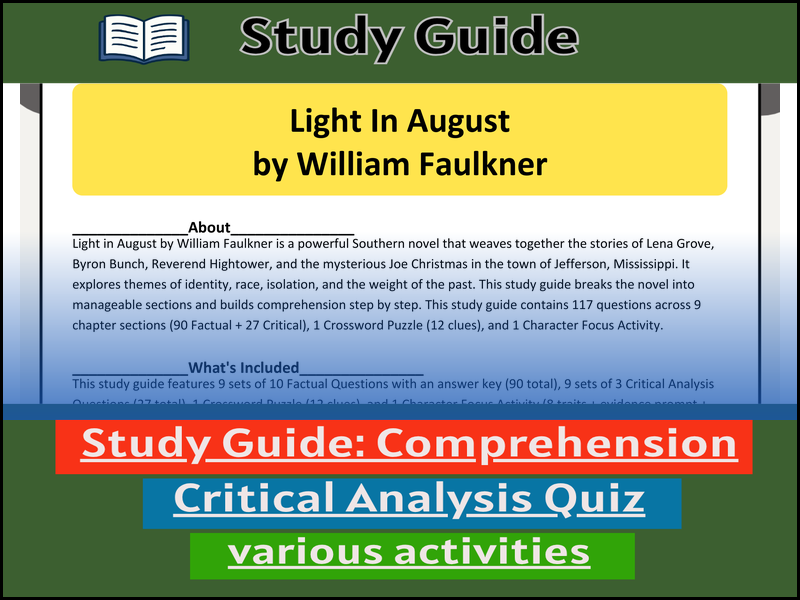
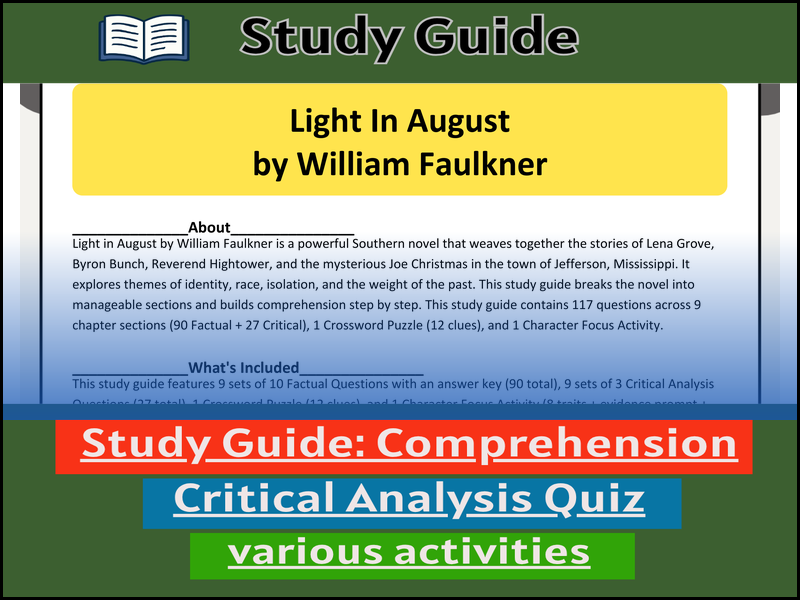
Light In August
by William Faulkner
About_
Light in August by William Faulkner is a powerful Southern novel that weaves together the stories of Lena Grove,
Byron Bunch, Reverend Hightower, and the mysterious Joe Christmas in the town of Jefferson, Mississippi. It
explores themes of identity, race, isolation, and the weight of the past. This study guide breaks the novel into
manageable sections and builds comprehension step by step. This study guide contains 117 questions across 9
chapter sections (90 Factual + 27 Critical), 1 Crossword Puzzle (12 clues), and 1 Character Focus Activity.
What’s Included_
This study guide features 9 sets of 10 Factual Questions with an answer key (90 total), 9 sets of 3 Critical Analysis
Questions (27 total), 1 Crossword Puzzle (12 clues), and 1 Character Focus Activity (8 traits + evidence prompt +
critical thinking question).
Target Grades_
Grades 10-12
Teacher Note_
This guide helps students read a challenging novel with confidence by moving from factual comprehension to
deeper critical thinking. It encourages thoughtful discussion on difficult themes while saving you valuable
preparation time. We hope it makes teaching Faulkner a rewarding experience for you and your students.
About the Author and the Novel
William Faulkner (1897-1962) was an American writer from Mississippi who won the Nobel Prize in Literature in 1949. Light in
August, published in 1932, is set in the fictional world of Yoknapatawpha County, which he based on the Deep South he knew.
The novel follows several troubled and very different people whose lives cross in the small town of Jefferson.
The American South in the Early 20th Century
The story takes place in the segregated South, where race, religion, and reputation strongly shaped how people were treated.
Small towns often judged outsiders quickly and gossip spread fast. Understanding this setting will help you see why characters
make the choices they do.
Reading Faulkner’s Style
Faulkner is known for long sentences, shifting viewpoints, and flashbacks that reveal a character’s past slowly. Do not worry if
the timeline feels jumbled at first. Pay attention to how each character’s history helps explain their present, and look for
themes such as identity, isolation, and the weight of the past.
Something went wrong, please try again later.
This resource hasn't been reviewed yet
To ensure quality for our reviews, only customers who have purchased this resource can review it
Report this resourceto let us know if it violates our terms and conditions.
Our customer service team will review your report and will be in touch.
£2.90