


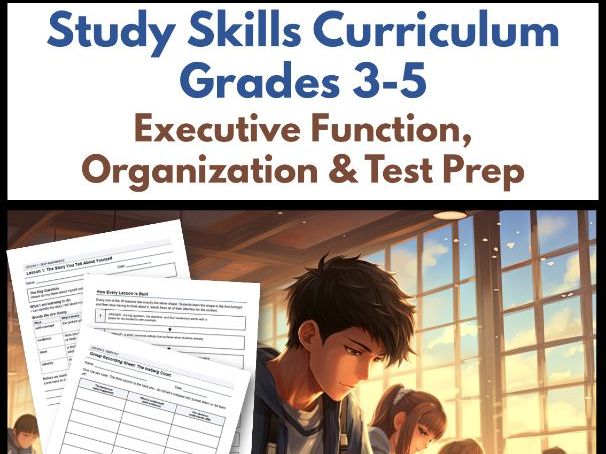
Study Skills Curriculum for Grades 3–5 is a comprehensive 10-unit program designed to help students develop practical, repeatable routines for organization, planning, focus, reading, note-taking, studying, test preparation, and asking for help. Rather than teaching isolated techniques, the curriculum helps students turn study skills into habits they can apply to real classroom work, homework, and future academic demands.
The resource includes a Facilitator Guide, Scope and Sequence with three pacing options, Student Self-Inventory for reflection and goal setting, 10 complete study skills units, printable student tools, checklists, templates, trackers, a 30-prompt Reflection Journal, Family Guide, and assessment and progress-monitoring materials.
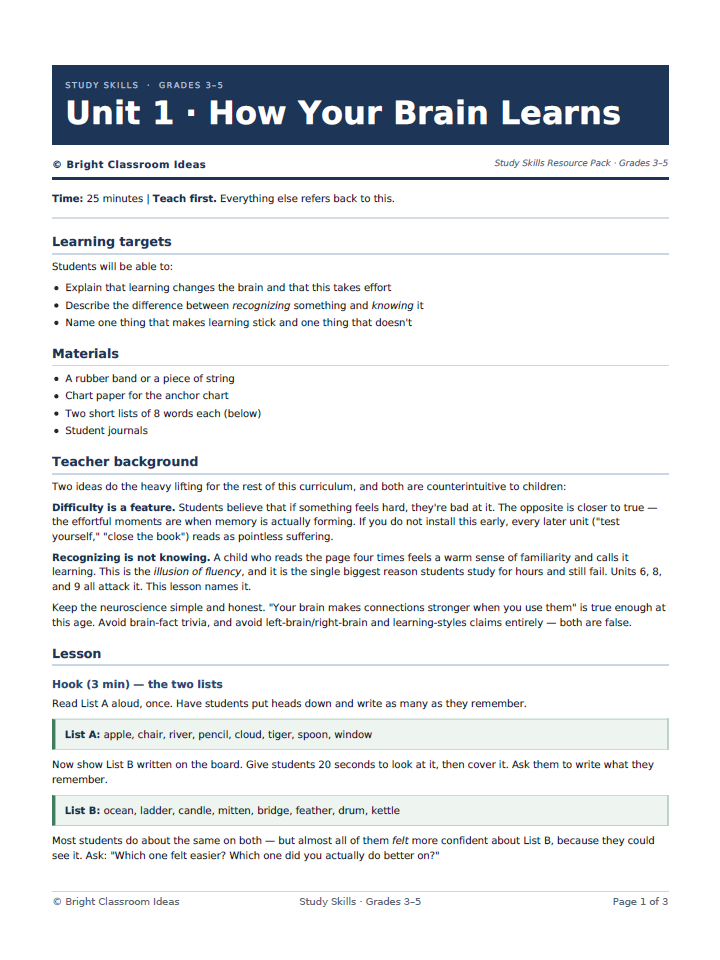
The 10 units cover How Your Brain Learns, Get Organized, Directions and Getting Started, Time and Planning, Focus and Study Space, Reading to Learn, Note-Taking Basics, Remembering What You Learn, Getting Ready for a Test, and Asking for Help. Together, these topics address essential executive-function and self-management skills needed as students become more independent learners.
Each unit follows a consistent 25-minute five-part structure: Hook, Teacher Model, Guided Practice, Transfer Task, and Reflection Close. The transfer task is particularly important because students apply each strategy to their actual current schoolwork rather than completing disconnected worksheets. This approach helps study skills become practical classroom routines.
Teachers can choose from several implementation models, including weekly instruction across the school year, a six-week intensive format for intervention or summer programs, or as-needed use for tutoring and homeschool settings. The curriculum works well for whole-class instruction, small groups, intervention, tutoring, resource rooms, advisory periods, and morning meetings.
Students develop skills in organization and materials management, task initiation, following multi-step directions, time management, sustained attention, comprehension monitoring, note-taking, retrieval practice, spaced studying, test preparation, error analysis, self-advocacy, reflection, and metacognition. The curriculum also supports CCSS ELA and CASEL competencies related to self-management and responsible decision-making.
Built-in differentiation supports Grades 3, 4, and 5, while checklists, planners, trackers, and question-building tools make expectations visible. Family resources extend learning at home, and developmental rubrics and observable indicators help teachers monitor growth.
Overall, this curriculum provides students with practical routines for becoming more organized, focused, independent, and confident learners as they prepare for increasing academic demands and the transition to middle school.
Something went wrong, please try again later.
This resource hasn't been reviewed yet
To ensure quality for our reviews, only customers who have purchased this resource can review it
Report this resourceto let us know if it violates our terms and conditions.
Our customer service team will review your report and will be in touch.
$12.00