



The aim of this lesson is to investigate the development of voting rights in nineteenth-century Britain and why the demand for universal suffrage became such an important issue.
Students examine how the Industrial Revolution transformed society and created new industrial towns such as Manchester, Sheffield and Birmingham, where growing populations had little or no parliamentary representation.
The lesson focuses on who had the vote, why working-class men and industrialists were demanding political reform and why Parliament was reluctant to extend the franchise.
Thus the story starts with why having a vote is so important today and who had the vote in the Nineteenth Century.
Students are given a slip at the beginning of the lesson only to realise many of them don’t have a vote much to their annoyance.
The final part of the lesson is to analyse the events of the Peterloo Massacre (named after the battle of Waterloo) and why the magistrates of Manchester were so scared at giving people the vote.
However the battlelines were drawn and so setting the seeds for the Suffragette movement at the turn of the century.
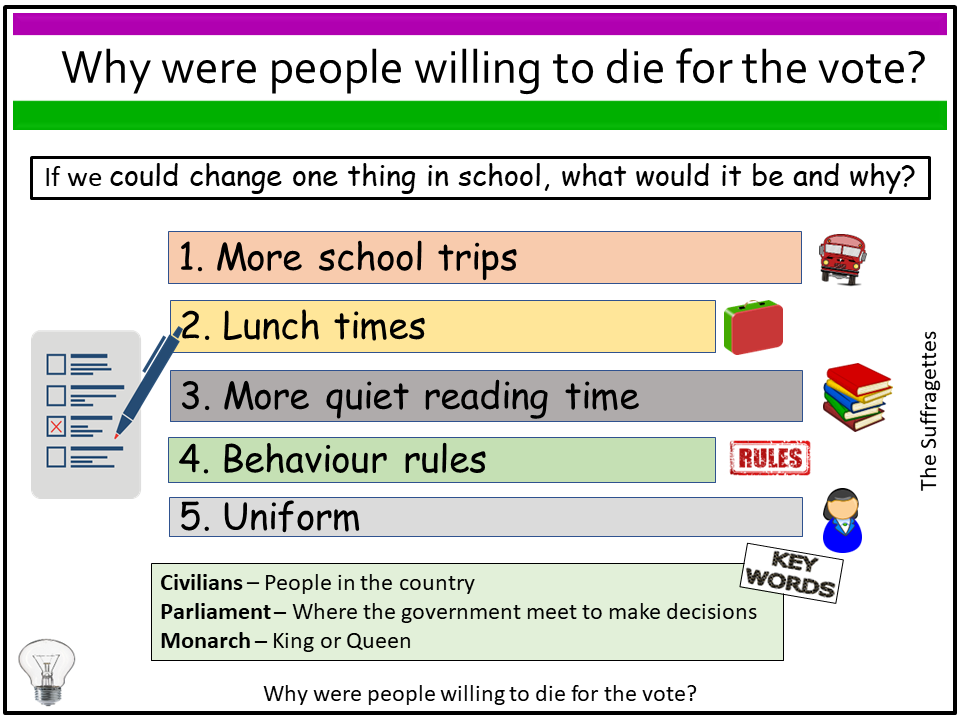
The lesson is enquiry based with a key question using a lightbulb posed at the start of the lesson and revisited to show the progress of learning.
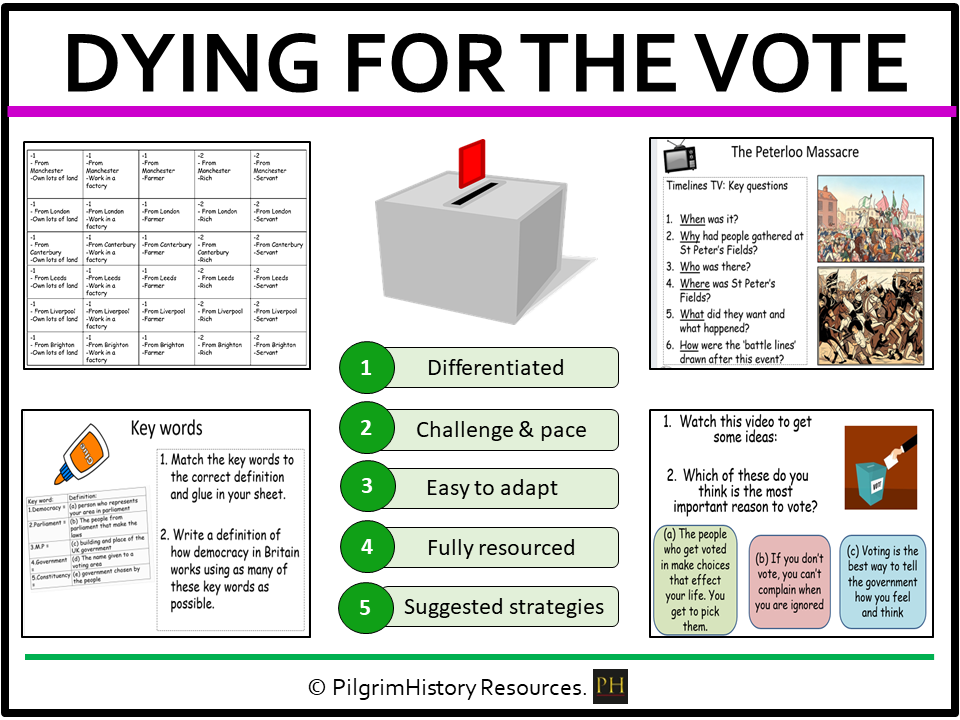
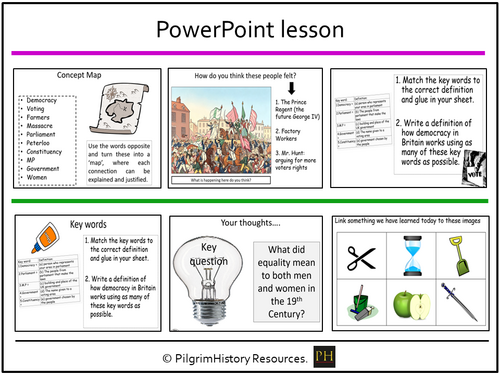
The resource includes suggested teaching strategies, differentiated materials and comes in PowerPoint format if there is a wish to adapt and change.
Something went wrong, please try again later.
This resource hasn't been reviewed yet
To ensure quality for our reviews, only customers who have downloaded this resource can review it
Report this resourceto let us know if it violates our terms and conditions.
Our customer service team will review your report and will be in touch.
£0.00