


A rich, concept‑driven lesson that pushes students to think deeply about Zusak’s exploration of humanity, morality and the political power of stories. Through structured tasks, peer discussion and close analysis, pupils examine how imagery, symbolism and allegory reveal both brutality and hope in Nazi Germany.
By the end of this lesson, students will be able to:
- Analyse the dual nature of humanity through Zusak’s imagery — exploring how beauty and brutality coexist in Death’s descriptions and the world of Himmel Street.
- Evaluate the moral ambiguity of theft in a time of war — considering survival, resistance and the shifting ethics of Liesel’s actions.
- Explain how small acts of kindness function as resistance — analysing how compassion becomes a quiet but powerful challenge to Nazi ideology.
- Interpret The Word Shaker as a political allegory — understanding how Max’s story critiques propaganda, power and the manipulation of language.
Included:
- Lesson tasks that guide students through imagery, ethics and allegory
- Peer talk to deepen interpretation and encourage collaborative thinking
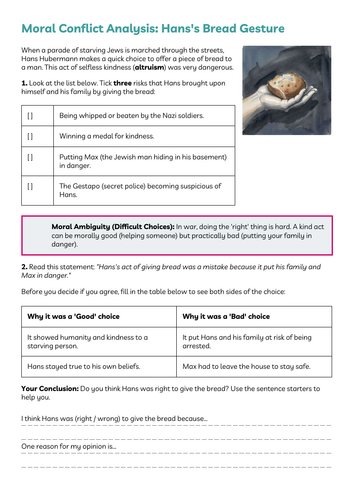
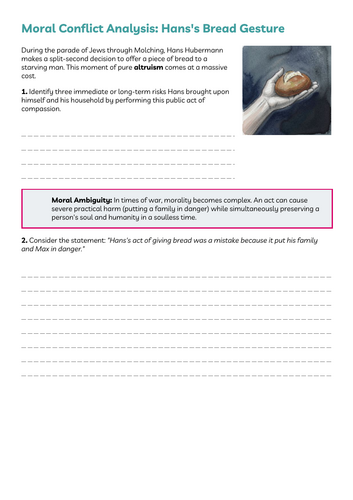
- Worksheet for structured analysis and reflective writing
- PowerPoint pack to support modelling, discussion and guided reading
A thoughtful, layered and fully ready‑to‑teach lesson that helps students grapple with the novel’s most profound ideas about humanity, power and resistance.
Some visuals in this resource were made with AI to help bring ideas to life and support student understanding.
Something went wrong, please try again later.
This resource hasn't been reviewed yet
To ensure quality for our reviews, only customers who have purchased this resource can review it
Report this resourceto let us know if it violates our terms and conditions.
Our customer service team will review your report and will be in touch.
£2.00