


The Cognitive Cartographer: A Sensory-Integrated Framework for Complex Narrative Analysis & Synthesis
Unlock deeper literary understanding with The Cognitive Cartographer — a revolutionary 33-page sensory-integrated framework that transforms traditional reading into active, spatial, and emotional mapping. Students no longer just “read” complex narratives; they chart them using chronotopes, sensory anchors, thematic ley lines, emotional topography, and node-and-edge character networks.
This complete digital PDF resource includes:
Phase 1 (Core Theory): Introduction to narrative architecture, sensory epistemology, cartographic synthesis, and meta-narrative construction with original case studies (The Glass Citadel, The Flooded City of Oakhaven, The Silk Rebellion).
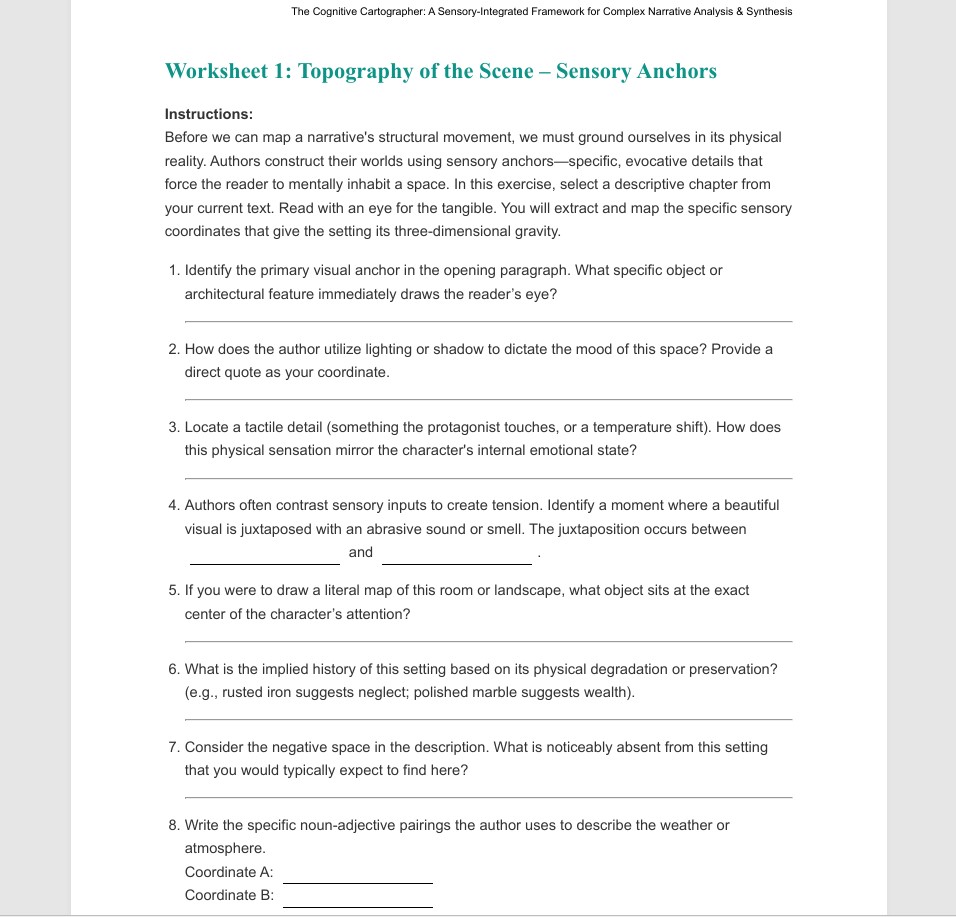
Phase 2 (Student Workbook): 10 ready-to-use, scaffolded worksheets covering scene topography, character geography, conflict ecology, auditory/olfactory resonance, temporal velocity, thematic ley lines, point-of-view cartography, emotional journeys, socio-historical biomes, and capstone master atlas synthesis.
Phase 3 (Teacher Resources): Full visual schematics (Sensory-Integrated Matrix, Cognitive Synthesis Map, Scaffolding Progression Chart), detailed implementation guide, differentiated pacing for grades 7–12, and a model case study (Markus Zusak’s The Book Thief chromatic cartography).
Perfect for middle and high school English/Language Arts, honors, and AP Literature classes. Aligns with Common Core, state ELA standards, and college-readiness skills. Instant digital download — no prep required. Elevate student engagement, critical thinking, and empathetic analysis with this deeply human-centered literature toolkit.
Why Parents/Schools Love It:
Builds advanced critical thinking, empathy, and spatial reasoning skills that traditional worksheets cannot match — students literally “map” stories instead of summarizing them.
Saves teachers hours of planning with 10 ready-to-print worksheets, visual anchor charts, and a complete implementation guide.
Aligns perfectly with ELA standards while making abstract concepts (theme, character motivation, unreliable narration) concrete and engaging for reluctant readers.
Differentiated scaffolding supports every learner from emerging to advanced, with clear progression across grade bands.
Promotes lifelong literacy habits by teaching students to experience literature through their senses and bodies, not just their eyes.
Target Student Classes (Based on Full PDF Analysis):
Target grades 7–12 English/Language Arts (ELA) teachers and students.
Grades 7–8: Guided sensory anchoring and basic mapping (explicit scaffolding provided).
Grades 9–10: Relational cartography and thematic connections.
Grades 11–12 / Honors / AP Literature: Independent synthesis, meta-narrative construction, and non-linear/fragmented text analysis. Ideal for any secondary classroom studying complex novels, short stories
Something went wrong, please try again later.
This resource hasn't been reviewed yet
To ensure quality for our reviews, only customers who have purchased this resource can review it
Report this resourceto let us know if it violates our terms and conditions.
Our customer service team will review your report and will be in touch.
£15.00