


The Lovely Bones: Chapter 3 (AQA KS5)
This lesson is designed for AQA A Level English Literature and Language and focuses on Chapter 3 of The Lovely Bones. The lesson develops students’ understanding of narrative voice, grief, memory, and the relationship between the living and the dead, with a clear emphasis on close textual analysis rather than narrative recall.
The lesson is student-led and task-focused. Students begin with a short retrieval activity to re-establish the key strands of the chapter, including Susie’s observations from heaven, the role of Ruth, and the differing responses to grief within Susie’s family. This ensures a secure understanding of the chapter before analysis begins.
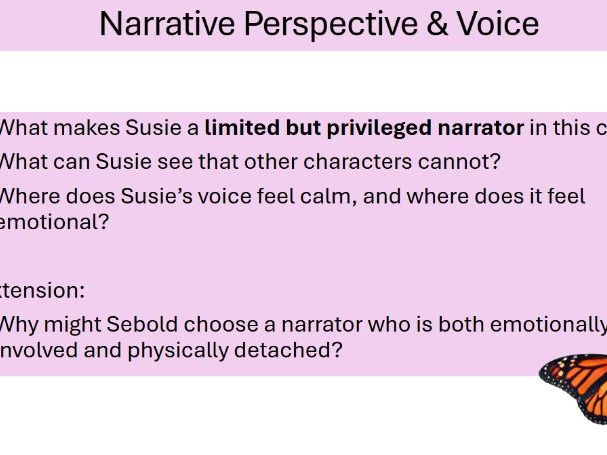
Students then explore narrative perspective and voice, considering Susie as a limited but privileged narrator. Guided questions support students in identifying what Susie can and cannot access, where her voice appears emotionally controlled or more expressive, and why Sebold may choose a narrator who is emotionally involved but physically detached. This work supports AO1 by developing clear, conceptual understanding of narrative method.
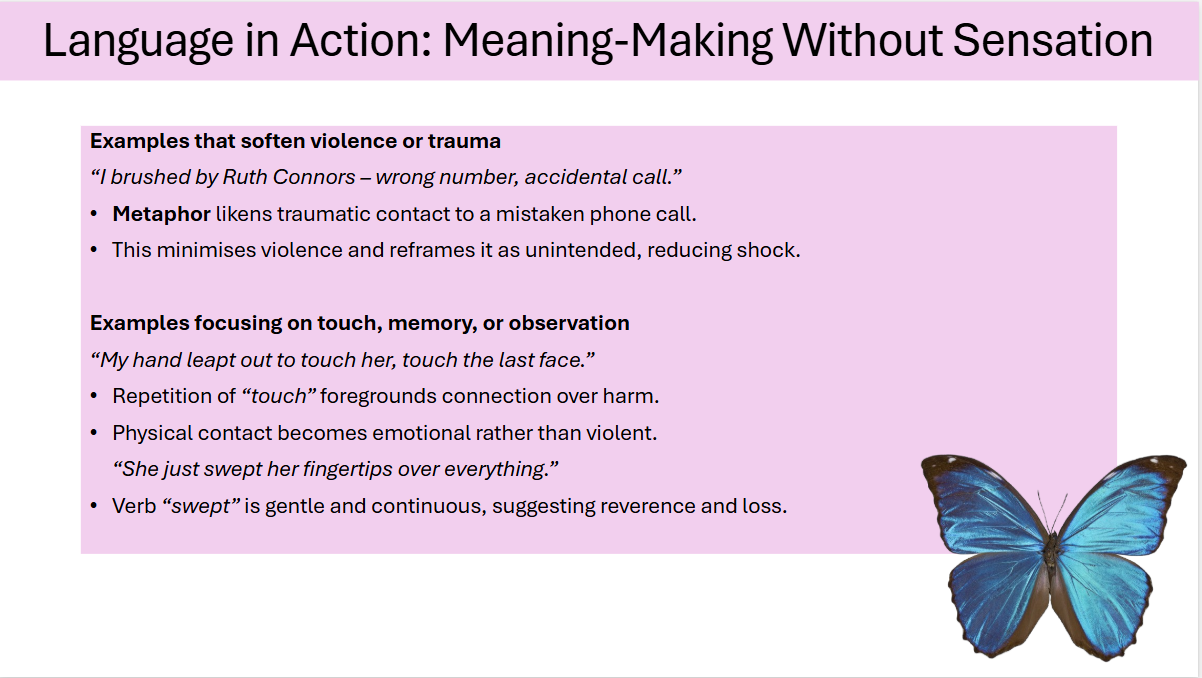
Language analysis focuses on how meaning is shaped without graphic description. Students identify and explain examples of imagery, observation, and metaphor that soften trauma and create a reflective tone, linking language choices directly to the representation of grief. This supports AO2 and discourages feature-spotting in favour of purposeful analysis.
The lesson also addresses structure, with students identifying shifts in focus across the chapter and considering how these shifts reflect emotional disruption and fragmented experiences of grief. A comparative task then asks students to consider how grief is represented across different characters, reinforcing the idea that grief is uneven and varied.
The lesson concludes with a short exam-style analytical paragraph, requiring students to respond to a focused question using minimal quotation and clear analysis. Plot retelling is explicitly avoided.
This resource is suitable for Year 12 or Year 13 and is intended for classes developing confidence with analytical writing for AQA English Literature and Language. It is not a content-heavy PowerPoint; independent thinking and structured tasks are central by design.
Something went wrong, please try again later.
This resource hasn't been reviewed yet
To ensure quality for our reviews, only customers who have purchased this resource can review it
Report this resourceto let us know if it violates our terms and conditions.
Our customer service team will review your report and will be in touch.
£2.50