


Help your students unlock the deeper meaning of novels with this Novel Reference Guide — a complete, student-friendly resource for studying long works of fiction. Perfect for middle school, high school, and AP English, this guide gives students everything they need to analyze novels with confidence.
What’s Inside:
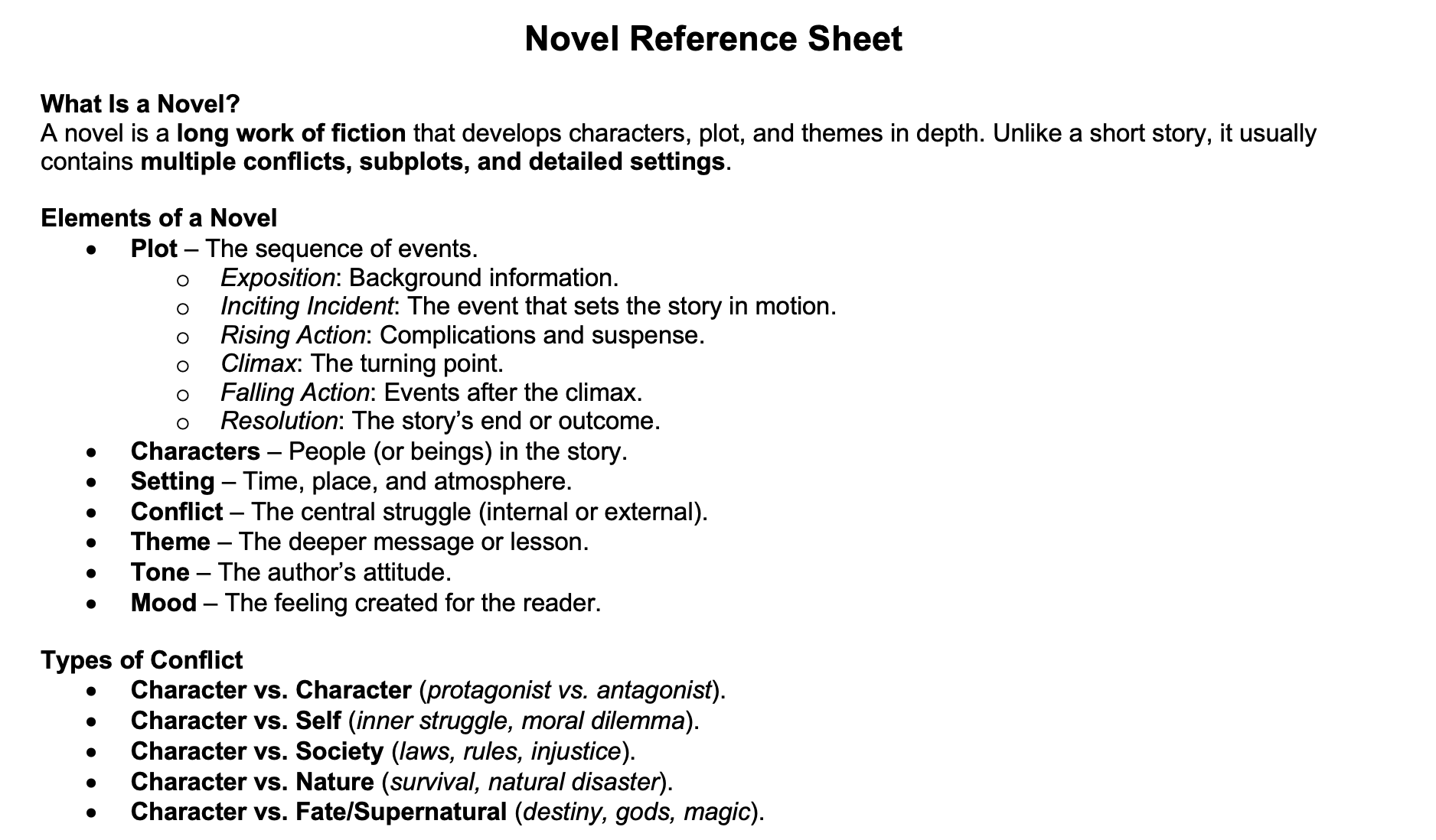
- What Is a Novel? – Clear definition and distinction from short stories.
- Plot Structure – Exposition, inciting incident, rising action, climax, falling action, resolution.
- Elements of a Novel – character, setting, conflict, theme, tone, mood.
- Types of Conflict – character vs. character, self, society, nature, fate/supernatural.
- Characterization (STEAL) – speech, thoughts, effect on others, actions, looks.
- Character Types – protagonist, antagonist, foil, flat, round, static, dynamic, stock.
- Archetypes – universal character patterns like hero, mentor, villain, rebel, trickster, caregiver, lover.
- Common Themes – good vs. evil, coming of age, love and sacrifice, identity, prejudice, fate vs. free will, isolation vs. connection.
- Narrative Point of View – first person, second person, third person limited/omniscient/objective.
- Narrative Techniques – foreshadowing, flashback, irony, symbolism, motif, imagery, allusion, unreliable narrator, stream of consciousness, frame narrative, epistolary form.
- Symbolism & Techniques – light/dark, seasons, journeys, weather, colors.
- Critical Questions – guiding prompts for analysis (themes, symbols, character change, setting).
- Visual Aid – Freytag’s Pyramid included for plot mapping.
Something went wrong, please try again later.
This resource hasn't been reviewed yet
To ensure quality for our reviews, only customers who have purchased this resource can review it
Report this resourceto let us know if it violates our terms and conditions.
Our customer service team will review your report and will be in touch.
£2.00