


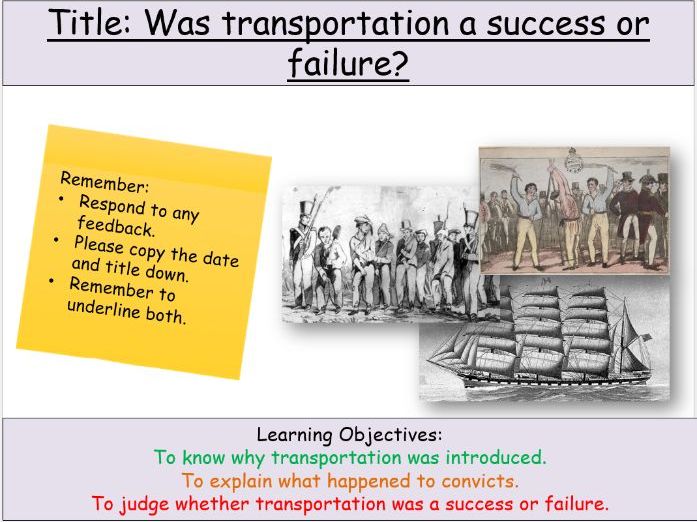
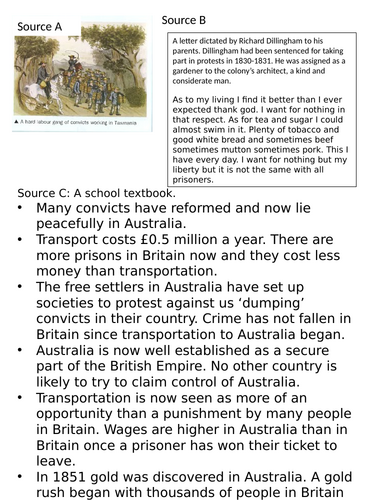
This lesson explores the use of transportation as a punishment in 18th and 19th-century Britain, focusing on whether it was an effective alternative to the death penalty. Students investigate why transportation was introduced, what happened to convicts sent to Australia, and whether it successfully deterred crime, reformed offenders, and supported the growth of the British Empire. Through source analysis, storytelling tasks, and evaluation activities, students develop a balanced judgement on the success of transportation. The resource includes both Higher Ability (HA) and Lower Ability (LA) versions.
Learning Intention: To understand why transportation was introduced and to evaluate whether it was a successful form of punishment.
Success Criteria:
- Describe why transportation was used as a punishment.
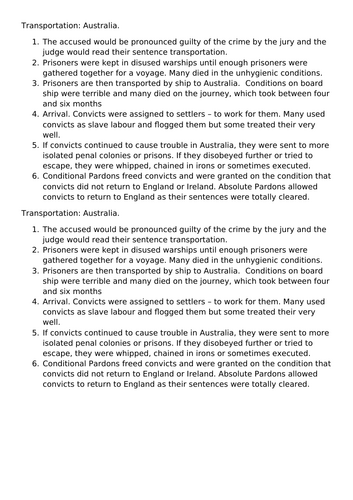
- Explain what happened to convicts sent to Australia.
- Evaluate whether transportation was successful in achieving its aims.
Activities Included:
- Starter discussion exploring opinions on transportation as a punishment
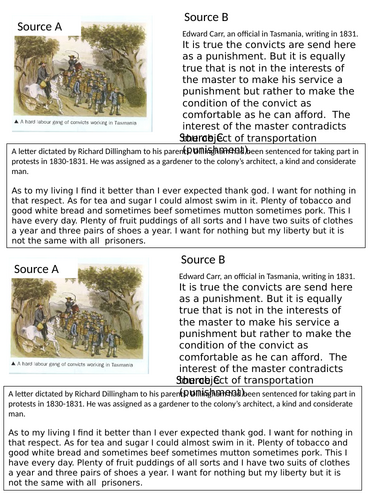
- Source-based reading analysing reasons for introducing transportation
- Data analysis examining who was transported and for what crimes
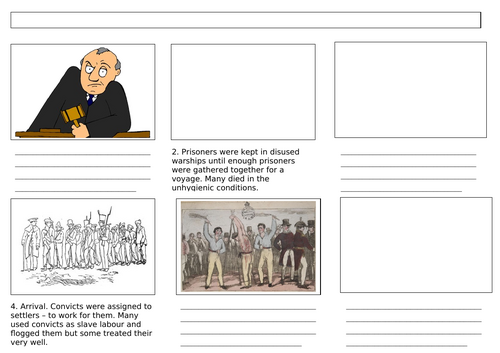
- Creative storyboard task illustrating the journey and experiences of convicts
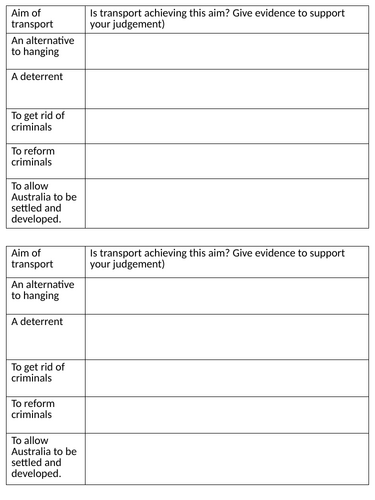
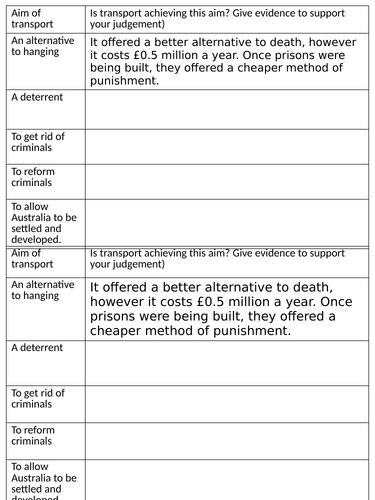
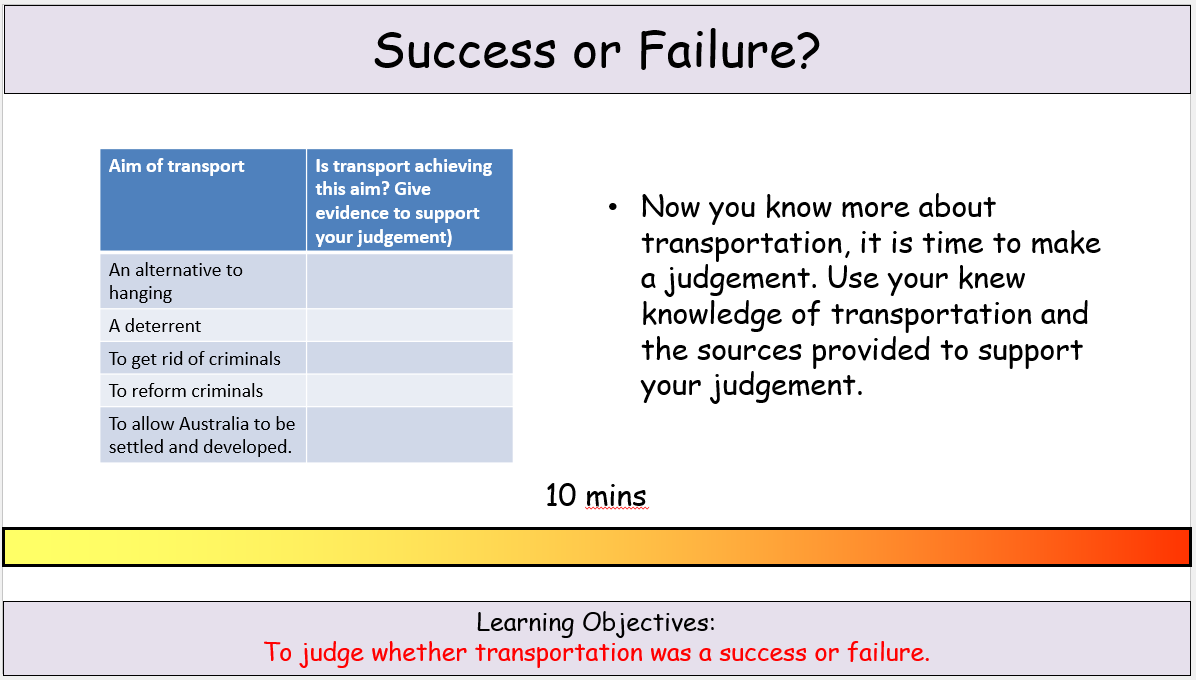
- Evaluation table assessing whether transportation met its aims
- Extended writing task where students make a judgement on success or failure
Format: PowerPoint lesson resource
Ideal For:
KS3 History (Crime and Punishment through Time)
Lessons exploring changes in punishment during the 18th and 19th centuries
Topics on British Empire and penal transportation
Inquiry-based learning developing evaluation and extended writing skills
Get this resource as part of a bundle and save up to 33%
A bundle is a package of resources grouped together to teach a particular topic, or a series of lessons, in one place.
Something went wrong, please try again later.
This resource hasn't been reviewed yet
To ensure quality for our reviews, only customers who have purchased this resource can review it
Report this resourceto let us know if it violates our terms and conditions.
Our customer service team will review your report and will be in touch.
£3.10