





A fully resourced, interactive GCSE lesson on the strengths and weaknesses of the Weimar Constitution of 1919. Students investigate whether Germany’s new democratic system after WWI was a bold breakthrough or whether hidden flaws made future instability inevitable. Through engaging, enquiry-led activities, students explore how the constitution worked, who held power, and why historians still debate its long-term impact.
The lesson includes:
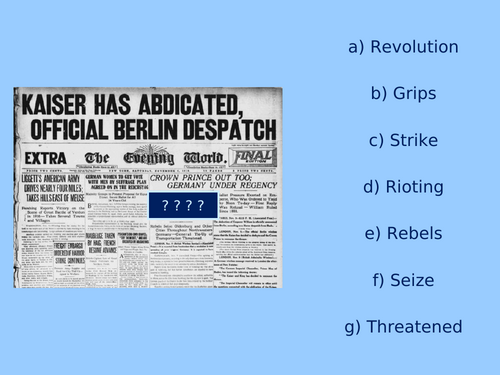
• A visual register starter with a surprising historical fact to introduce the Weimar context
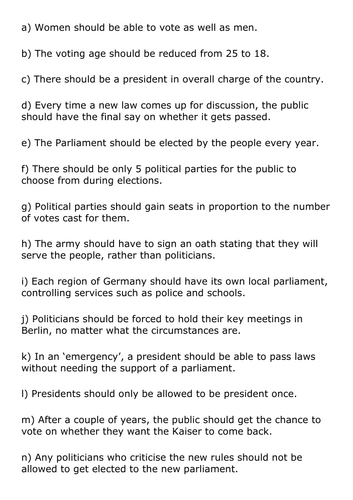
• A continuum activity where students rank fourteen possible constitutional features
• A structured “What Would You Include?” discussion linking values to democratic design
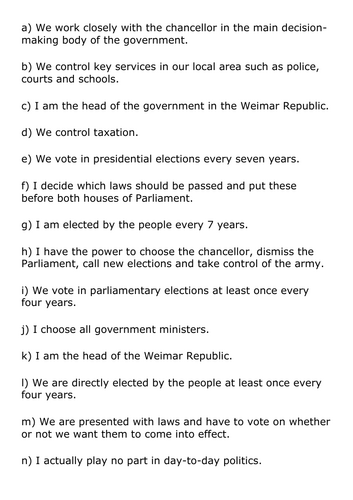
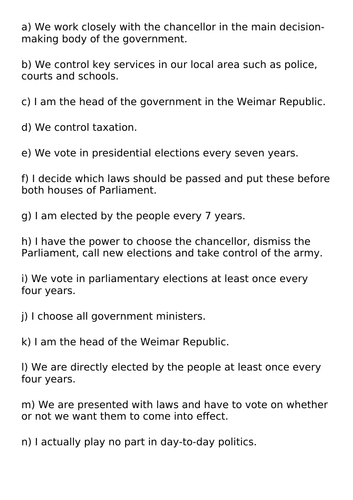
• A grouping activity matching fourteen real constitutional statements to five roles
• A high-quality Diamond 9 task evaluating the constitution’s most serious weaknesses
• Clear teacher-led modelling of the President, Chancellor, Parliament, Cabinet and Electorate
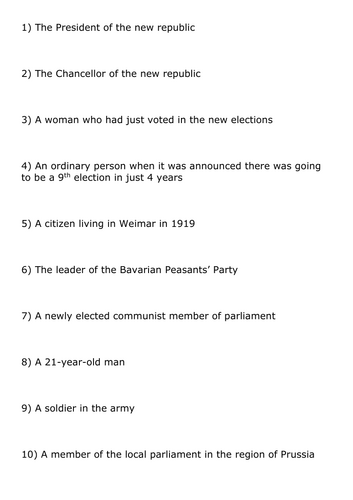
• A character match-up revealing how ten different Germans experienced the new democracy
• A whole-class judgement continuum plenary: Was the Constitution built to succeed or doomed to fail?
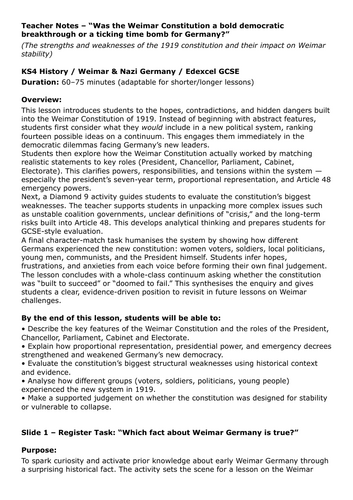
• Full teacher notes for every slide, including Purpose, Guidance, Insight and Differentiation
All worksheets, role cards, Diamond 9 cards and detailed teacher notes are included.
Designed for Edexcel GCSE History (Weimar & Nazi Germany) but easily adaptable for AQA, OCR or Eduqas.
Ideal for developing inference, judgement, and evaluative skills while helping students understand how the Weimar Constitution balanced democratic ambition with structural vulnerabilities — and why its design continues to divide historians.
Something went wrong, please try again later.
This resource hasn't been reviewed yet
To ensure quality for our reviews, only customers who have purchased this resource can review it
Report this resourceto let us know if it violates our terms and conditions.
Our customer service team will review your report and will be in touch.
£4.50