


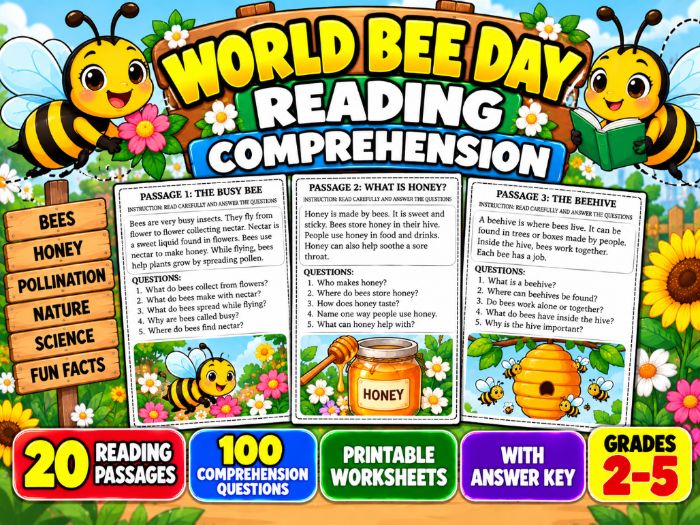
Make reading practice meaningful with this World Bee Day Reading Comprehension resource! Designed for elementary students, this printable activity pack features 20 bee-themed reading passages that help students strengthen reading comprehension, vocabulary, and understanding of informational texts while learning about bees, pollination, honey production, and the importance of protecting pollinators.
Students will read about busy bees, beehives, queen bees, different types of bees, and the process of pollination. They will also explore how bees support agriculture and biodiversity, how bees communicate through the waggle dance, the stages of a bee’s life cycle, and the threats bees face from pesticides, habitat loss, and climate change.
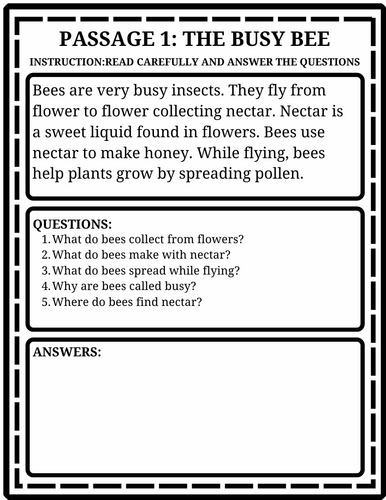
Each passage includes five comprehension questions that encourage students to read carefully, recall important details, and demonstrate understanding. These activities connect English Language Arts with science, environmental awareness, and World Bee Day.
WHAT’S INCLUDED
- 20 World Bee Day-themed reading comprehension passages
- 5 comprehension questions per passage
- 100 comprehension questions in total
- 20 printable student worksheet pages
- Spaces for written answers
- Passages about bees, honey, and beehives
- Reading activities about queen bees and different types of bees
- Topics covering pollination, agriculture, and biodiversity
- A passage about bee communication and the waggle dance
- Reading activities about the bee life cycle and honey production
- Topics covering beekeeping and urban bees
- Passages about pesticides, habitat loss, and climate change
- A passage about World Bee Day and its purpose
- Activities exploring ways to protect bees and pollinators
- A seven-page answer section covering all 20 passages
READING SKILLS PRACTICED
- Reading comprehension
- Identifying key details
- Understanding the main idea
- Recalling information from passages
- Answering who, what, where, when, and why questions
- Building vocabulary
- Understanding informational texts
- Finding specific information in a passage
- Writing short responses
- Recognizing cause-and-effect relationships
- Developing reading fluency and comprehension
Something went wrong, please try again later.
This resource hasn't been reviewed yet
To ensure quality for our reviews, only customers who have purchased this resource can review it
Report this resourceto let us know if it violates our terms and conditions.
Our customer service team will review your report and will be in touch.
£4.00