


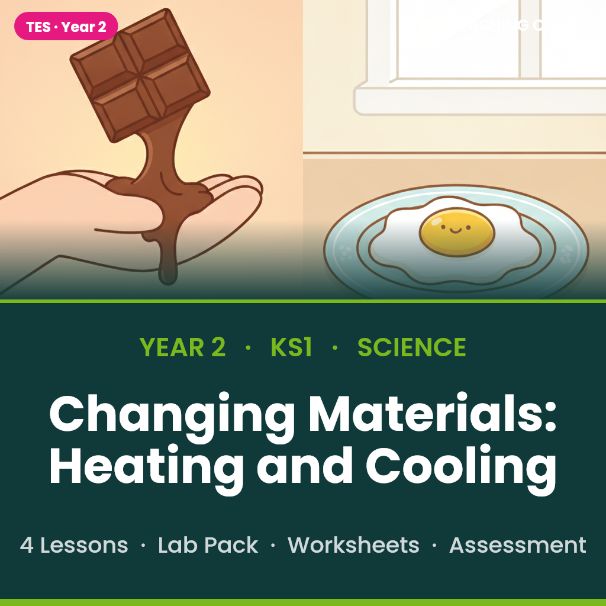
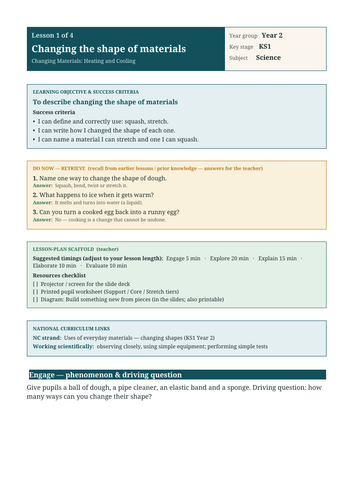
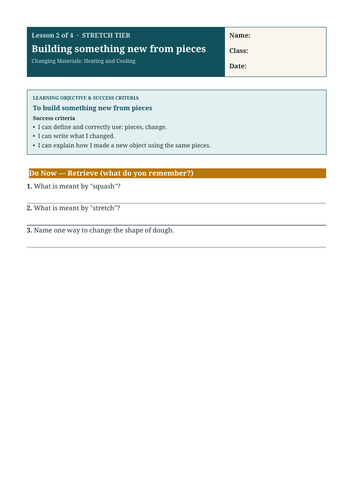
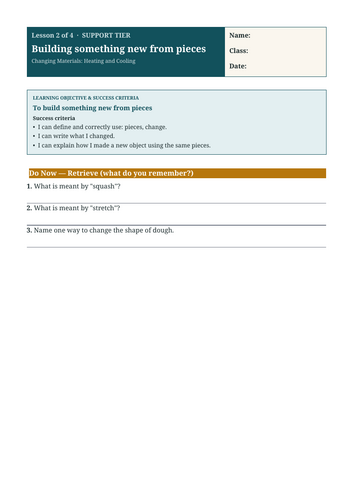
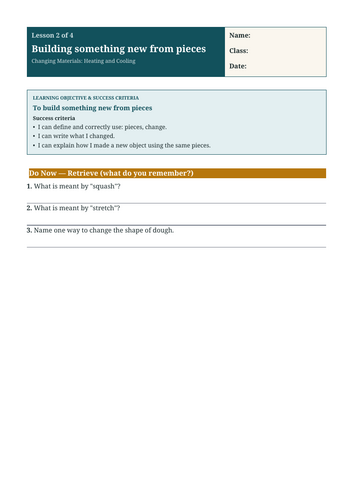
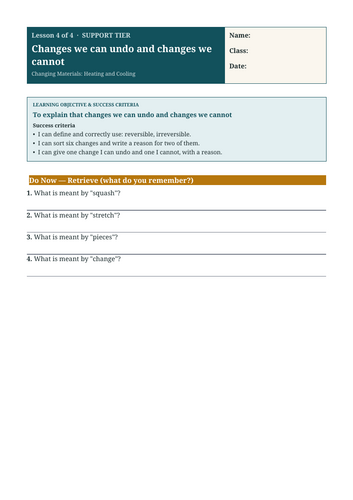
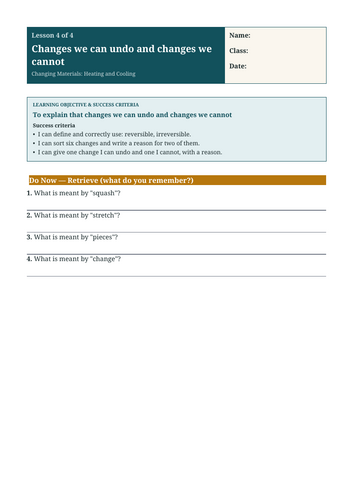
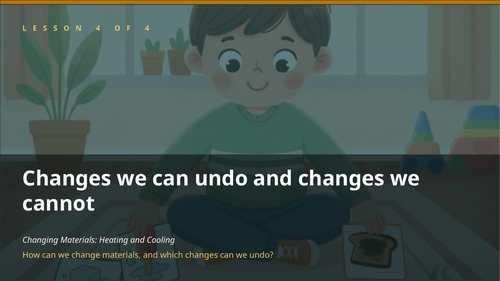
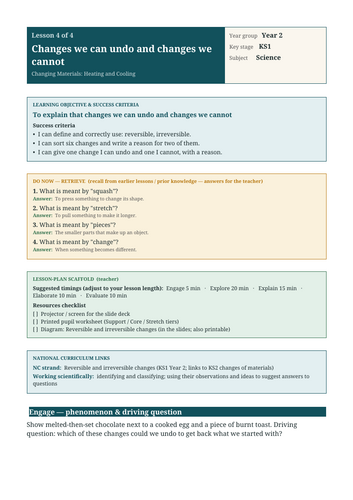
A no-prep, 4-lesson science unit on Uses of everyday materials — changing shapes and materials (KS1 Year 2; heating/cooling links to KS2 properties and changes of materials), written for Year 2 (ages 6-7). Phenomenon-first and three-dimensional: every lesson opens with something to wonder about and builds toward the unit’s big question. Open and teach — full teacher plans, projectable slides, three differentiated pupil worksheets per lesson, a complete printable lab pack, a knowledge organiser, and a baseline + end-of-unit assessment.
Big question: How can we change materials, and which changes can we undo?
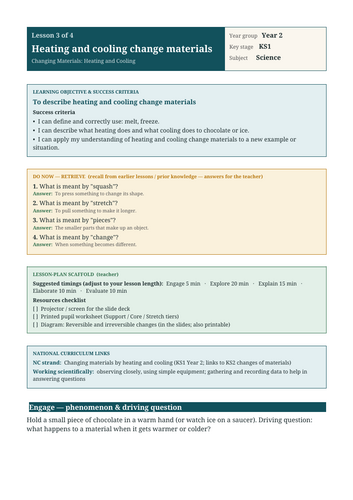
What’s included- 4 × Teacher lesson plans (Word) on the 5E spine (Engage · Explore · Explain · Elaborate · Evaluate)
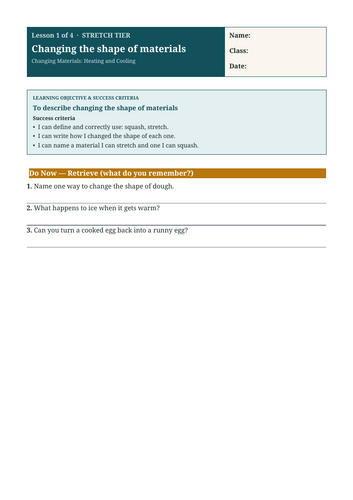
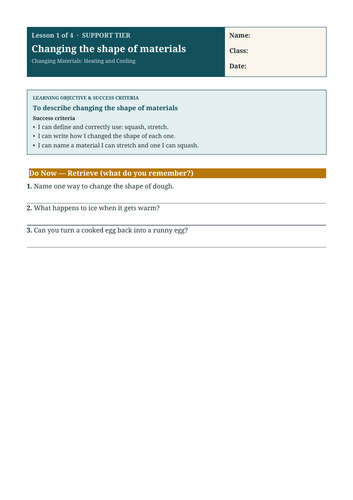
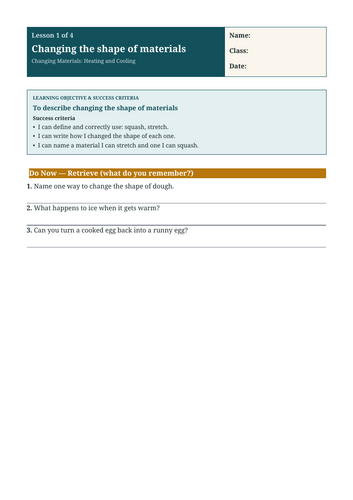
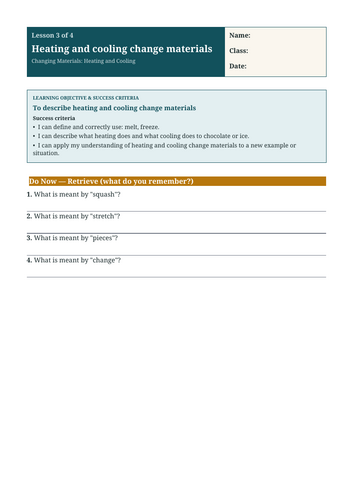
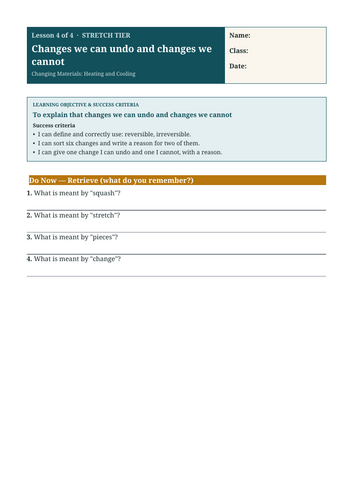
- 4 × Pupil worksheets in 3 differentiated tiers (Support / Core / Stretch)
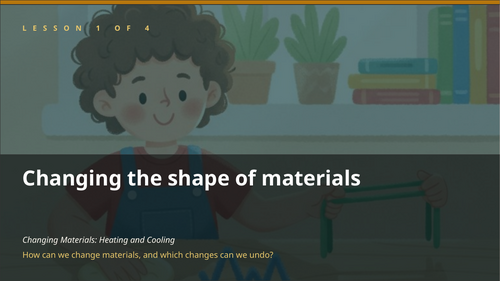
- 4 × Projectable slide decks (PowerPoint, 16:9 widescreen)
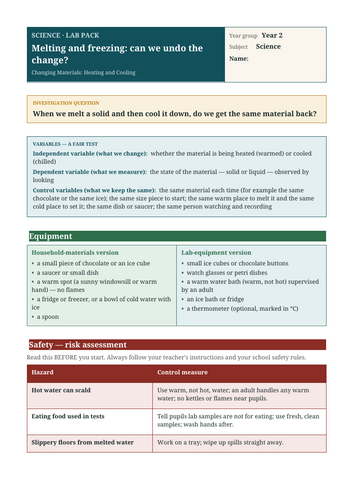
- 1 × Full lab pack (Word) — investigation question, fair-test variables, household and lab equipment lists, a real risk assessment, a blank results table, and analysis + conclusion scaffolds
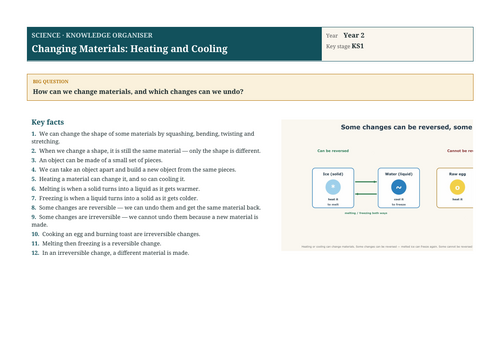
- 1 × Knowledge organiser (Word, A4 landscape)
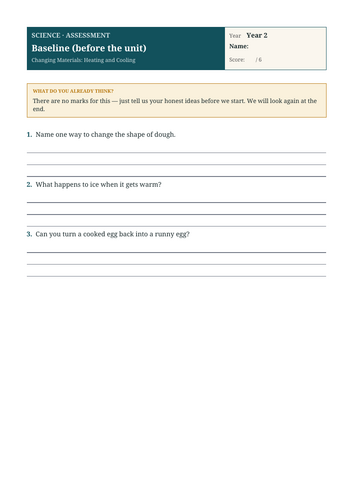
- 1 × Baseline + end-of-unit assessment with a teacher answer key and three-dimensional items
- Hand-coded diagrams with clear labels for the unit’s key ideas — never AI-generated
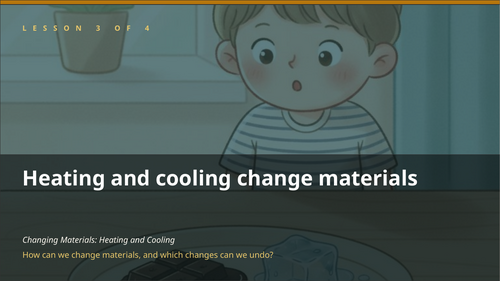
- Original illustrations for every phenomenon hook
- Changing the shape of materials
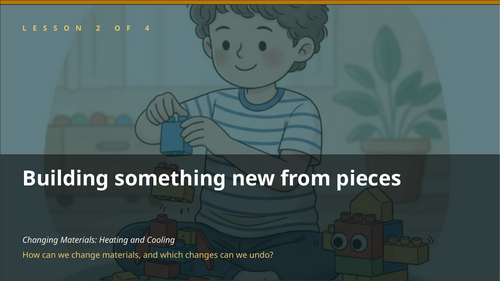
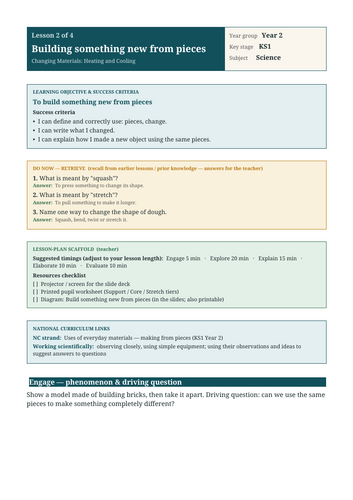
- Building something new from pieces
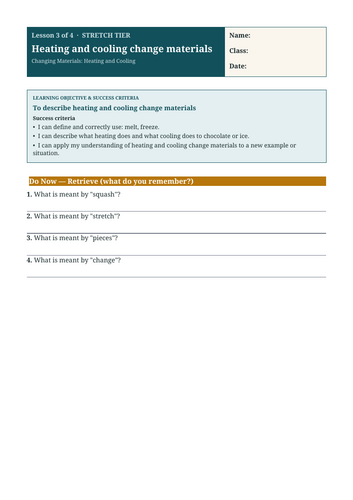
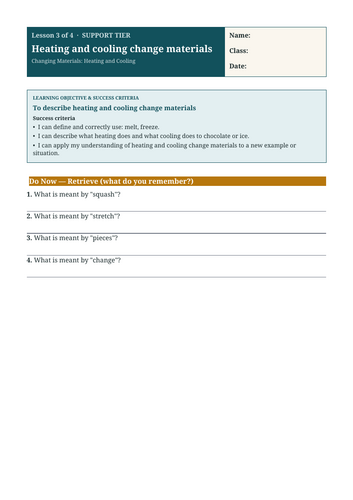
- Heating and cooling change materials
- Changes we can undo and changes we cannot
- We can change the shape of some materials by squashing, bending, twisting and stretching.
- We can take an object apart and use the pieces to make a new object.
- Heating a material can change it, and so can cooling it.
- Some changes can be reversed (undone) — like melting then freezing.
- Some changes cannot be reversed — like cooking or burning; a new material is made.
Something went wrong, please try again later.
This resource hasn't been reviewed yet
To ensure quality for our reviews, only customers who have purchased this resource can review it
Report this resourceto let us know if it violates our terms and conditions.
Our customer service team will review your report and will be in touch.
£9.99