


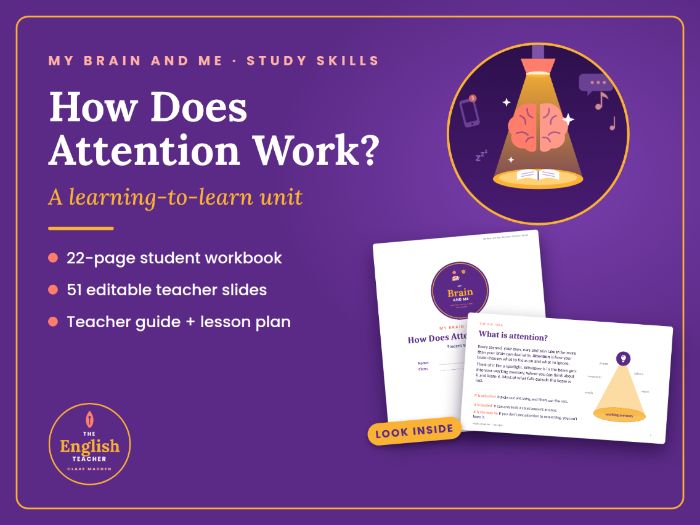
Attention is how students get anything into their heads to learn it, yet most have never been taught how it works. In this hands-on learning-to-learn unit, students test their own attention through a series of short classroom experiments. They look at the evidence on phones, multitasking, music and sleep, then build a practical set of strategies they can use in class and at home.
Created by Clare Madden, a secondary teacher with 15 years’ experience who has a special interest in how students learn, and author of the My Brain and Me programme.
What’s included
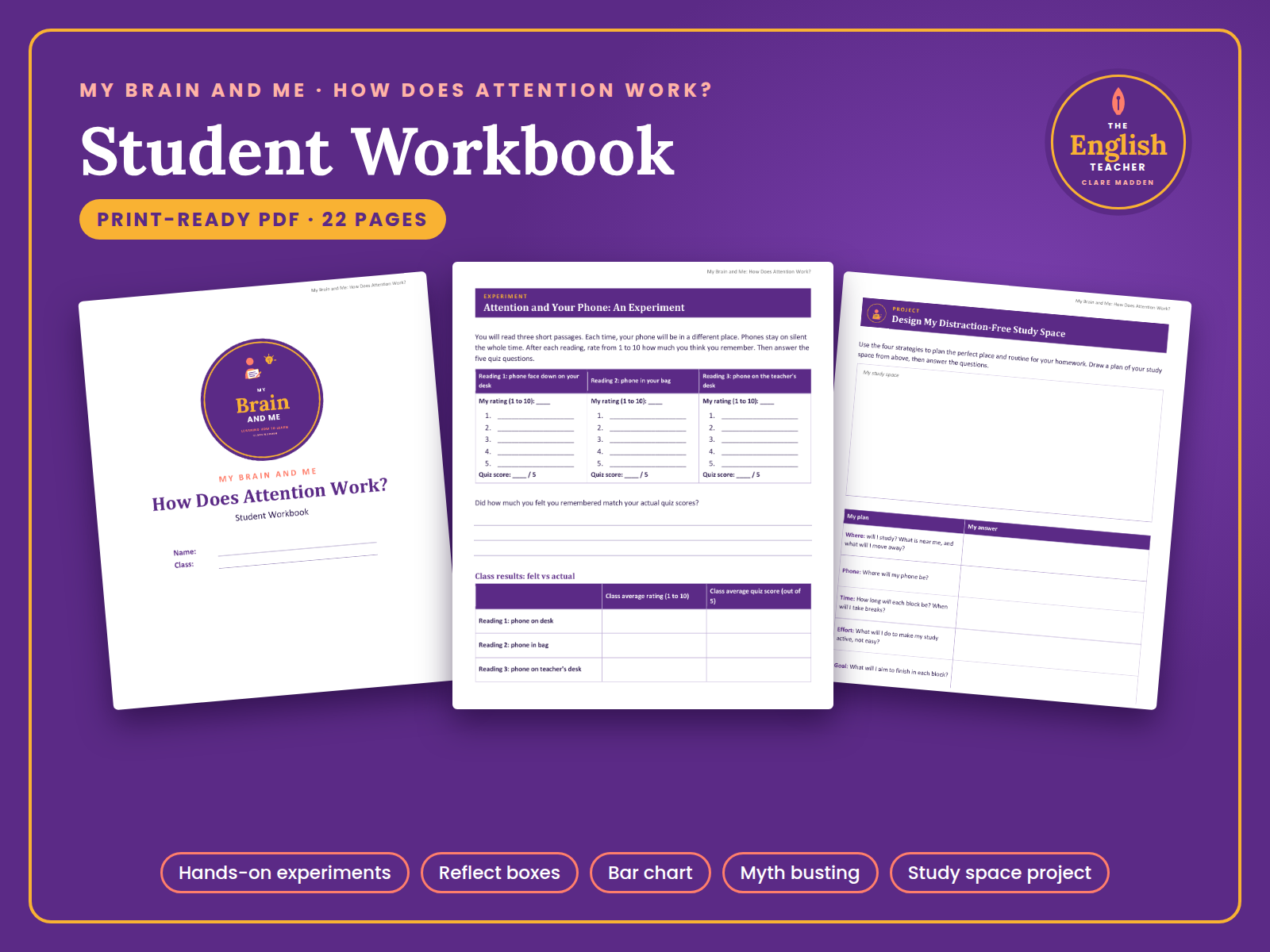
Student Workbook (22-page PDF): a matching page for every activity, most followed by a short Reflect box, and ending with a Big Questions review.
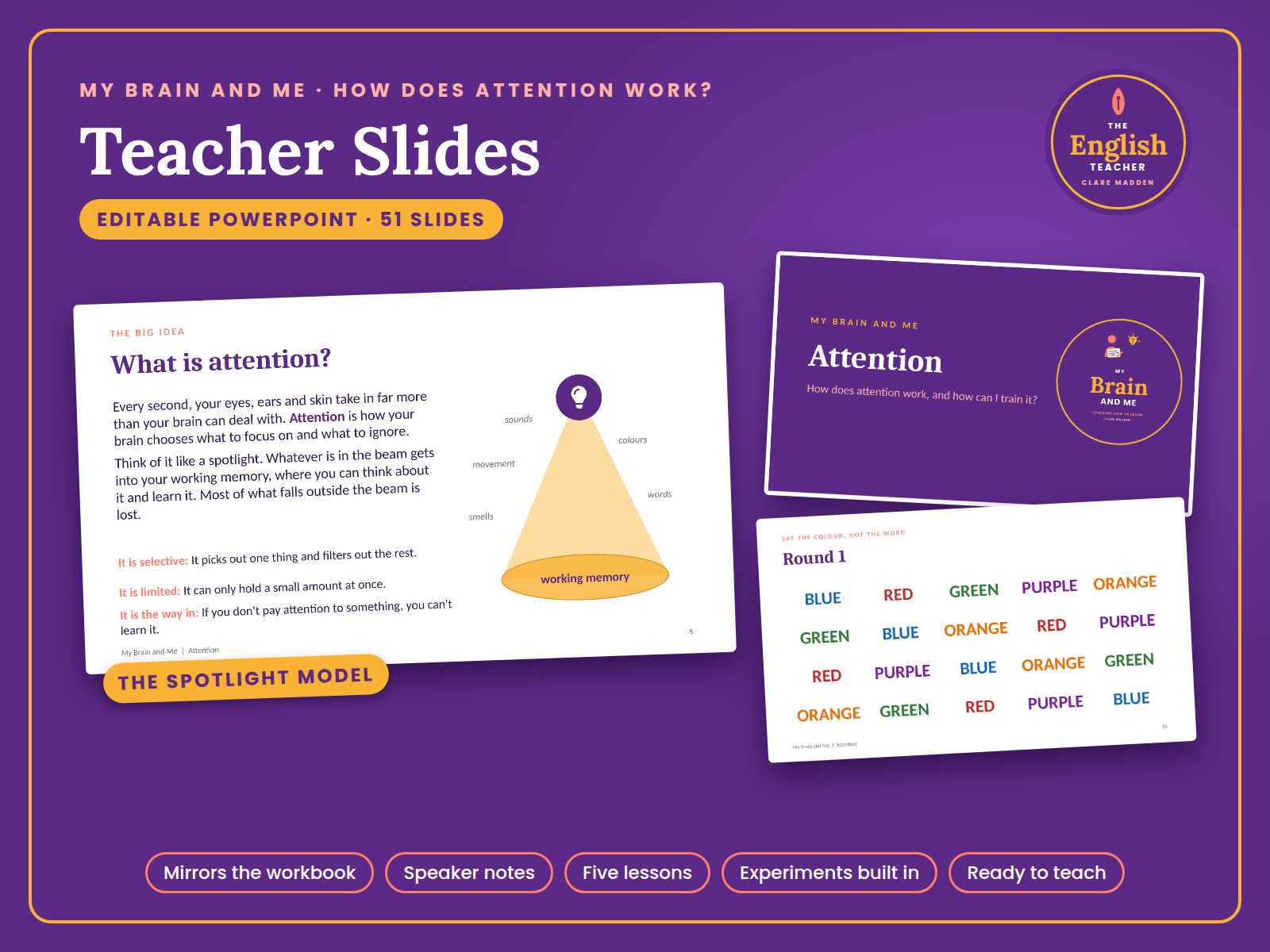
Teacher Slides (51 editable PowerPoint slides): these mirror the workbook page for page. Speaker notes hold the teacher-only details, such as number lists, passages and answers.
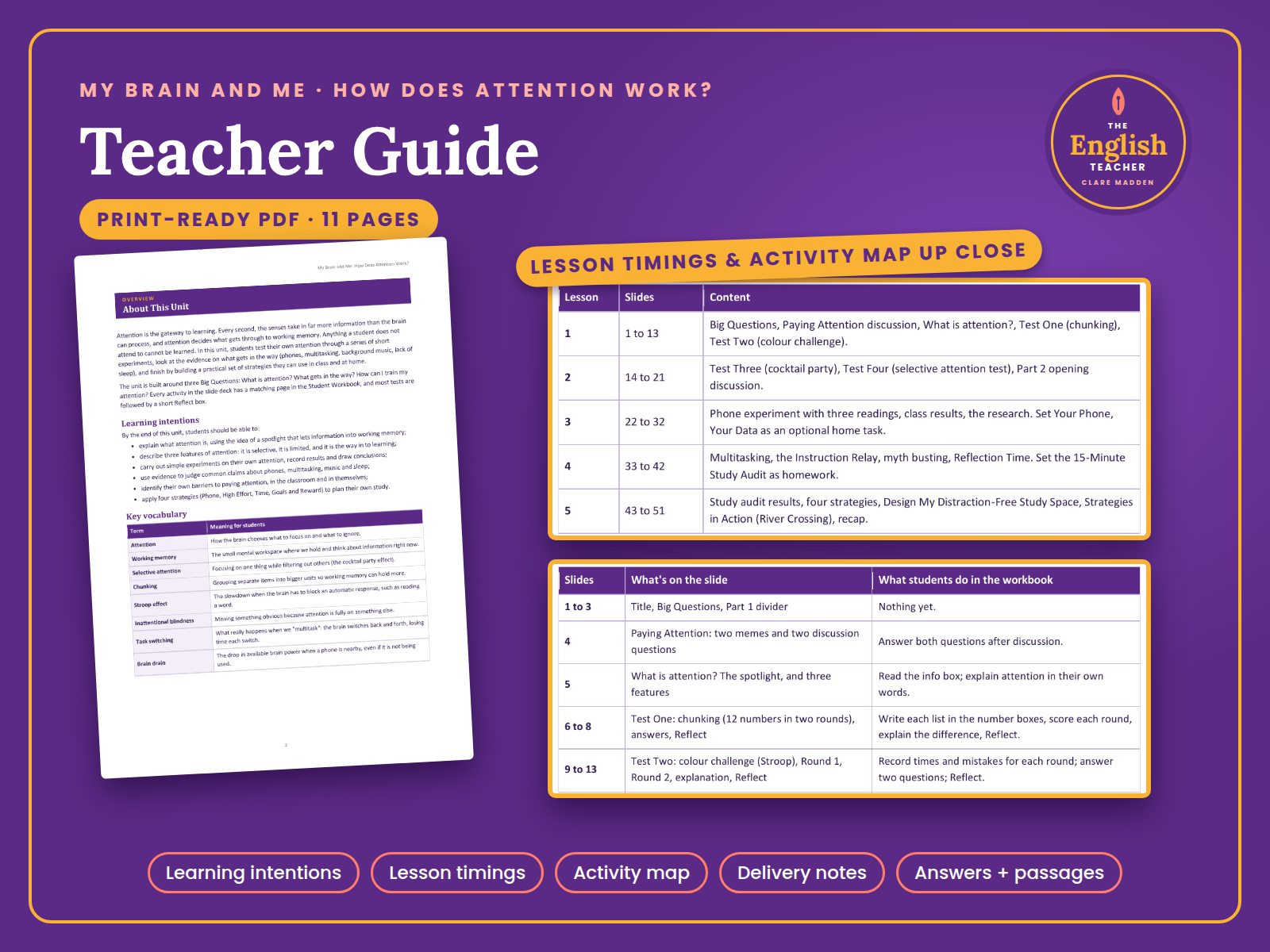
Teacher Guide (11-page PDF): learning intentions, key vocabulary, timings for five lessons, a materials checklist, and an activity map showing which slide goes with which workbook page. It also has delivery notes, teacher resources (number lists, reading passages and quiz answers), background reading and references.
Built around three Big Questions
What is attention? The spotlight model and its three features: it’s selective, it’s limited, and it’s the way in to learning. Students run four attention tests: How Big Is Your Spotlight? (chunking), The Colour Challenge (Stroop effect), The Cocktail Party (selective listening) and The Selective Attention Test.
What gets in the way? A class phone experiment based on the “brain drain” study, with results graphed as a bar chart. Students also try a multitasking activity and the Instruction Relay, bust myths about music, sleep and phones, and do a 15-minute study audit at home.
How can I train my attention? Four strategies (Phone, High Effort, Time, Goals and Reward), a Design My Distraction-Free Study Space project, and the River Crossing Problem challenge, where groups put all four strategies into action.
Why teachers use it
Students discover how their attention works through experiments, not lectures
Grounded in research, with sources cited in the teacher guide
Ready to teach in five lessons, plus two short home tasks
Works well for study skills, wellbeing, form time or pastoral programmes, and for exam groups before study season
Suitable for ages 12–16 (lower to middle secondary). Files: PowerPoint and PDF.
Something went wrong, please try again later.
This resource hasn't been reviewed yet
To ensure quality for our reviews, only customers who have purchased this resource can review it
Report this resourceto let us know if it violates our terms and conditions.
Our customer service team will review your report and will be in touch.
£4.00