






- Fully resourced KS3 Computer Science lesson introducing subroutines in Flowol and how they are used to simplify complex control systems.
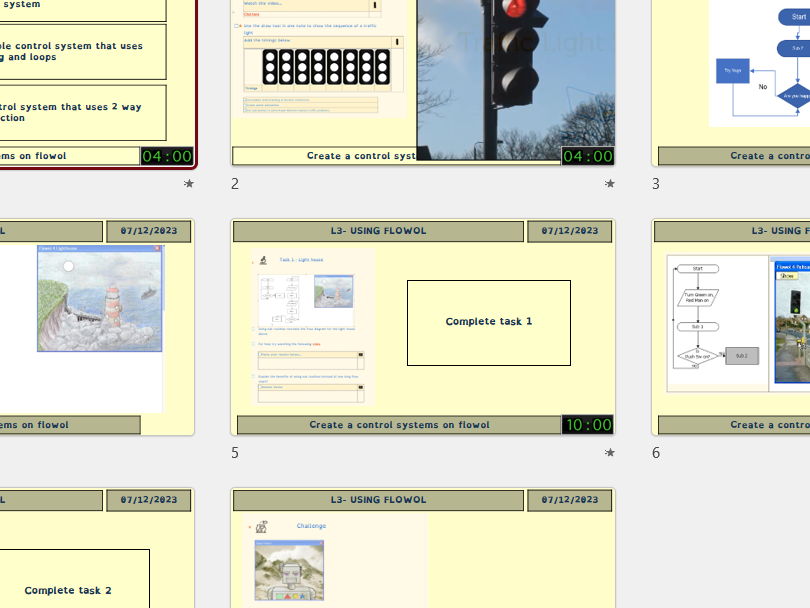
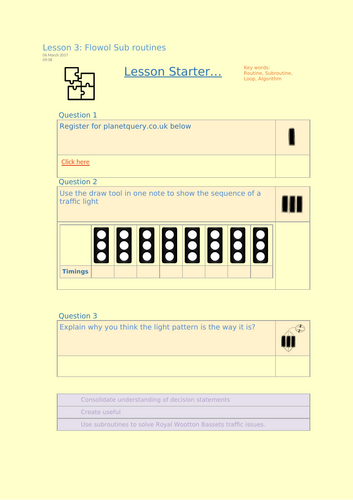
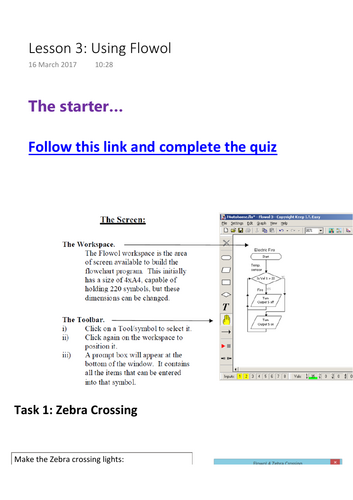
- Starter tasks recap algorithms, loops and routines, and include a drawing activity where students sequence real traffic light patterns.
- Builds conceptual understanding by asking students to explain why traffic lights follow a specific pattern, linking to real-world automation.
- Main Flowol task: pupils recreate a lighthouse using subroutines, developing structured, reusable code.
- Students record screenshots of evidence and answer questions on what subroutines are and why they are beneficial.
- Royal Wootton Bassett traffic scenario: learners complete a pelican crossing routine that triggers a subroutine when the button is pressed.
- Includes clear “Is it OK to move on?” checkpoints for self-assessment and pacing—ideal for mixed-ability classes.
- Challenge activity: control a robot using multiple button-activated subroutines, reinforcing algorithmic thinking and problem solving.
- Strong focus on building independence—step-by-step tasks, scaffolded questions and video help links make the lesson accessible for specialists and non-specialists.
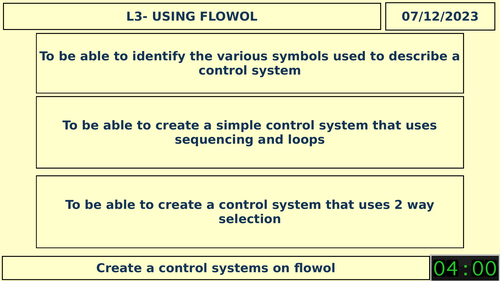
- Lesson objectives include: consolidating decision statements, understanding and applying subroutines, and modelling real automated systems.
- Ideal for KS3 Computing and an excellent foundation for GCSE algorithm, programming and control system topics.
Something went wrong, please try again later.
This resource hasn't been reviewed yet
To ensure quality for our reviews, only customers who have purchased this resource can review it
Report this resourceto let us know if it violates our terms and conditions.
Our customer service team will review your report and will be in touch.
£2.50