


L’Étranger – The Prison Cell
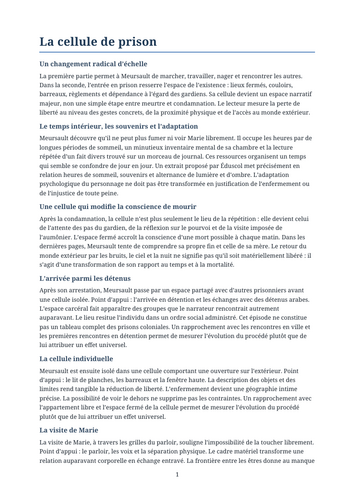
A comprehensive French-language study resource examining the prison cell in Albert Camus’s L’Étranger. It explores confinement, sensory deprivation, memory, altered perceptions of time, separation from Marie and the growing awareness of execution while showing how the same enclosed space changes function as Meursault moves from adaptation to the expectation of death.
Key features:
- Clear analysis of the transition from freedom of movement to confinement, showing how prison reduces Meursault’s world to rules, barriers and controlled spaces
- Detailed study of the individual cell, including the plank bed, bars and high window as concrete markers of reduced freedom
- Examination of Marie’s prison visit, where physical separation and the impossibility of touch transform a previously bodily relationship
- Focused analysis of the confiscation of cigarettes, showing how an ordinary deprivation makes the meaning of imprisonment tangible
- Detailed treatment of memory and repetition, including Meursault’s mental reconstruction of his room and repeated reading of a newspaper story
- Exploration of the distortion of time in prison, where repetitive days, sleep and memory replace the movement and varied experiences of the first part
- Analysis of the cell after the death sentence, when the same space becomes dominated by appeal, the chaplain, sleepless waiting and the prospect of execution
- Ten substantial exercise sections, detailed answers and a developed dissertation plan on how the prison cell transforms Meursault’s relationship with space, the body, time, memory and his own mortality
Something went wrong, please try again later.
This resource hasn't been reviewed yet
To ensure quality for our reviews, only customers who have purchased this resource can review it
Report this resourceto let us know if it violates our terms and conditions.
Our customer service team will review your report and will be in touch.
£1.50