




The resource booklet covers the entire topic of rates of reaction.
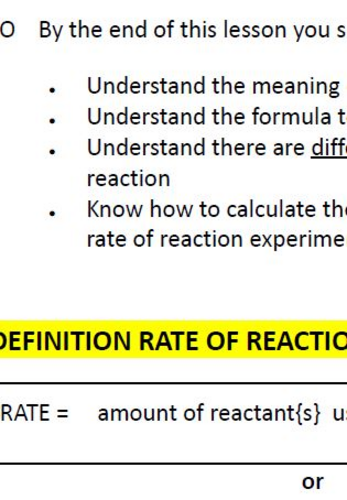
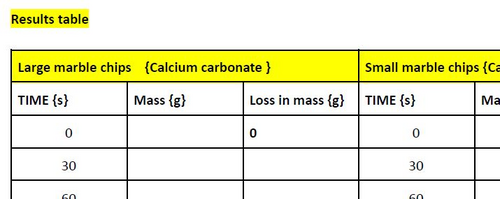
I have essentially provided a workbook for the students that include questions on defining rate of reaction , identifying methods for measuring the rate of a chemical reaction and factors that can affect the rate of a chemical reaction such as concentration, temperature, surface area and the addition of a catalyst covered at IGCSE . The booklet is designed to enable students to demonstrate their knowledge and understanding of this subject through both carrying out experimental methods for measuring rate in a school laboratory and then analyzing and evaluating data from those experiments
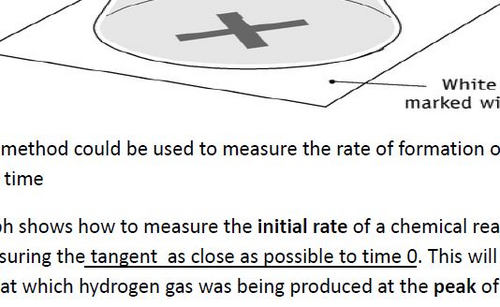
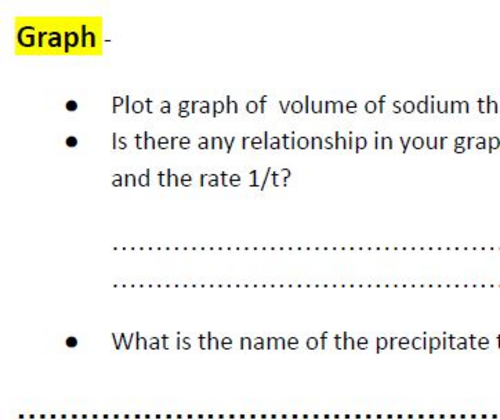
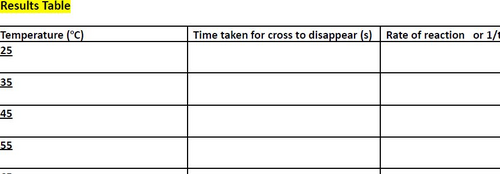
The booklet introduces the concept of rate , methods for measuring rate and how to measure intial rates from the gradients of graphs constructed from experimental date. They also calculate 1/t.
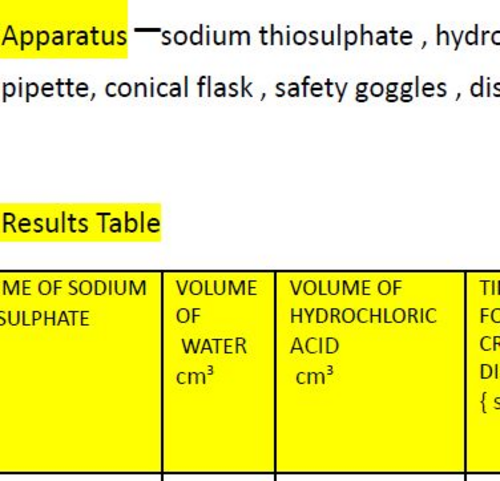
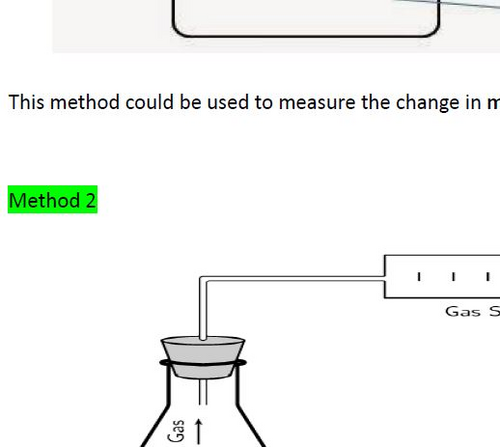
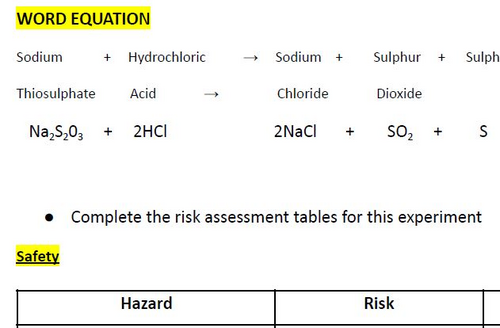
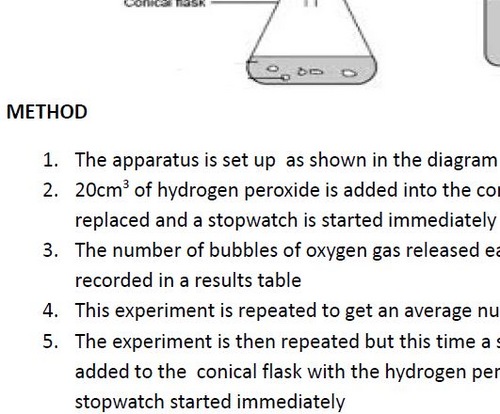
For concentration and temperature, students perform the sodium thiosulphate and hydrochloric acid experiment , with surface area they perform the large/small marble chip with hydrochloric acid experiment and with a catalyst they perform the Hydrogen peroxide with Manganese IV oxide experiment.
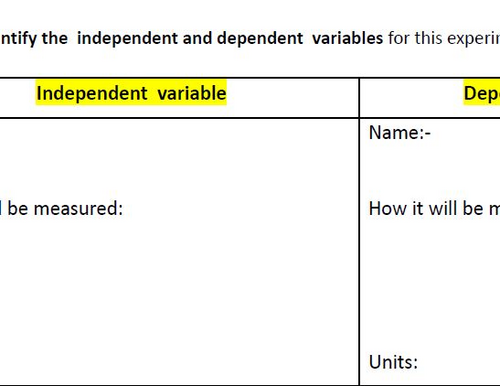
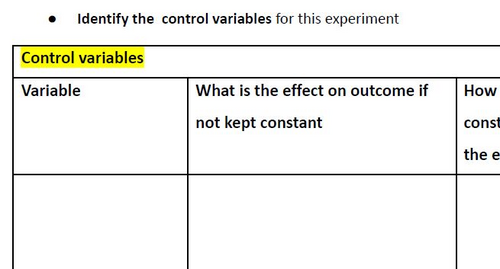
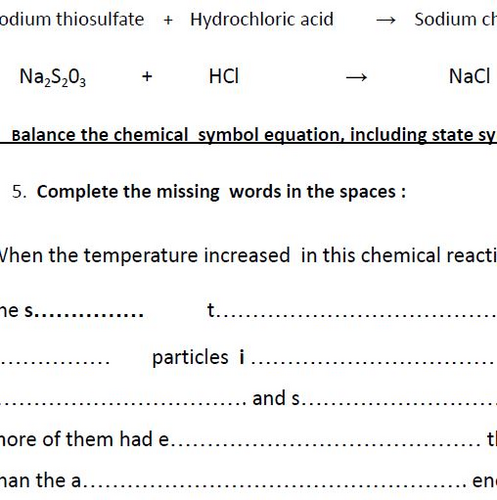
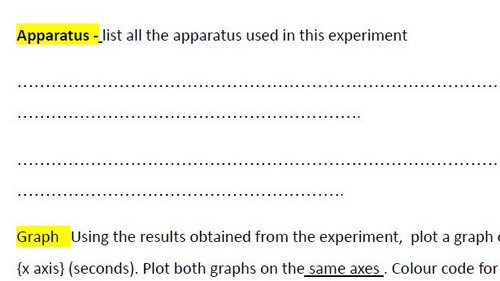
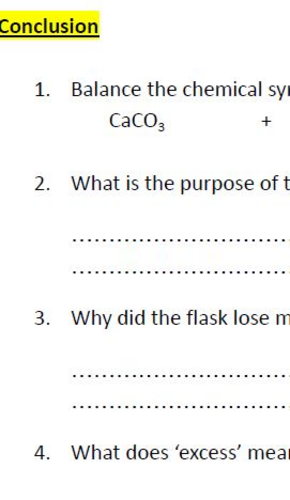
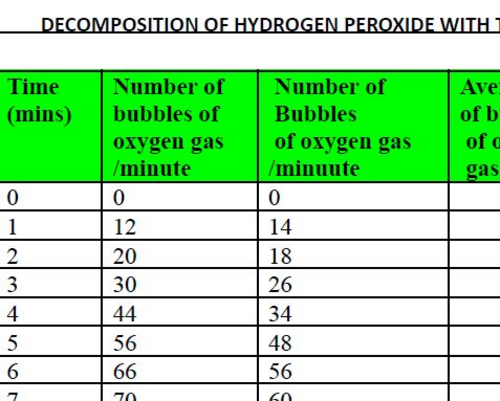
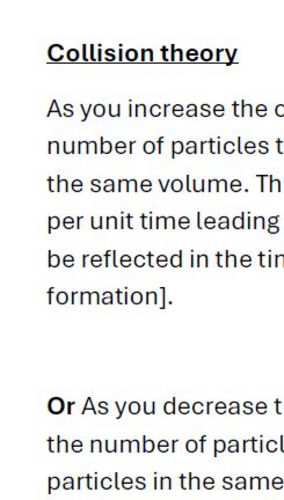
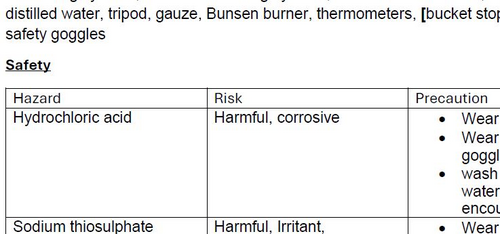
For each experiment they are tasked with : listing the apparatus and chemicals, undertaking risk assessments and identifying variables. There are also extension questions that include balancing chemical equations with state symbols, drawing graphs, calculating initial rate and applying knowledge and understanding of collision theory, activation energy , surface area and alternative pathways to help explain their results. The investigation also sets questions for students to analyze and evaluate their data. I have also included data from classes I have used this booklet with so students can use those results if their experiments are not so successful on the day.
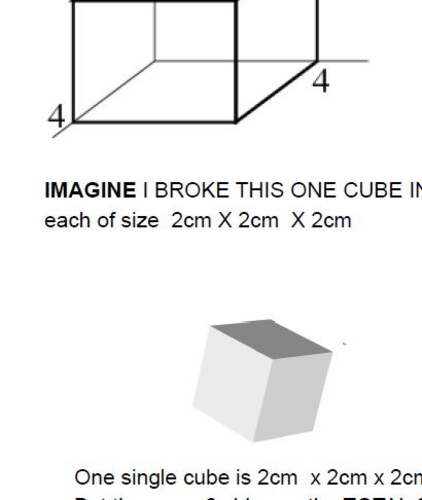
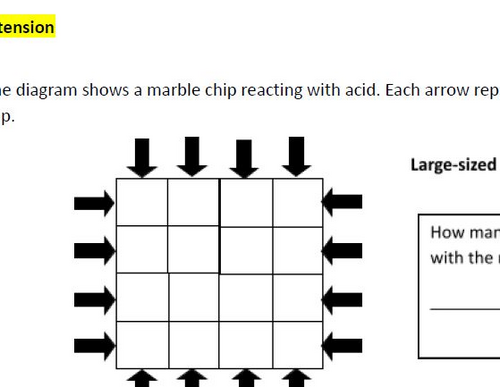
For surface area there is also an information sheet included in the booklet on how surface area changes when materials are broken down into smaller parts and also an information sheet on catalysts, activation energy and alternative pathways.
Students write their answers directly into the book and I have also incorporated graph paper directly into the book. The booklet will be a very useful revision resource on this topic once completed.
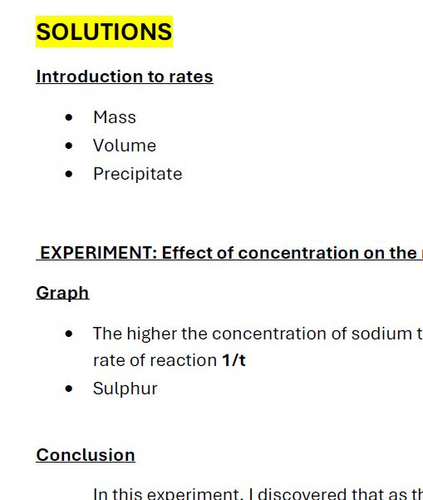
All solutions to questions are provided at the end of the booklet. There is a technician’s list with equipment , chemicals and concentrations required for each experiment.
The resource is designed for IGCSE/GCSE Chemistry but is also relevant to Key Stage 3 Chemistry such as Cambridge Checkpoint Science where rates of reaction is covered.
Something went wrong, please try again later.
This resource hasn't been reviewed yet
To ensure quality for our reviews, only customers who have purchased this resource can review it
Report this resourceto let us know if it violates our terms and conditions.
Our customer service team will review your report and will be in touch.
£12.00