


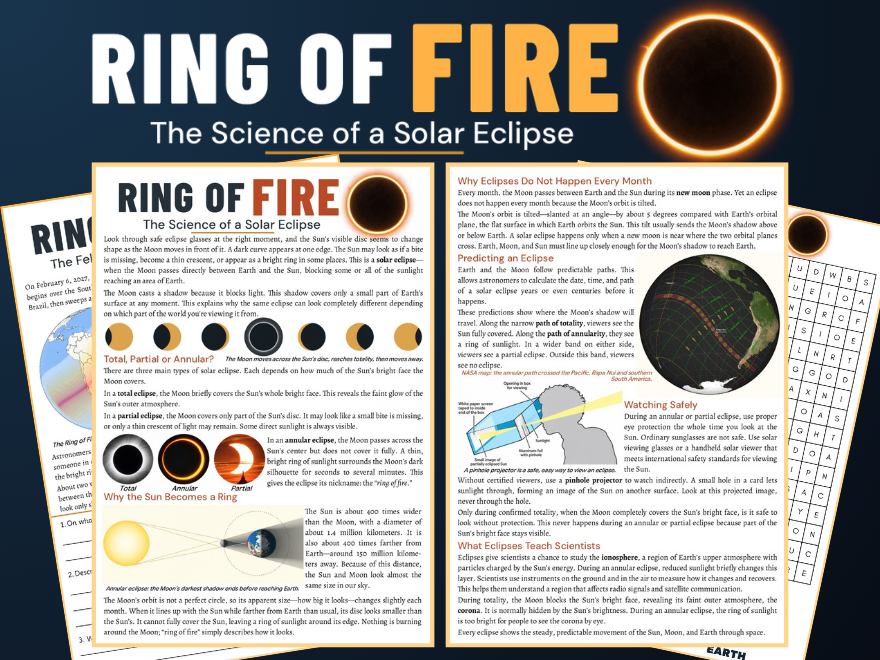
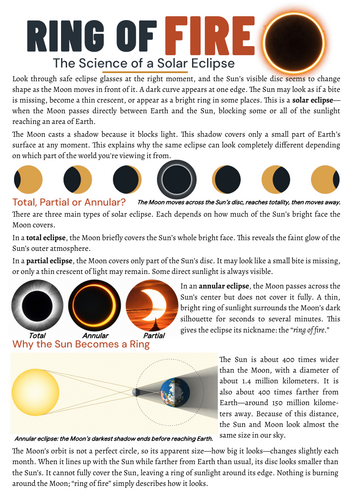
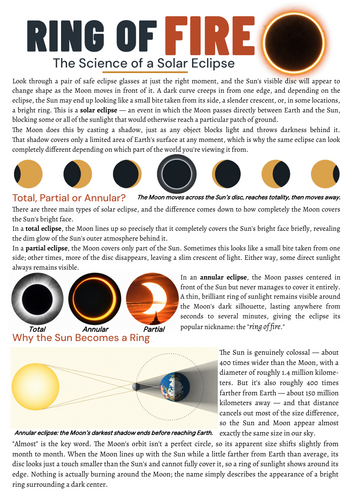
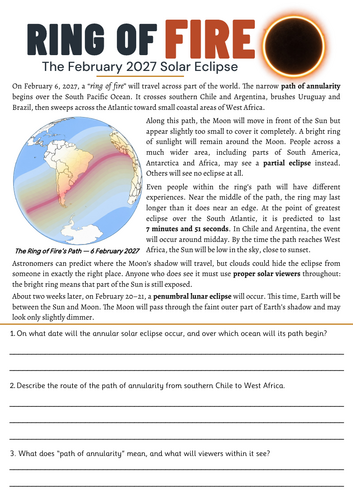
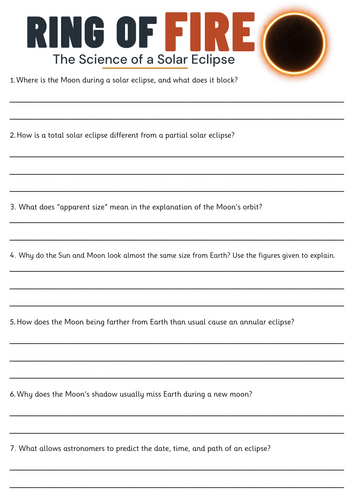
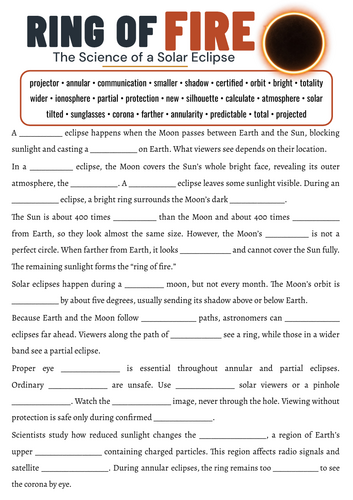
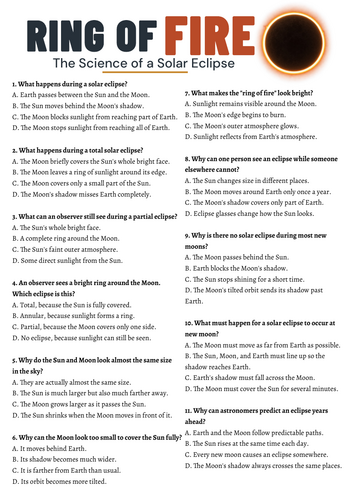
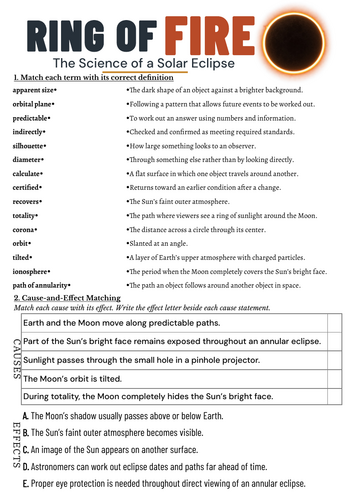
Explore total, partial and annular solar eclipses with this differentiated KS3 science reading comprehension resource. Two illustrated texts explain why the Sun can appear as a ‘ring of fire’, how the Moon’s orbit affects eclipses, and why viewers in different locations see different events.
Pupils investigate eclipse prediction, safe viewing and pinhole projection, alongside what scientists learn from the corona and ionosphere. Ready-to-use activities develop scientific vocabulary, close reading, comparison and evidence-based explanations.
Reading Levels
Designed primarily for Years 7–9, with two versions covering the same essential science:
- Higher: Estimated Lexile 1000–1150L, with more complex sentences, academic vocabulary and deeper interpretation.
- Lower: Estimated Lexile 850–1000L, with simpler language, shorter sentences and explanations of technical terms. Approximately 180 words shorter, with font size increased from 12 pt to 13 pt.
What’s Included
Two illustrated, two-page nonfiction texts, supported by photographs, diagrams and a map.
Seven activities at each reading level — 14 differentiated activities:
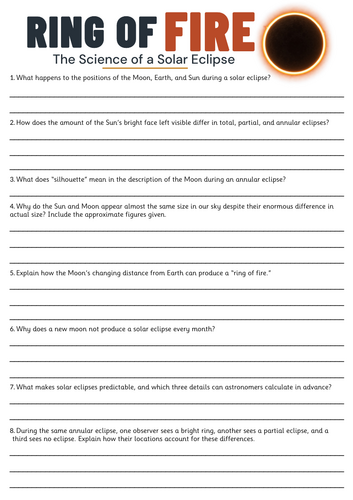
- Written-response questions: 14 higher-level or 12 lower-level questions
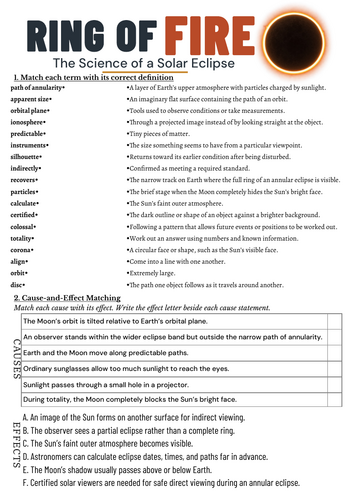
- Mixed comprehension, including cause-and-effect matching
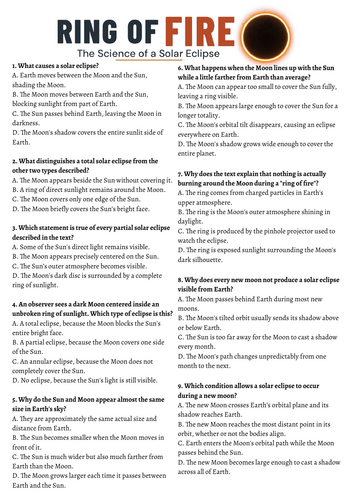
- Multiple-choice assessment
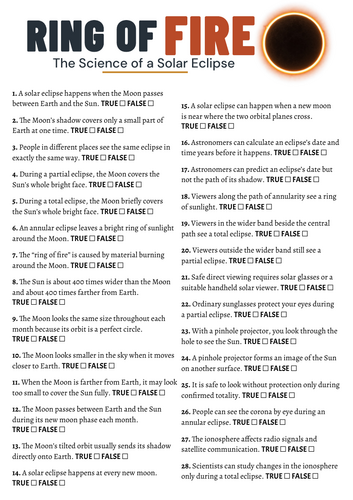
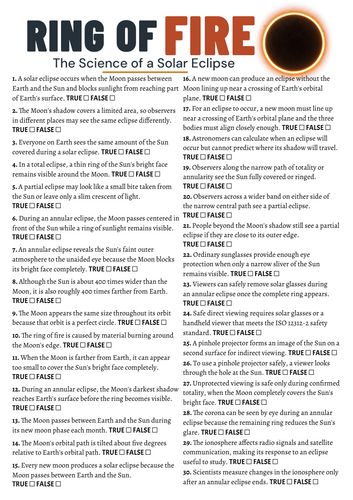
- True/false quiz: 30 higher-level or 28 lower-level statements
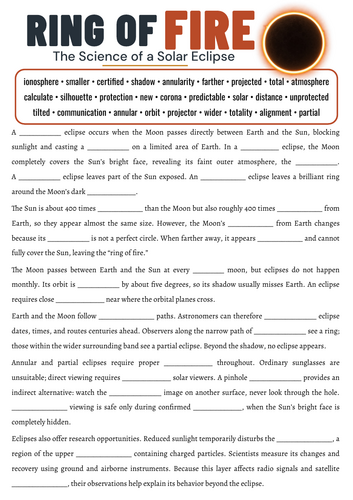
- Cloze summary with word bank
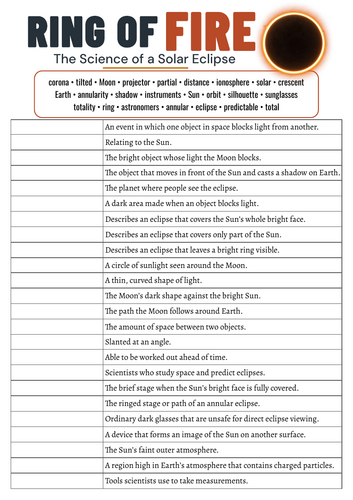
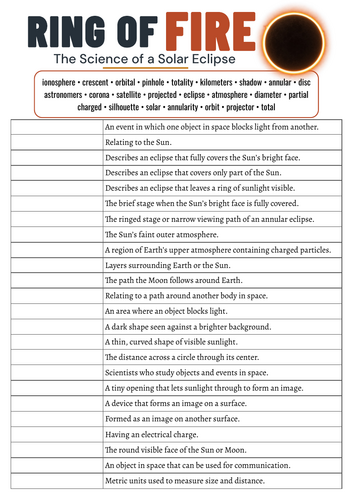
- Vocabulary matching: 24 terms at each level
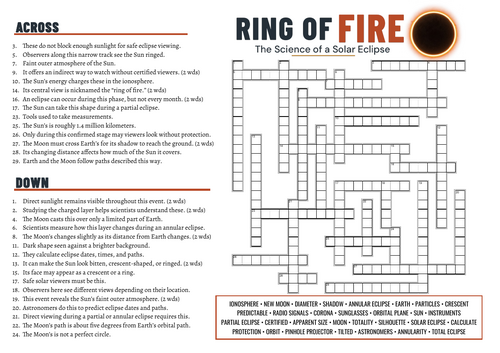
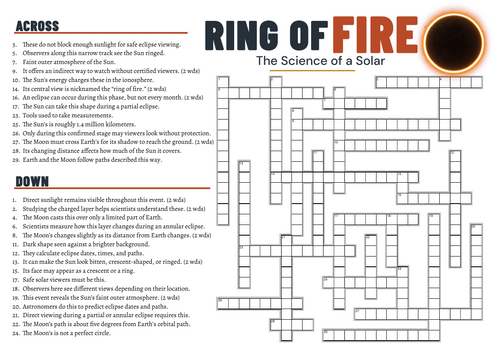
- Crossword, with a supporting word bank in the lower-level version
Three Shared Bonus Activities
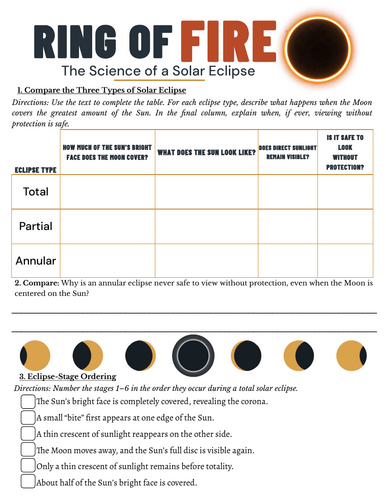
- Eclipse Comparison and Application: Compare eclipse types, sequence stages, interpret a diagram and map, and correct a scientific misconception.
- February 2027 Eclipse Case Study: Illustrated reading and 11 questions exploring the eclipse’s path, viewing conditions and solar–lunar comparisons.
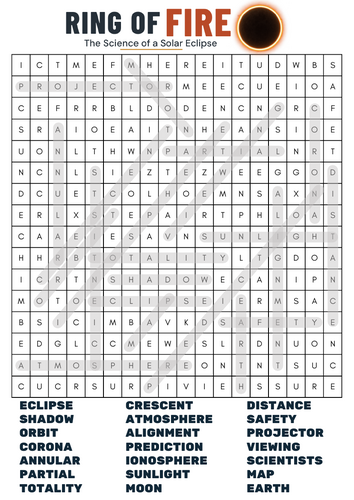
- Word Search: Reinforce spelling and recognition of 21 theme words.
Answer keys and model answers included.
Something went wrong, please try again later.
This resource hasn't been reviewed yet
To ensure quality for our reviews, only customers who have purchased this resource can review it
Report this resourceto let us know if it violates our terms and conditions.
Our customer service team will review your report and will be in touch.
£3.50