


Was it right to punish those who refused to fight in the First World War?
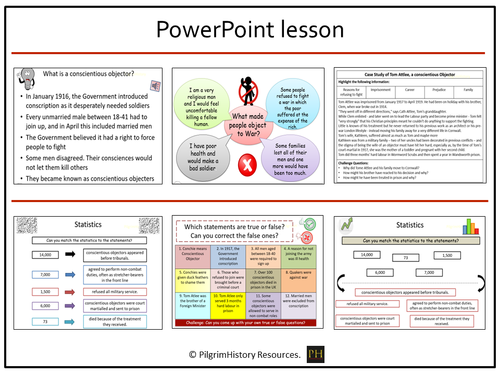
Students are challenged to evaluate whether the Government was justified in punishing those who refused to take up arms, and to consider how difficult it must have been for individuals to stand against enormous social and political pressure.
The lesson examines why some men refused to fight despite widespread propaganda, public expectation and accusations of cowardice. Students explore how conscientious objectors were often ostracised, abused and brought before tribunals, revealing the intense moral and social pressures of wartime Britain.
Using high-quality video and audio resources (including BBC-linked material), students are supported in challenging traditional narratives of “cowardice and shame” and instead develop a deeper understanding of pacifism, personal belief and freedom of conscience during wartime.
Students analyse two detailed case studies before taking part in a structured mini-debate on whether conscientious objectors were justified in their actions or rightfully punished under wartime law.
The lesson concludes with a true-or-false plenary designed to test understanding and consolidate key arguments from the lesson.
The resource also features:
An enquiry question revisited throughout the lesson and unit
Retrieval practice activities
Case study analysis and interpretation tasks
Structured debate activity
Differentiated materials to support all learners
Suggested teaching strategies
Fully editable PowerPoint format
Any reviews would be gratefully received to aid future planning.
Something went wrong, please try again later.
This resource hasn't been reviewed yet
To ensure quality for our reviews, only customers who have purchased this resource can review it
Report this resourceto let us know if it violates our terms and conditions.
Our customer service team will review your report and will be in touch.
£3.00