


Unit of work with all lessons for Settlement Dynamics/Urbanisation for A Level Geography (Cambridge 9696).
This scheme of work is very comprehensive, and includes an information resource for each lesson so students (or yourself) don’t need to complete any further research.
This scheme of work can easily be adapted to fit other exam boards/curriculums due to the extensive subject knowledge/resources included. All in all, this unit of work required a huge amount of planning, reflecting the price.
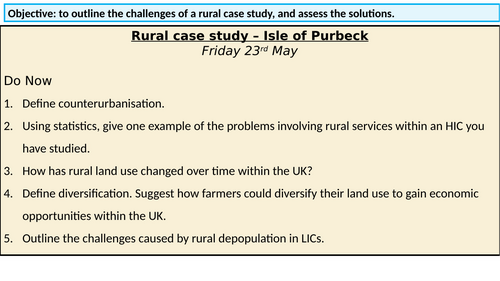
6.1 Changes in rural settlements
Contemporary issues in rural settlements in LICs, MICs and HICs, (e.g. depopulation, service provision) including the impacts of internal migration and the consequences of urban growth.
Case study: candidates must study a rural settlement (village or hamlet) or a rural area showing some of the issues of its development and growth (or decline) and evaluating the responses to these issues.
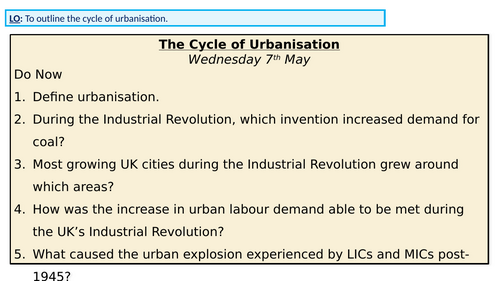
6.2 Urban trends and issues of urbanisation
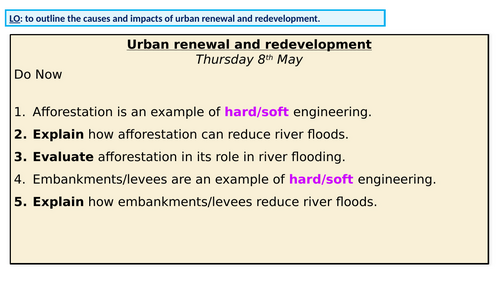
Urban growth. The process of urbanisation and its causes and consequences in LICs, MICs and HICs, including counterurbanisation and re-urbanisation, competition for land and urban renewal.
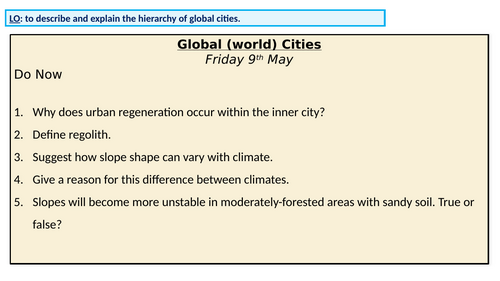
The concept of a world city: causes of the growth of world cities and the development of a hierarchy of world cities.
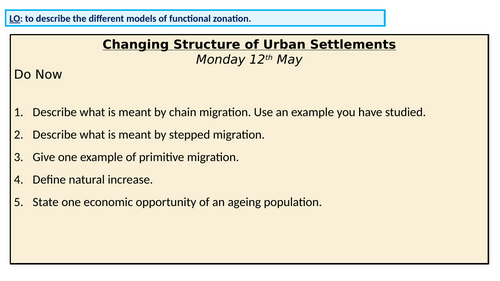
6.3 The changing structure of urban settlements
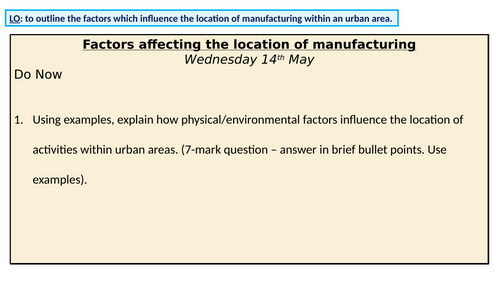
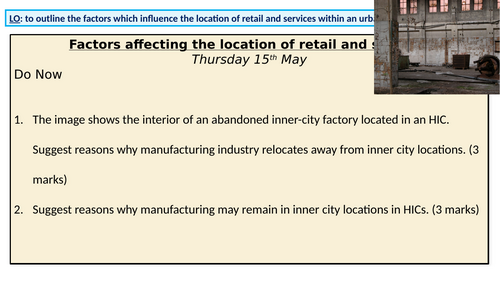
Factors (social, economic, environmental and political) affecting the location of activities within urban areas (including planning) and how urban locations change over time for retailing, services and manufacturing.
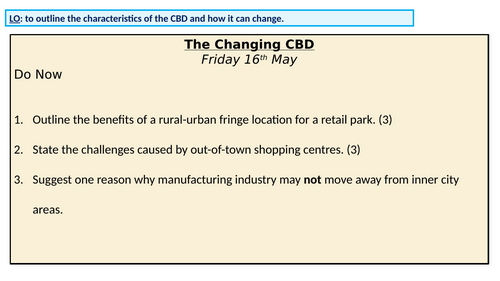
The changing central business district (CBD).
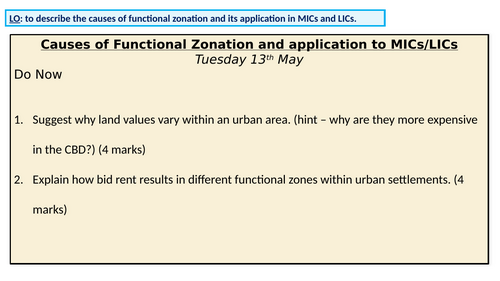
Competition for space (spatial competition) in urban areas, the concept of bid rent, and functional zonation.
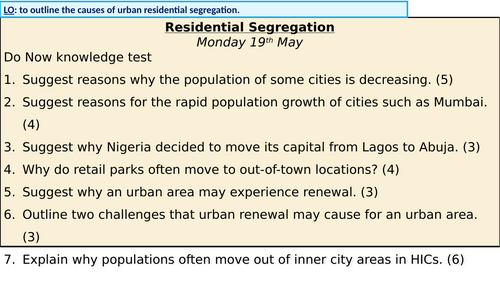
Residential segregation: causes (income and race/ethnicity) and processes (e.g. operation of the housing market, influence of family and friends, culture and planning).
6.4 The management of urban settlements
Case study: candidates must study urban settlements showing the challenges of, and evaluating the attempted solutions in, each of the following:
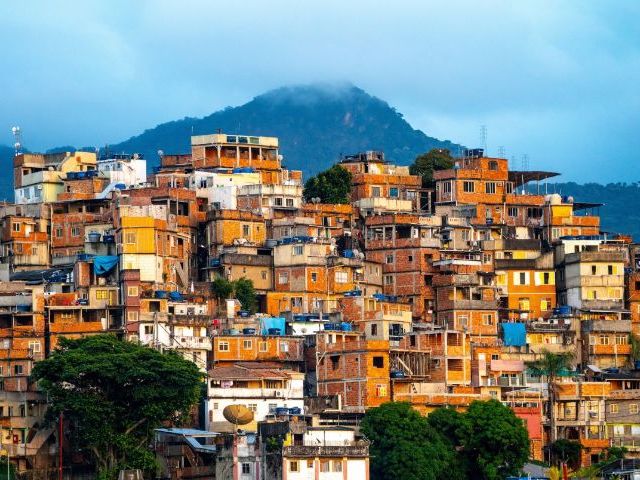
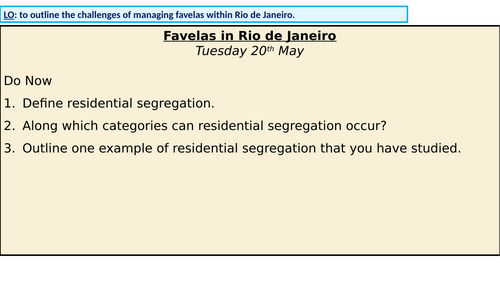
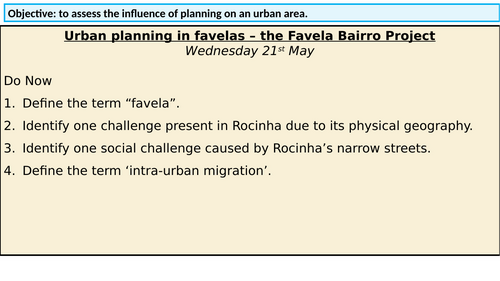
• a shanty town (squatter settlement) in an LIC or MIC
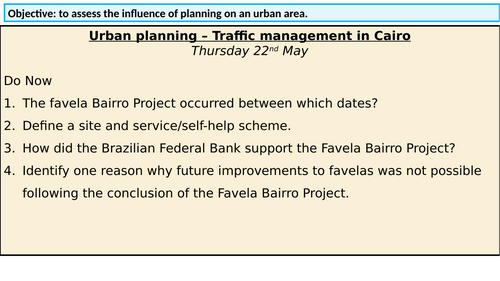
• providing infrastructure (either power or transport) for a city.
Something went wrong, please try again later.
This resource hasn't been reviewed yet
To ensure quality for our reviews, only customers who have purchased this resource can review it
Report this resourceto let us know if it violates our terms and conditions.
Our customer service team will review your report and will be in touch.
£10.00