


Albert Camus – The Absurd
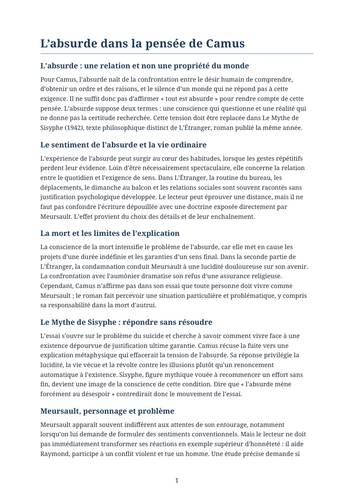
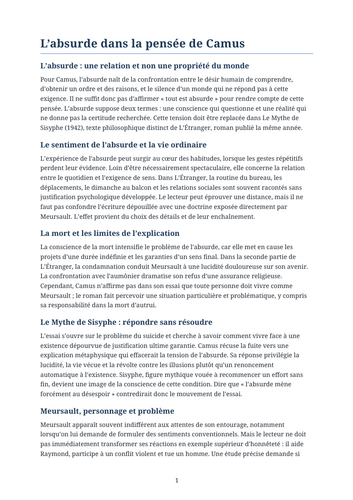
A comprehensive French-language study resource examining the concept of the absurd in Camus’s thought and its relationship to L’Étranger. It distinguishes Camus’s philosophical arguments from Meursault’s fictional experience while exploring meaning, death, lucidity, revolt, responsibility and the ethical limits of existential interpretation.
Key features:
- Clear explanation of the absurd as a relationship between the human desire for meaning and a world that offers no guaranteed answer
- Detailed introduction to Le Mythe de Sisyphe and its treatment of suicide, lucidity, revolt, transcendence and the problem of living without metaphysical certainty
- Careful comparison between Sisyphe and Meursault, stressing the difference between philosophical figure, essay and fictional protagonist
- Examination of ordinary routine, social expectations, mortality and the final confrontation with the chaplain as key ways in which the novel makes the absurd perceptible
- Focused analysis of the sun, heat, physical sensation and the murder, showing why sensory explanation must not be confused with moral justification
- Consideration of the trial, social judgement, colonial context and the unnamed Arab victim, ensuring that philosophical interpretation does not erase questions of responsibility
- Ten substantial exercise sections covering knowledge, analytical vocabulary, close reading, interpretation, argumentation, grammar, translation and critical comparison
- Dedicated dissertation preparation with detailed answers and a structured essay plan on how L’Étranger presents the experience of the absurd while preserving moral responsibility and the significance of the victim
Something went wrong, please try again later.
This resource hasn't been reviewed yet
To ensure quality for our reviews, only customers who have purchased this resource can review it
Report this resourceto let us know if it violates our terms and conditions.
Our customer service team will review your report and will be in touch.
£1.50