


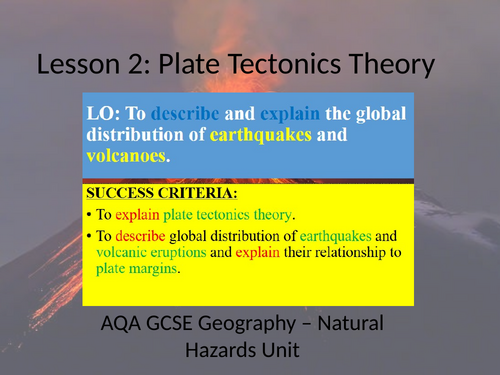
Lesson 2: Structure of the Earth & Plate Tectonic Theory – AQA GCSE Geography
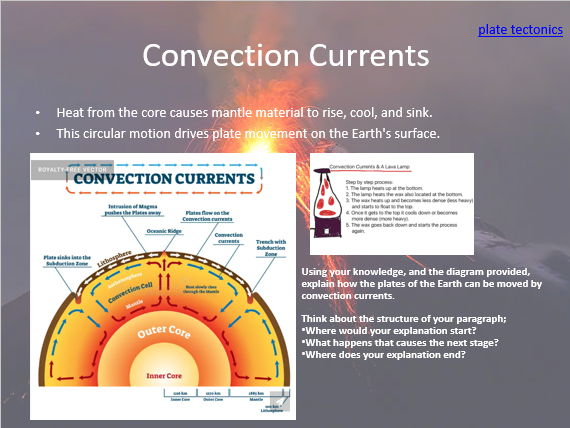
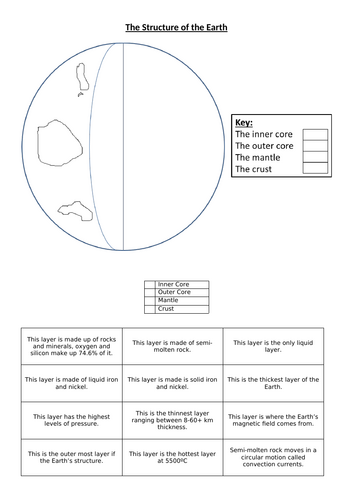
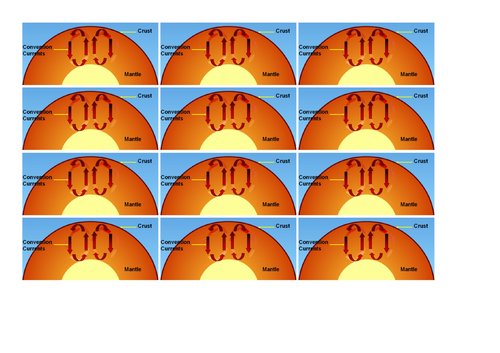
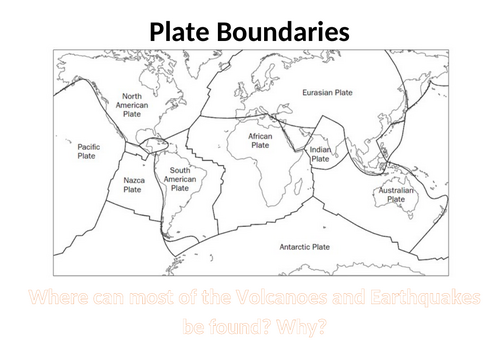
Students explore the layers of the Earth and the theory of plate movement, including convection currents, slab pull, and ridge push. A colouring/annotation task and lava lamp analogy help bring the science to life. All resources are included, and the PowerPoint can be adapted or changed to suit teachers’ needs, whether teaching high or lower ability classes.
Get this resource as part of a bundle and save up to 59%
A bundle is a package of resources grouped together to teach a particular topic, or a series of lessons, in one place.
Bundle
AQA GCSE Geography: The challenge of natural hazards unit
Natural Hazards Unit (Lessons 1–6) – AQA GCSE Geography This fully resourced 5-lesson unit introduces and develops the topic of Natural Hazards, aligned to the AQA GCSE Geography specification. It covers the types of natural hazards, structure of the Earth, plate tectonic theory, plate boundaries, reasons why people live in hazardous areas (Iceland), and strategies for reducing risk (the 3Ps: Prediction, Protection, Planning). Each lesson includes a structured, easy-to-follow PowerPoint, student worksheets, case studies (Japan and Nepal), and engaging tasks like matching activities, video links, diagrams, and exam-style questions. Every PowerPoint can be changed to suit teachers’ needs, making this unit flexible, adaptable, and ready to use in a wide range of classroom settings. Perfect for introducing or revising tectonic hazards. Lessons Covered: What are natural Hazards PLate tectonic Theory Plate Boundaries Living with the risk of tectonic hazards Earthquake case studies Ruducing the risk of tectonic hazards This comprehensive unit covers every key concept from the AQA GCSE Geography specification, using the Oxford GCSE 9–1 Second Edition textbook as a guide. Each lesson is carefully structured with clear learning objectives, differentiated tasks, and a variety of activities, including recap quizzes, case study analysis, diagram labelling, and exam-style questions with model answers. Topics include global atmospheric circulation, the formation and impacts of tropical storms, climate change links, extreme weather in the UK, and hazard management strategies. All PPT slides are fully editable so you can adapt them to suit your class, and the pack includes printable worksheets, case study resources, and suggested video links. Perfect for saving time while delivering an engaging, curriculum-focused sequence of lessons. Complete Climate Change unit designed for GCSE Geography, covering natural and human causes, evidence, impacts, mitigation, and adaptation strategies. Each lesson includes detailed case studies, engaging tasks, diagrams, videos, and editable worksheets to keep students actively involved. The unit is fully adaptable to suit different teaching styles and abilities, with recap activities, assessment opportunities, and extension challenges built in. Perfect for delivering the topic with confidence and depth while saving hours of planning. Lessons: Evidence of climate change Natural causes of climate change Human causes of climate change Climate change mitigation and adaptation
£8.00
Bundle
AQA Geography Natural Hazards Unit
Natural Hazards Unit (Lessons 1–6) – AQA GCSE Geography This fully resourced 5-lesson unit introduces and develops the topic of Natural Hazards, aligned to the AQA GCSE Geography specification. It covers the types of natural hazards, structure of the Earth, plate tectonic theory, plate boundaries, reasons why people live in hazardous areas (Iceland), and strategies for reducing risk (the 3Ps: Prediction, Protection, Planning). Each lesson includes a structured, easy-to-follow PowerPoint, student worksheets, case studies (Japan and Nepal), and engaging tasks like matching activities, video links, diagrams, and exam-style questions. Every PowerPoint can be changed to suit teachers’ needs, making this unit flexible, adaptable, and ready to use in a wide range of classroom settings. Perfect for introducing or revising tectonic hazards. Lessons Covered: What are natural Hazards PLate tectonic Theory Plate Boundaries Living with the risk of tectonic hazards Earthquake case studies Ruducing the risk of tectonic hazards
£4.00
Something went wrong, please try again later.
This resource hasn't been reviewed yet
To ensure quality for our reviews, only customers who have purchased this resource can review it
Report this resourceto let us know if it violates our terms and conditions.
Our customer service team will review your report and will be in touch.
£1.50