


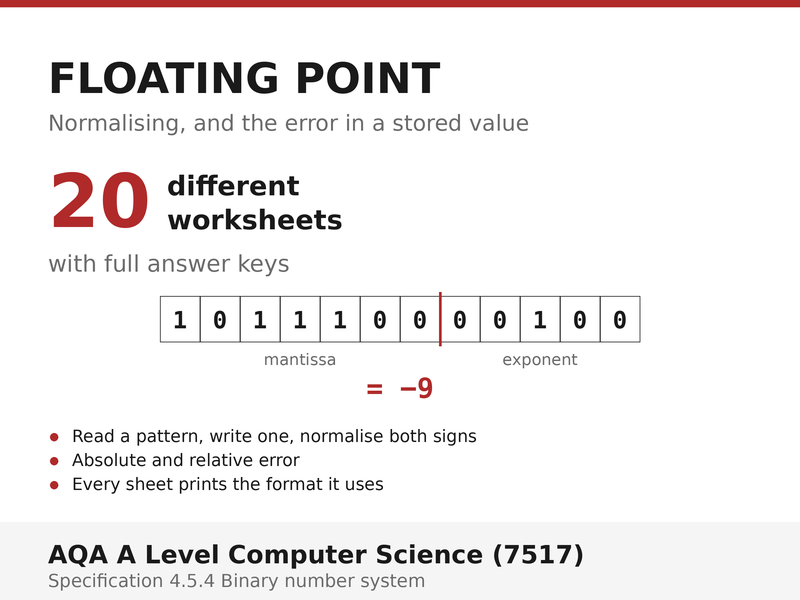
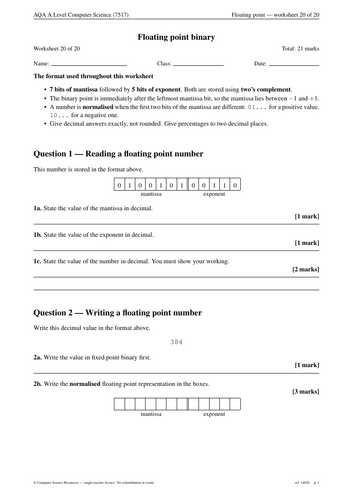

Floating point binary practice for AQA A Level Computer Science (7517):
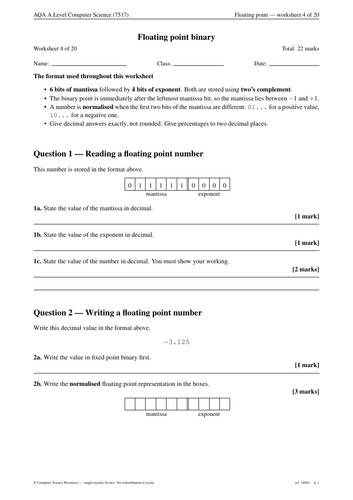
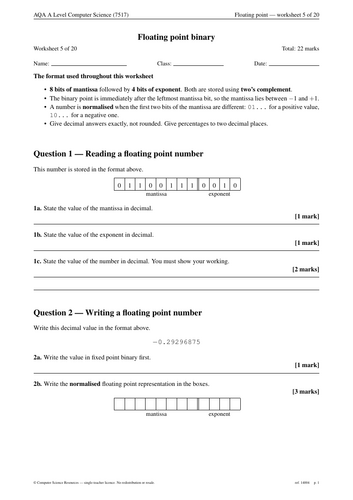
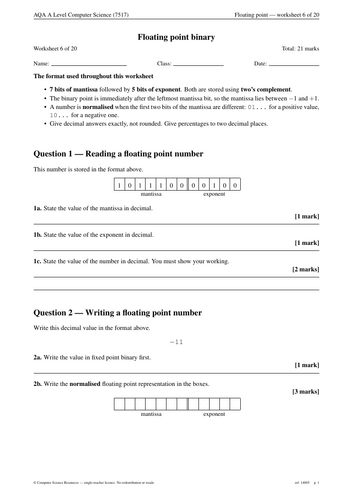
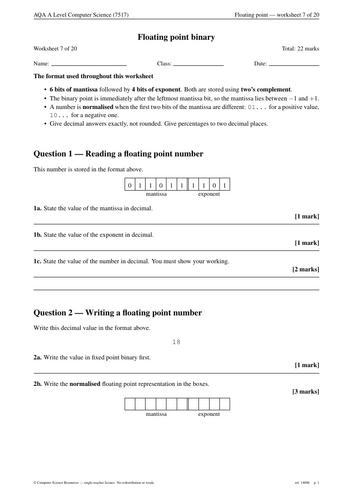
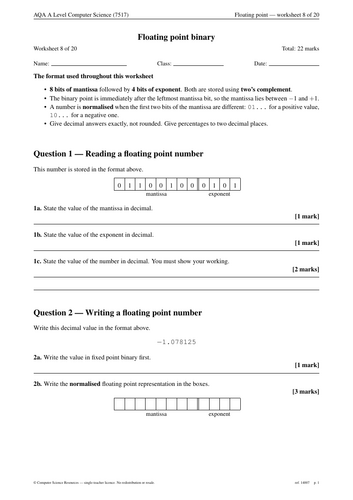
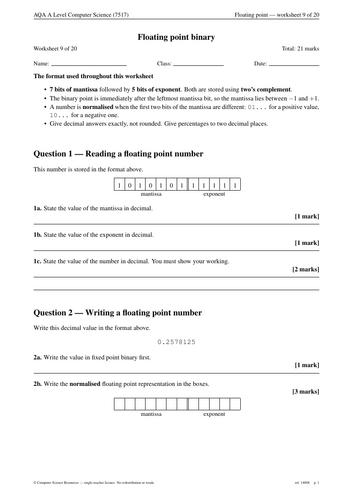
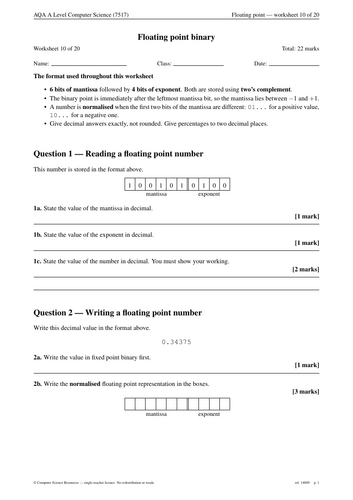
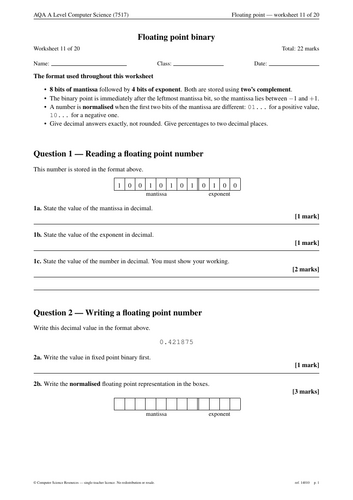
twenty different worksheets on reading, writing and normalising floating
point numbers, and on the error in a value the format cannot store, each with
a complete answer key.
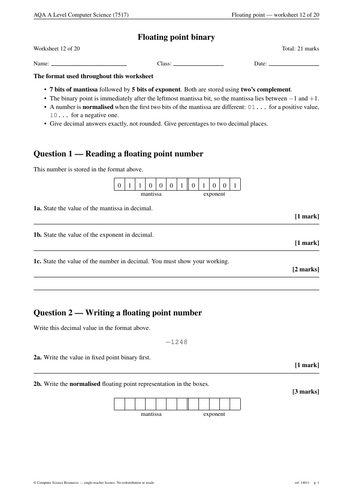
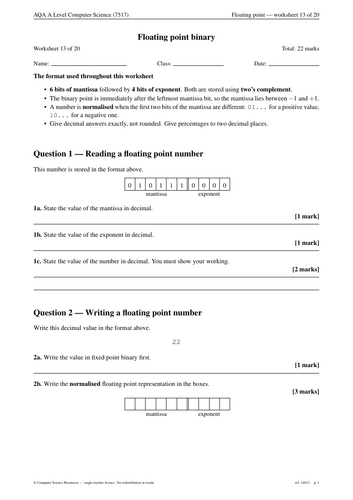
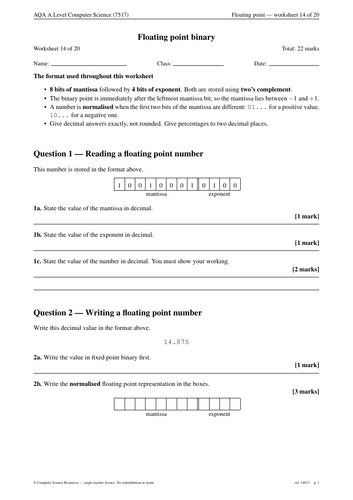
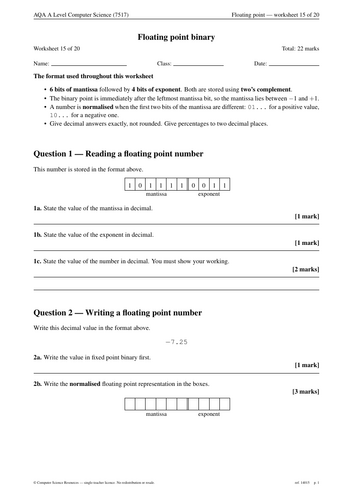
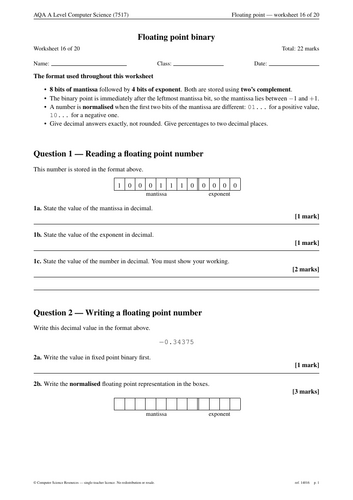
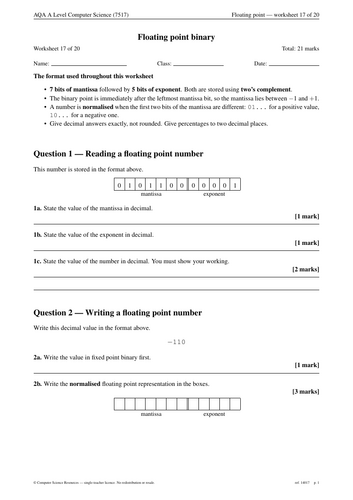
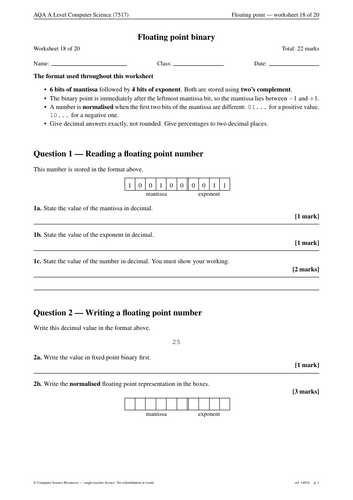
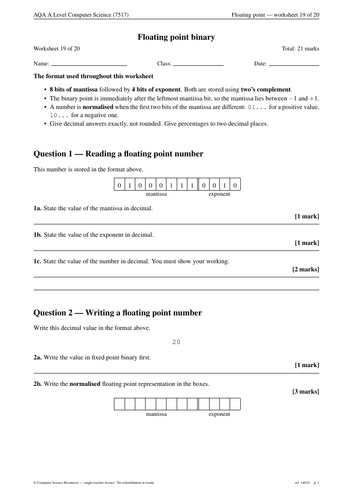
AQA states in the specification that exam questions use a format in which
both the mantissa and the exponent are two’s complement, but the number of
bits changes from paper to paper: June 2018 used a 7-bit mantissa with a
5-bit exponent, June 2023 used 8 and 4. These sheets do the same. They use
8+4, 7+5 and 6+4, and every sheet prints its own format at the top of the
page.
WHAT YOU GET
- 20 worksheets, 2 pages each, numbered 01 to 20
- 20 matching answer keys
- A contents table listing the format and the final written question of each
sheet, so you can pick one without opening all twenty
WHAT IS ON EVERY SHEET
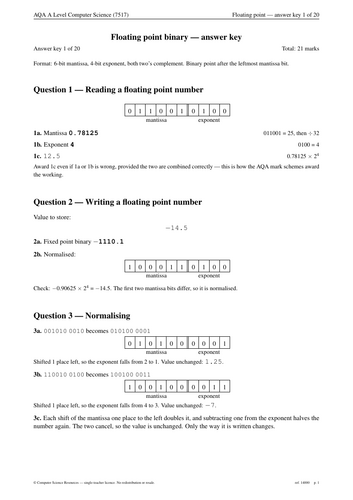
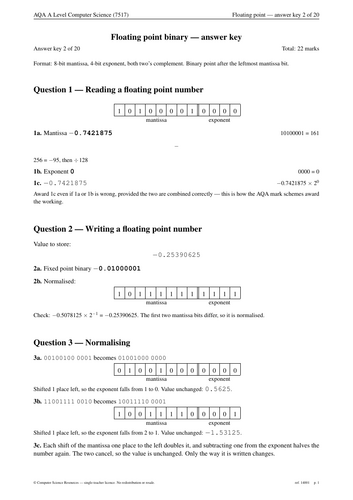
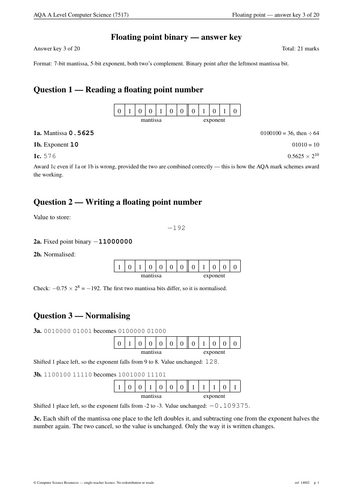
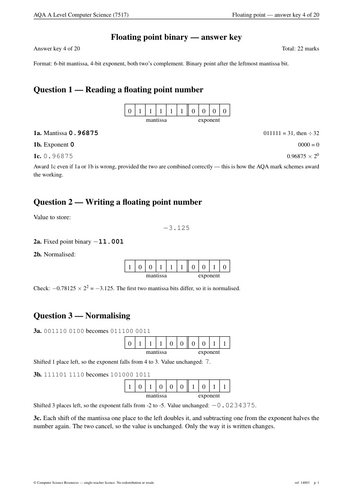
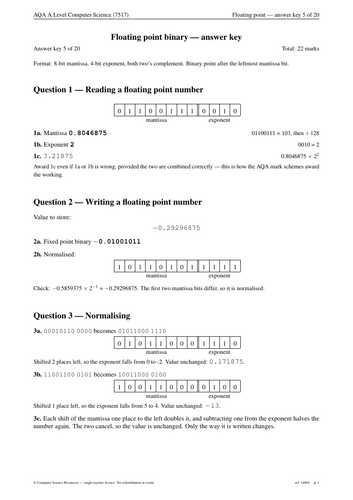
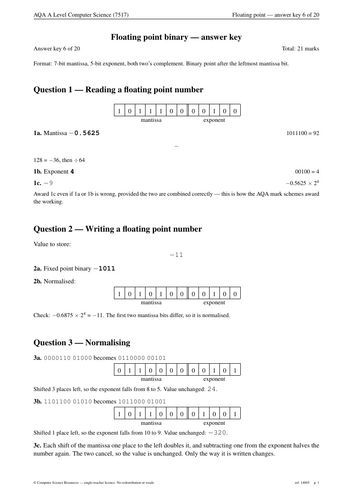
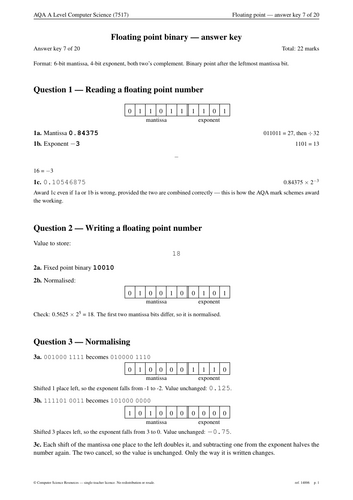
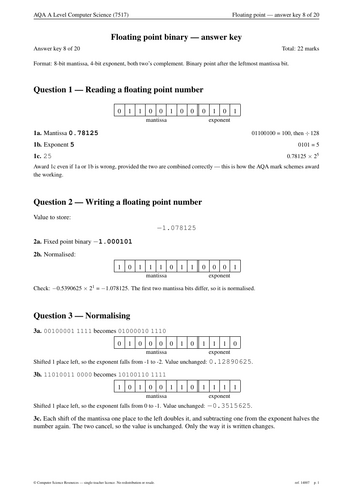
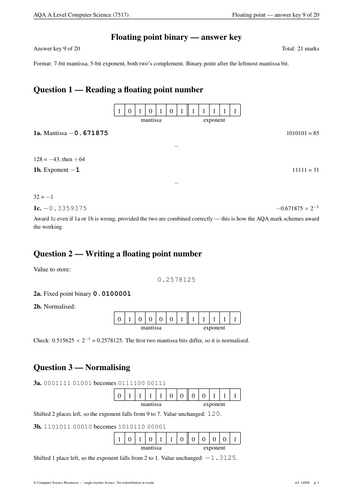
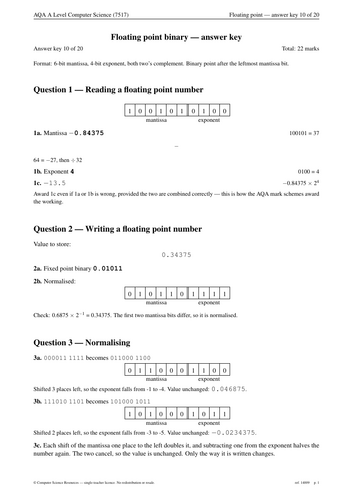
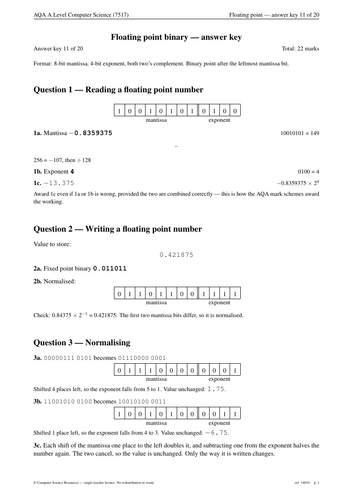
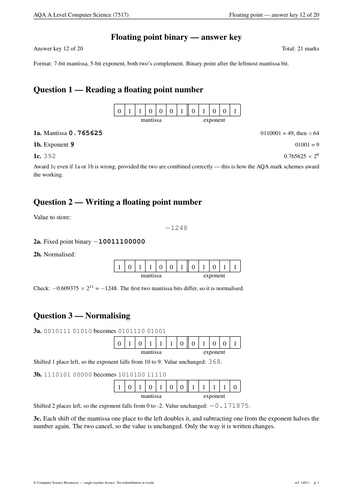
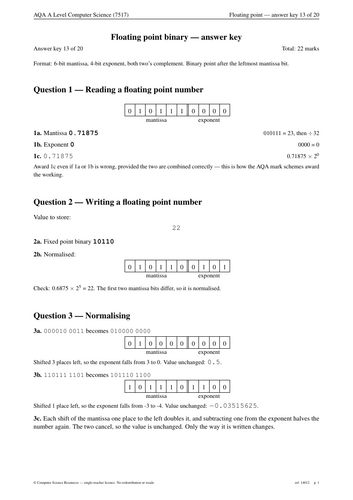
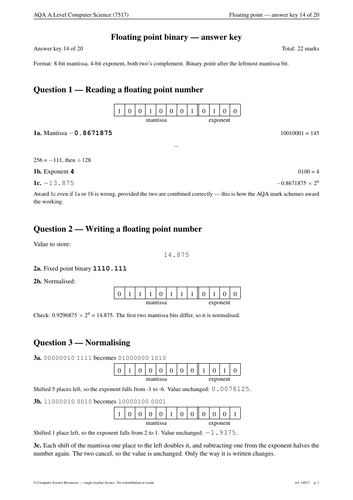
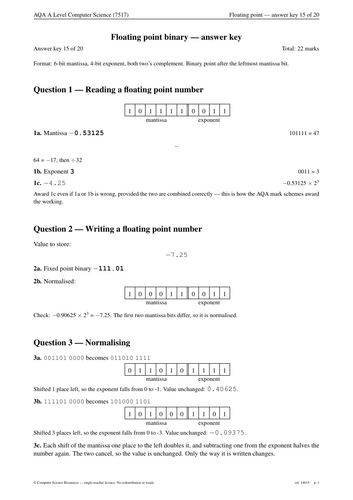
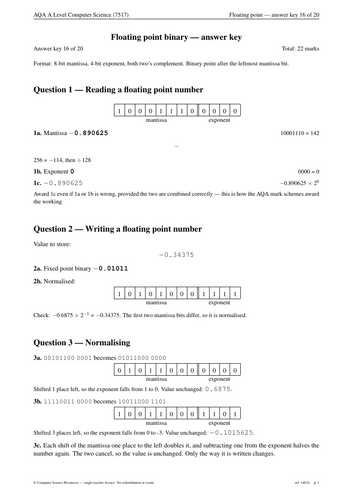
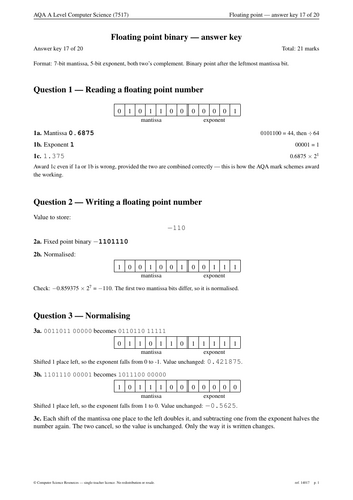
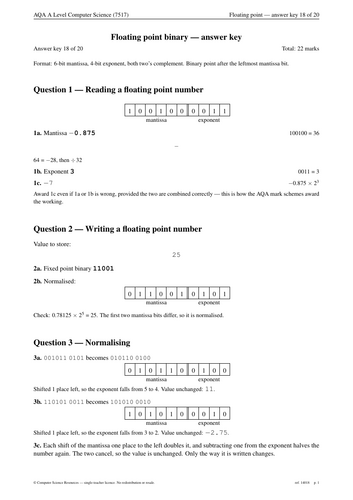
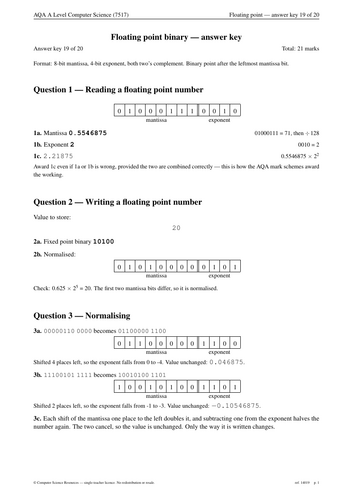
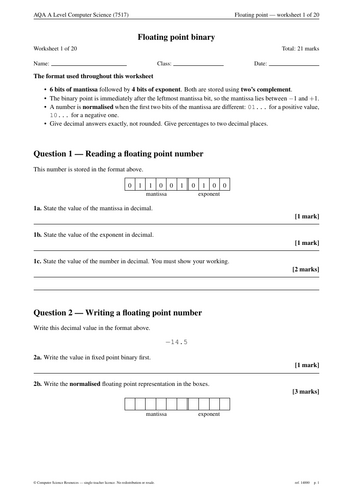
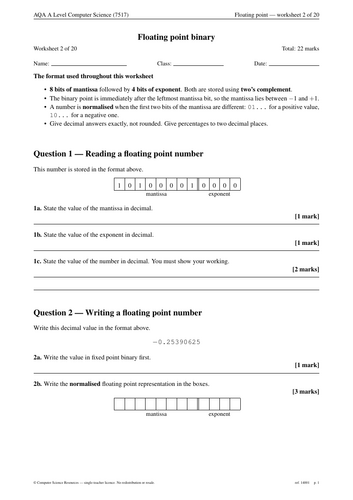
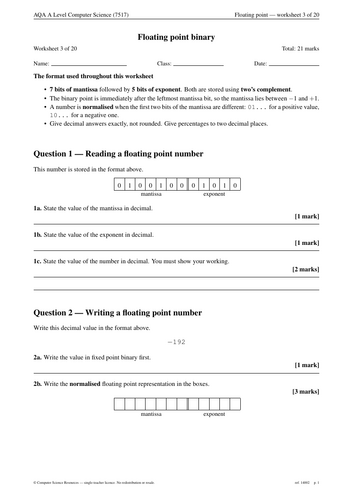
Question 1 reads a floating point number and asks for the mantissa, the
exponent and the value, in decimal. Question 2 goes the other way: a decimal
value, written first in fixed point binary, then normalised into the boxes.
Question 3 normalises two numbers - one with a positive mantissa and one with
a negative mantissa. Question 4 gives a value the format cannot store
exactly, together with the pattern the computer stores instead, and asks for
the absolute and the relative error. Question 5 is a written question on
precision, range, underflow, overflow, or why numbers are normalised at all.
That covers specification 4.5.4.4 to 4.5.4.9. Sheets run from 21 to 22 marks.
BOTH SIGNS, WHICH IS WHAT THE SPECIFICATION ASKS FOR
The specification says students should “be able to normalise un-normalised
floating point numbers with positive or negative mantissas”. Most resources
work through the positive case and stop. Question 3 does both on every single
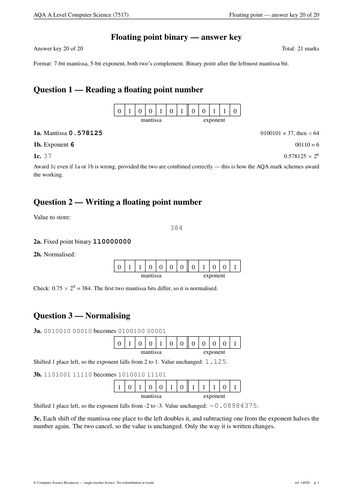
sheet, and the answer key shows how many places the mantissa shifted and what
the exponent became.
NO QUESTION HAS TWO CORRECT ANSWERS
Every value a student is asked to convert fits its format exactly. That is
deliberate: when a value does not fit, the answer depends on whether your
department rounds or truncates, and the AQA mark schemes themselves accept
both. None of these sheets asks a student to make that choice.
The one value that cannot be stored exactly is in question 4 - and there the
stored pattern is given, so what is asked for is the error, not the rounding.
Where the binary point sits, what counts as normalised, and how many bits go
to each field are printed in the conventions at the top of every page, not
assumed from a textbook.
FORMAT
PDF, A4, print-ready. No macros, nothing to enable, nothing that stops
working when your IT policy changes. Twenty genuinely different versions, so
you already have a fresh sheet for every class, every resit and every
homework.
Licensed for the purchasing teacher and their own classes.
Something went wrong, please try again later.
This resource hasn't been reviewed yet
To ensure quality for our reviews, only customers who have purchased this resource can review it
Report this resourceto let us know if it violates our terms and conditions.
Our customer service team will review your report and will be in touch.
£6.00