


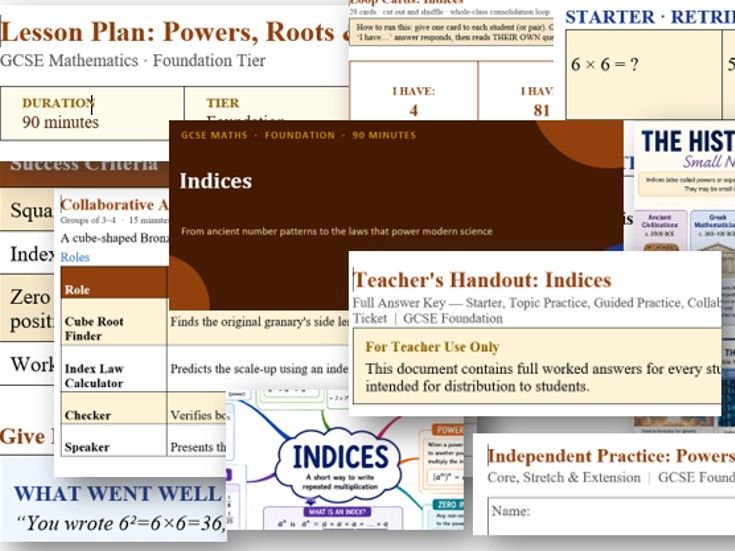
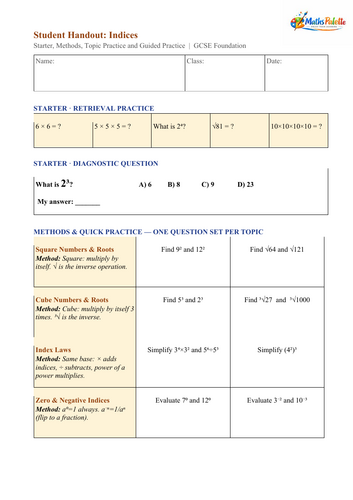
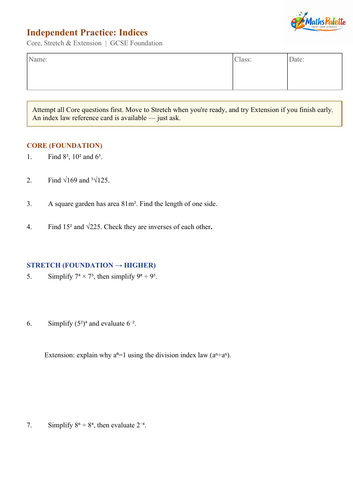
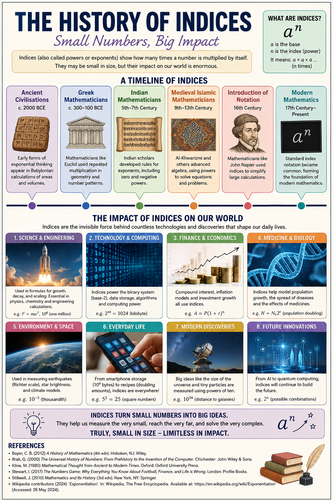
This lesson takes GCSE Foundation students from square and cube numbers through to the three index laws and the trickiest topic of all - zero and negative indices - and makes every rule feel earned, not memorised. Real mathematical history runs through the whole lesson: Babylonian clay tablets, the 2,000-year unsolved Delian Problem, Descartes inventing modern notation in 1637. Students aren’t just learning rules; they’re seeing where the rules came from.
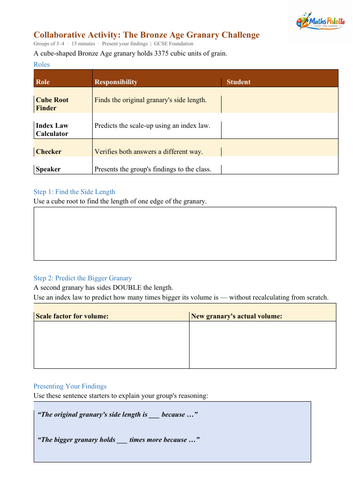
The lesson’s standout moment is a genuine discovery activity: rather than being told why anything to the power 0 equals 1, students uncover the pattern themselves, working out the missing values in a sequence of powers of 2 with a partner before the rule is ever named. It’s the kind of “aha” moment that makes an abstract rule stick. From there, everything builds toward the Bronze Age Granary Challenge - groups become archaeologists, using a cube root to uncover an ancient granary’s true size, then applying an index law to predict a larger one without recalculating from scratch.
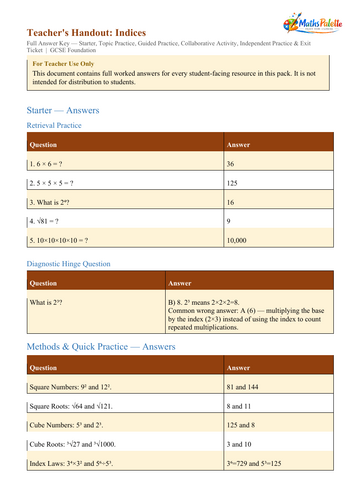
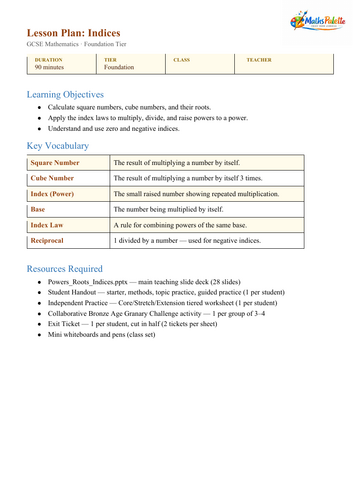
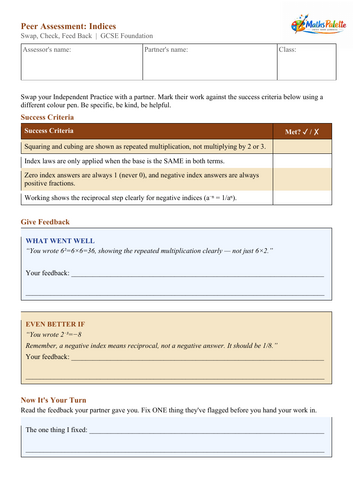
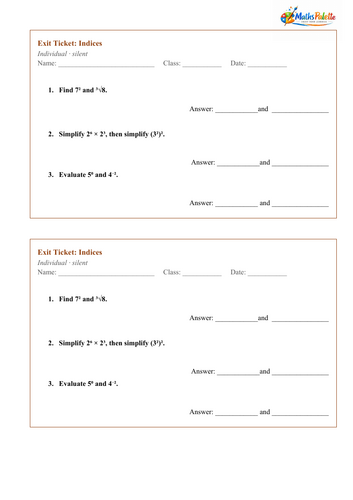
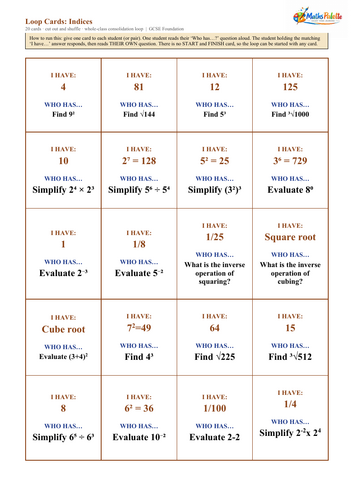
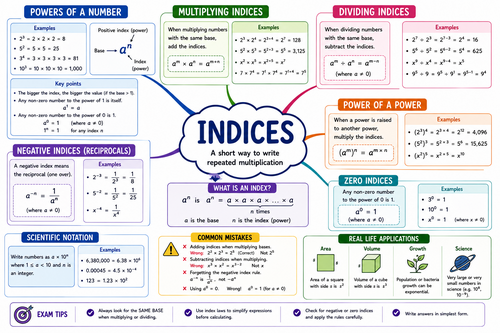
Every topic is taught with a full worked example followed immediately by its own practice question, keeping pace brisk without losing anyone. Includes the complete slide deck plus a full set of matching resources: Student Handout, tiered Independent Practice, the Bronze Age Granary Challenge, Peer Assessment, Exit Ticket, Loop Cards, Teacher’s Handout with a complete answer key, and a Teacher’s Lesson Plan with full timing across every phase of the lesson. Beside these, there are Loop cards, a Mind Map, a History Poster to enhance students’ learning experience and engagement.
Something went wrong, please try again later.
This resource hasn't been reviewed yet
To ensure quality for our reviews, only customers who have purchased this resource can review it
Report this resourceto let us know if it violates our terms and conditions.
Our customer service team will review your report and will be in touch.
£5.00