


L’Étranger – Irony
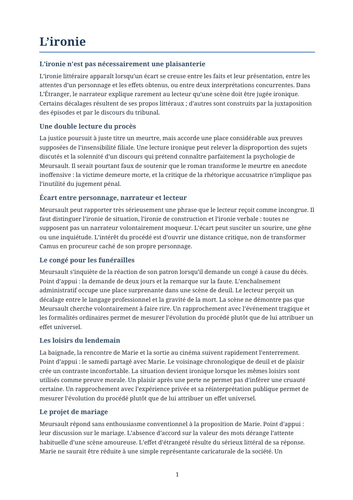
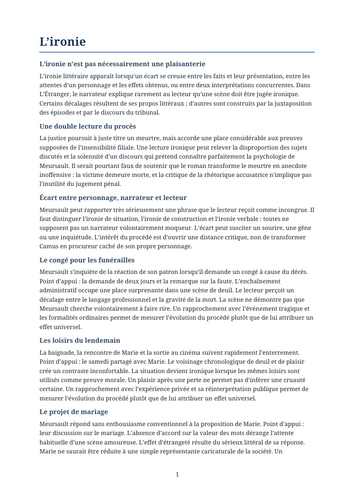
A comprehensive French-language study resource examining irony in Albert Camus’s L’Étranger. It explores irony of situation, verbal irony, pragmatic mismatch, reversal and judicial disproportion while showing that irony often arises from contrasts between events, expectations and interpretations rather than from an openly mocking narrator.
Key features:
- Clear explanation of literary irony as a gap between facts, expectations and interpretation, rather than simply as humour or mockery
- Detailed study of Meursault’s request for funeral leave, where professional language and administrative concerns sit uneasily beside bereavement
- Examination of the day with Marie after the funeral, showing how the contrast between grief and pleasure later acquires a new meaning at the trial
- Focused analysis of the marriage conversation, where Meursault’s literal seriousness conflicts with conventional romantic expectations
- Detailed treatment of the examining magistrate and the crucifix, highlighting the tension between criminal judgement and expectations of religious conformity
- Exploration of judicial irony, particularly the disproportionate attention paid to funeral behaviour during a murder trial
- Analysis of Meursault becoming a spectator of other people’s accounts of his own life, creating a reversal between narrator and object of narration
- Ten substantial exercise sections, detailed answers and a developed dissertation plan on whether the novel’s irony primarily targets social conventions, judicial discourse or the limitations of Meursault’s own perspective
Something went wrong, please try again later.
This resource hasn't been reviewed yet
To ensure quality for our reviews, only customers who have purchased this resource can review it
Report this resourceto let us know if it violates our terms and conditions.
Our customer service team will review your report and will be in touch.
£1.50