


L’Étranger – Truth, Sincerity and Hypocrisy
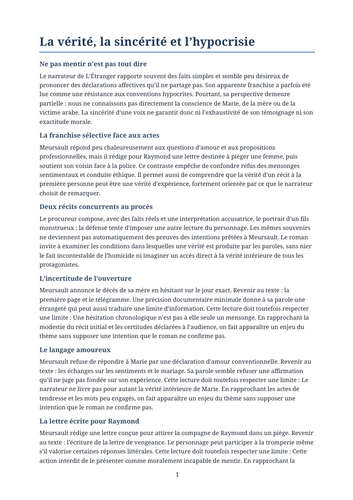
A comprehensive French-language study resource examining truth, sincerity and hypocrisy in Albert Camus’s L’Étranger. It explores Meursault’s apparent frankness, the limits of first-person narration, complicity in deception, institutional expectations and competing courtroom narratives while distinguishing personal sincerity from complete truth or moral innocence.
Key features:
- Detailed analysis of Meursault’s restrained and apparently candid narrative voice, including the distinction between sincerity and complete knowledge
- Focused study of the uncertain opening and the telegram, showing how limited information can produce ambiguity without proving dishonesty
- Examination of Meursault’s responses to Marie, contrasting emotional honesty with the limits of his access to her inner life
- Analysis of the deceptive letter written for Raymond, demonstrating that literal speech does not make Meursault morally incapable of participating in deception
- Detailed treatment of the examining magistrate and expectations of repentance, showing how personal frankness can conflict with institutional assumptions
- Exploration of the prosecutor’s reinterpretation of funeral evidence, where factually accurate details are arranged into a reductive moral portrait
- Examination of the final confrontation with the chaplain, including Meursault’s attachment to what he considers authentic speech without presenting sincerity as absolution
- Ten substantial exercise sections, detailed answers and a developed dissertation plan on whether Meursault’s sincerity constitutes a form of truth or is limited by the partial nature of first-person narration
Something went wrong, please try again later.
This resource hasn't been reviewed yet
To ensure quality for our reviews, only customers who have purchased this resource can review it
Report this resourceto let us know if it violates our terms and conditions.
Our customer service team will review your report and will be in touch.
£1.50