


Component 1: Applied anatomy and physiology
GCSE PE – The Skeletal System & Classification of Bones
Introduce students to the skeletal system with this engaging and structured GCSE PE PowerPoint resource, designed to develop their understanding of the functions of the skeleton, bone structure and the classification of bones, with links to sporting performance.
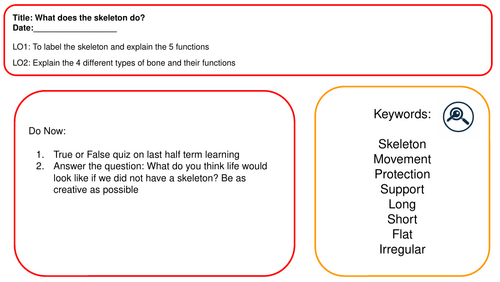
Students begin by exploring the role of the skeleton, identifying key bones within the human body and learning the five main functions of the skeletal system: support, protection, movement, blood cell production and mineral storage. Through interactive labelling activities, quizzes, mini-whiteboard tasks and sporting examples, students develop their understanding of how the skeleton supports the body and contributes to performance.
The lessons then explore the structure of the vertebral column, including its different regions and the role of intervertebral discs in cushioning and movement. Students examine the composition of bones, including cartilage, compact bone, spongy bone, bone marrow and the periosteum, alongside the importance of calcium, vitamin D and ossification in bone development and health.
Students also learn to classify bones into the four main types: long, short, flat and irregular. They explore the characteristics, functions and sporting applications of each type of bone, applying their knowledge to a range of sporting scenarios and activities.
The resource includes retrieval practice, collaborative activities, skeleton labelling tasks, sorting activities, sporting application questions and opportunities for students to explain how skeletal structures contribute to movement, support and protection in sport.
Included in this resource:
Introduction to the skeletal system
Labelling the major bones of the skeleton
The five functions of the skeleton
Support, protection, movement, blood cell production and mineral storage
Sporting examples of skeletal functions
Structure and regions of the vertebral column
Intervertebral discs and their role
Bone structure and composition
Cartilage, periosteum, bone marrow, compact and spongy bone
Ossification and bone development
The importance of calcium and vitamin D
Classification of long, short, flat and irregular bones
Characteristics and functions of the four bone types
Sorting and identification activities
Application of bone types to sporting performance
Retrieval practice, quizzes and mini-whiteboard activities
Stretch-and-challenge and written application tasks
Ideal for GCSE PE students studying the skeletal system, developing anatomical knowledge and applying their understanding of bones and skeletal functions to sporting performance.
Something went wrong, please try again later.
This resource hasn't been reviewed yet
To ensure quality for our reviews, only customers who have purchased this resource can review it
Report this resourceto let us know if it violates our terms and conditions.
Our customer service team will review your report and will be in touch.
£3.00