


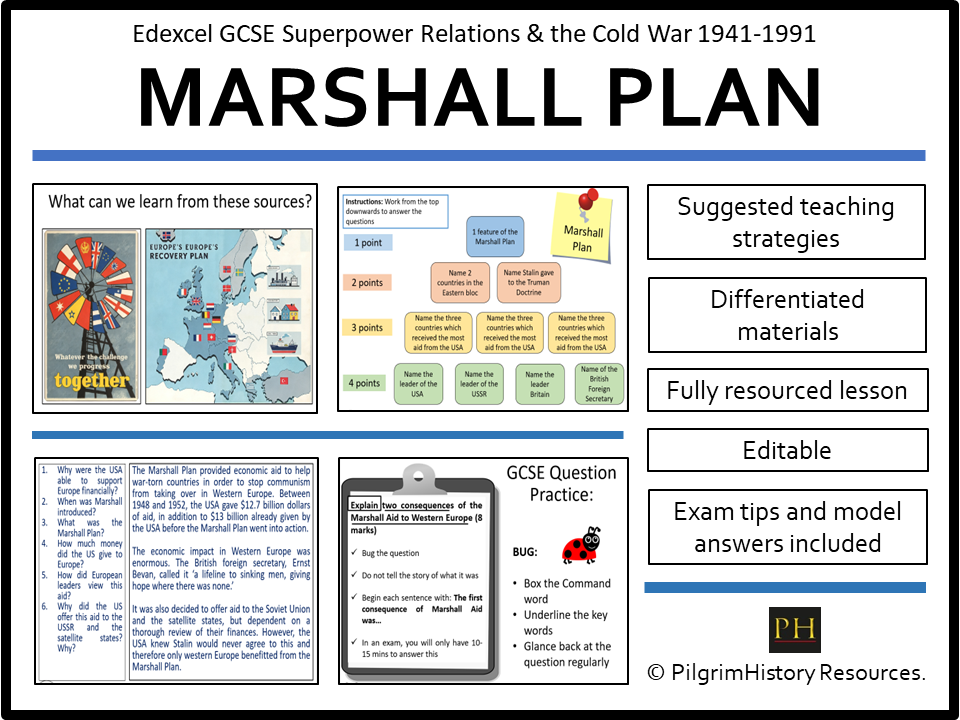
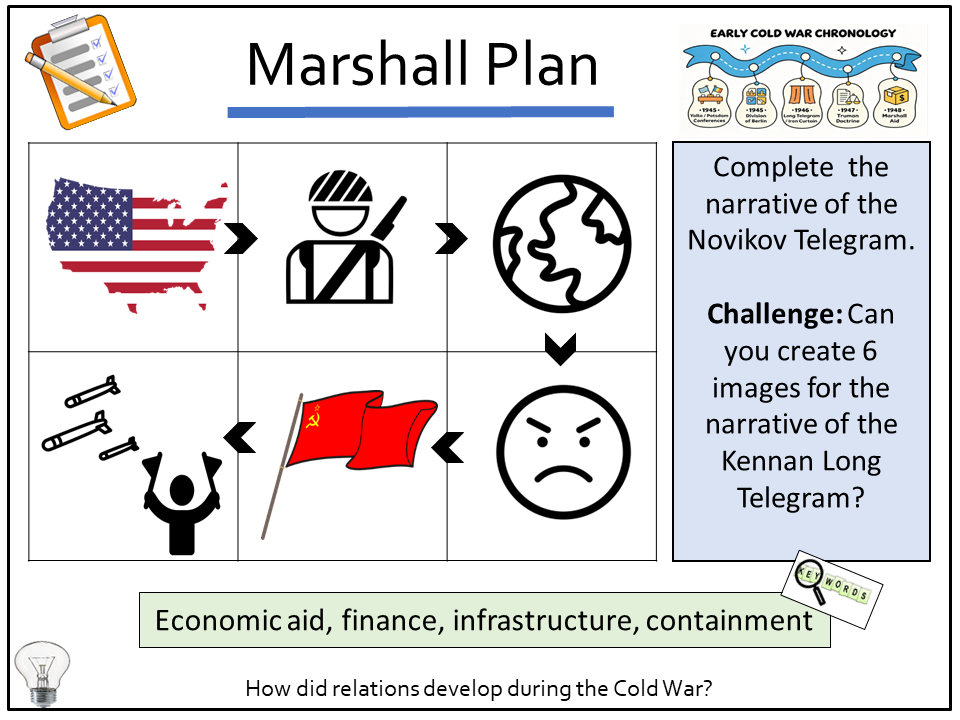
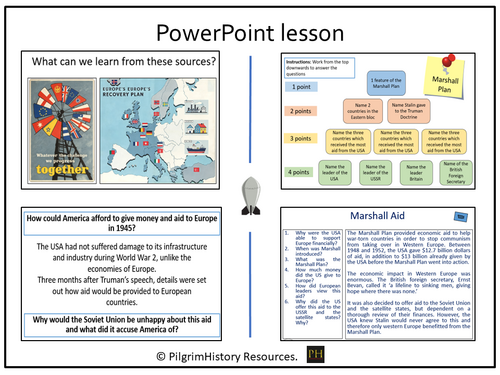
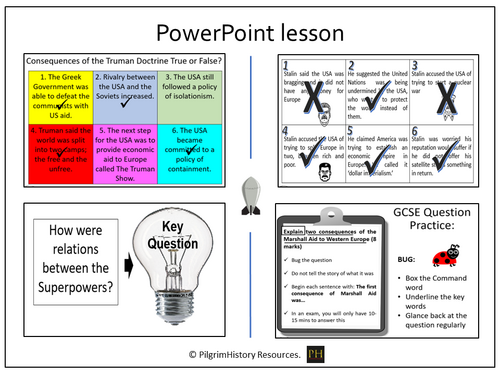
The aim of this lesson is to explore the significance of the Marshall Plan and assess how American financial aid increased tensions between the USA and the Soviet Union.
Students examine the financial aid offered to Western Europe and consider how the Marshall Plan supported the Truman Doctrine.
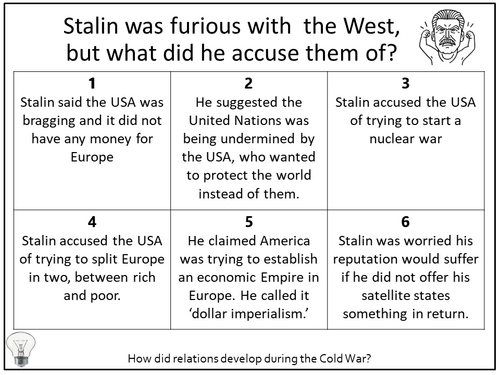
They also explore Stalin’s reaction to what he described as “dollar imperialism” and why the Soviet Union viewed American aid with suspicion.
Differentiated questions help students investigate why the USA offered aid to Eastern European countries, how America could afford to provide such large sums of money and which countries received the most Marshall Aid.
Students then analyse written information to make inferences about superpower relations and growing Cold War tensions.
The plenary includes a series of questions to recap the main points of the lesson and consolidate learning from previous lessons in the Cold War sequence.
The lesson includes GCSE exam question practice focusing on a consequences question. Tips and guidance help students structure their answers, with a model answer provided where needed.
The lesson is enquiry based, with a key question using a lightbulb introduced at the start and revisited throughout this and subsequent lessons to show the progress of learning.
The resource includes retrieval practice, suggested teaching strategies, differentiated materials and GCSE exam practice.
It also comes in PowerPoint format if there is a wish to adapt and change.
Something went wrong, please try again later.
This resource hasn't been reviewed yet
To ensure quality for our reviews, only customers who have purchased this resource can review it
Report this resourceto let us know if it violates our terms and conditions.
Our customer service team will review your report and will be in touch.
£3.00