


A focused OCR A-Level Media Studies theory lesson applying George Gerbner’s Cultivation Theory to Stranger Things and Lupin, with a clear exam focus on LFTVD theory application.
This fully editable PowerPoint (.pptx) lesson is designed as a stand-alone theory, recap or revision lesson for OCR A-Level Media Studies Paper 2: Evolving Media, Section B – Long Form Television Drama.
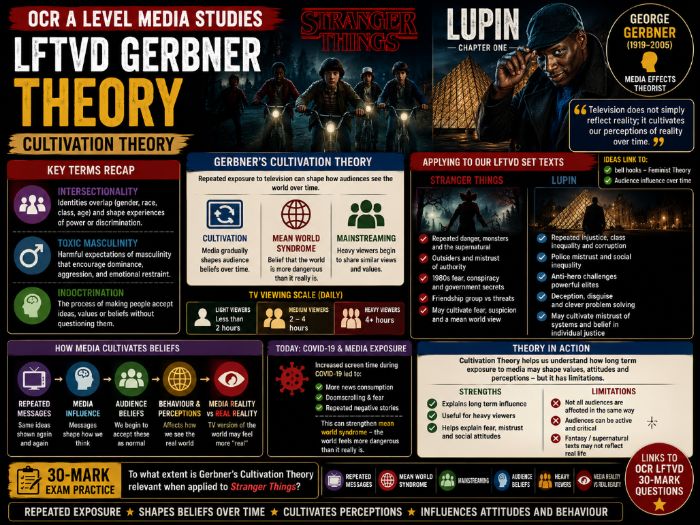
The lesson introduces students to George Gerbner’s Cultivation Theory, including the idea that repeated exposure to television and media messages can shape audience beliefs over time. Students explore key concepts such as cultivation, mean world syndrome and mainstreaming, before considering how the theory can be applied to OCR set texts including Stranger Things, Lupin and wider media products such as newspapers.
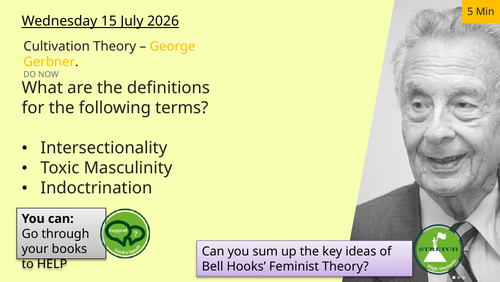
Students begin by recapping useful theory terms including intersectionality, toxic masculinity and indoctrination, linking these to wider media theory and repeated media messaging. This helps students connect Gerbner to previous theory work, including bell hooks and audience influence.
The lesson then explores how repeated media messages can shape audience beliefs, using visual analysis and the idea of media reality vs real reality. Students consider how heavy viewers may begin to see the world as more dangerous than it really is, linking directly to mean world syndrome. The lesson also includes a COVID-19 media exposure discussion, encouraging students to consider how increased screen time, doomscrolling and repeated negative messages may strengthen audience fear and anxiety.
Students then apply Gerbner to LFTVD trailers and set texts, comparing repeated messages in Stranger Things and Lupin. The lesson asks students to analyse repeated ideas about danger, identity, social roles, power, class, deception, justice, gender roles, authority and mistrust. Students compare how each text may cultivate different fears or attitudes in audiences.
The lesson builds towards an exam-style response: To what extent is Gerbner’s Cultivation Theory relevant when applied to Stranger Things? Students are guided to consider repeated danger and violence, gender roles, social norms, mean world syndrome, mainstreaming, trust in authority and the limitations of applying Gerbner to a fantasy/supernatural LFTVD text. This links clearly to OCR A-Level Media Studies LFTVD 30-mark questions, especially where students need to apply and evaluate media theory.
This lesson covers
OCR A-Level Media Studies
Paper 2: Evolving Media
Section B: Long Form Television Drama
LFTVD
Stranger Things
Lupin
George Gerbner
Cultivation Theory
Mean world syndrome
Mainstreaming
Heavy viewers
Media reality vs real reality
Audience beliefs
Repeated media messages
Gender roles
Social norms
Danger and threat
Authority and mistrust
COVID-19 media exposure
Doomscrolling
Media influence
Theory evaluation
30-mark exam prepa
Something went wrong, please try again later.
This resource hasn't been reviewed yet
To ensure quality for our reviews, only customers who have purchased this resource can review it
Report this resourceto let us know if it violates our terms and conditions.
Our customer service team will review your report and will be in touch.
£5.00