




A complete OCR GCSE Media Studies lesson teaching students how to identify and analyse camera movement, including panning, tilting, zoom, tracking/dolly, handheld and arc movements. Including two videos for Task One and Task Two.
This fully editable PowerPoint (.pptx) lesson is suitable for GCSE Media Studies students and works well as a follow-up to an introductory camerawork lesson. It helps students move beyond simply naming camera shots and angles by focusing specifically on how camera movement creates meaning, mood, pace, tension and audience response.
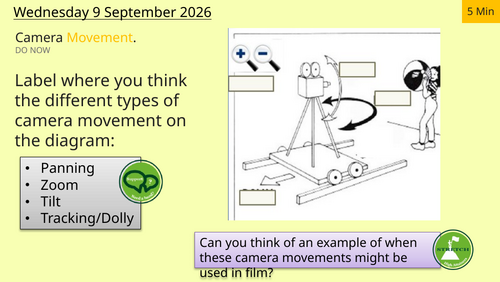
The lesson begins with a Do Now task where students label different types of camera movement on a diagram, including panning, zoom, tilt and tracking/dolly, before considering examples of when these movements might be used in film.
Students are introduced to the key term camera movement, defined as the way a director uses different types of camera movement on screen. The lesson objectives focus on using terminology accurately, giving examples of camerawork and discussing the effects created by camera movement.
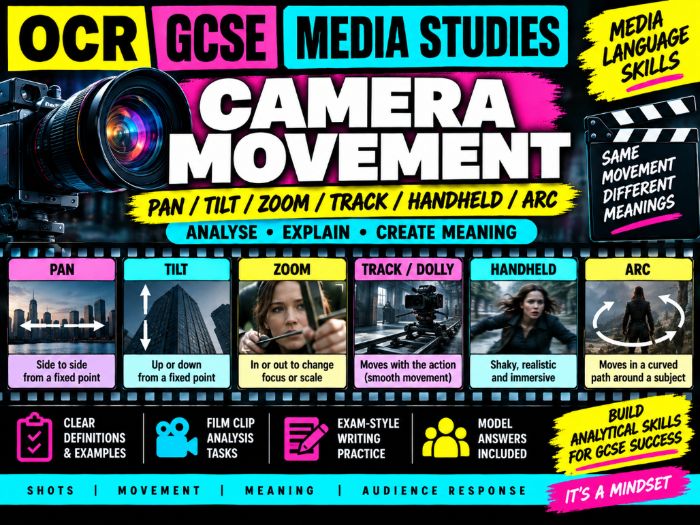
The lesson includes clear definitions of key camera movement terminology. Students learn that a pan moves side to side from a fixed point, a tilt moves up or down from a fixed point, a zoom makes something appear closer or further away, tracking/dolly follows the action smoothly, handheld camerawork creates a shaky or realistic effect, and an arc moves in a curved path around a subject.
Students then complete a note-taking task on camera movement, with focus on panning, arc, tilting, zoom and tracking/dolly. The lesson asks students to consider which camera movement would work best for filming a car chase, helping them connect camera movement to genre, action and audience immersion.
The main analysis task focuses on how camera movement creates effects in an action/adventure sequence, using examples linked to Katniss, Cinna, Peeta and Finnick. Students analyse movement types such as tracking, arc and handheld and explain how they create urgency, panic, momentum, chaos, vulnerability and danger.
Something went wrong, please try again later.
This resource hasn't been reviewed yet
To ensure quality for our reviews, only customers who have purchased this resource can review it
Report this resourceto let us know if it violates our terms and conditions.
Our customer service team will review your report and will be in touch.
£5.50