


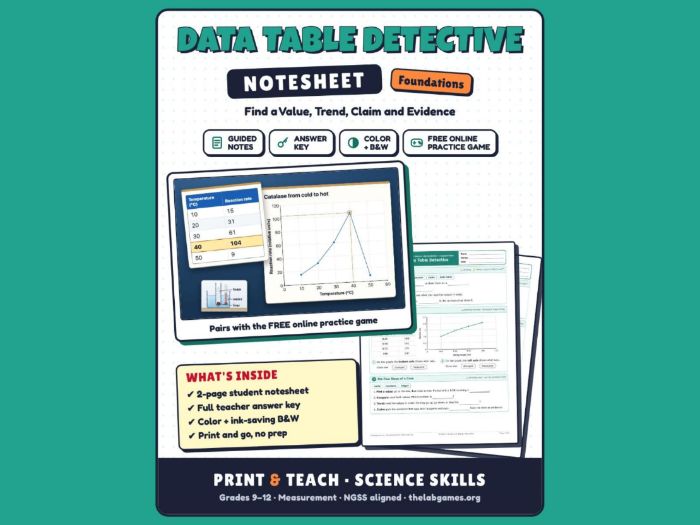
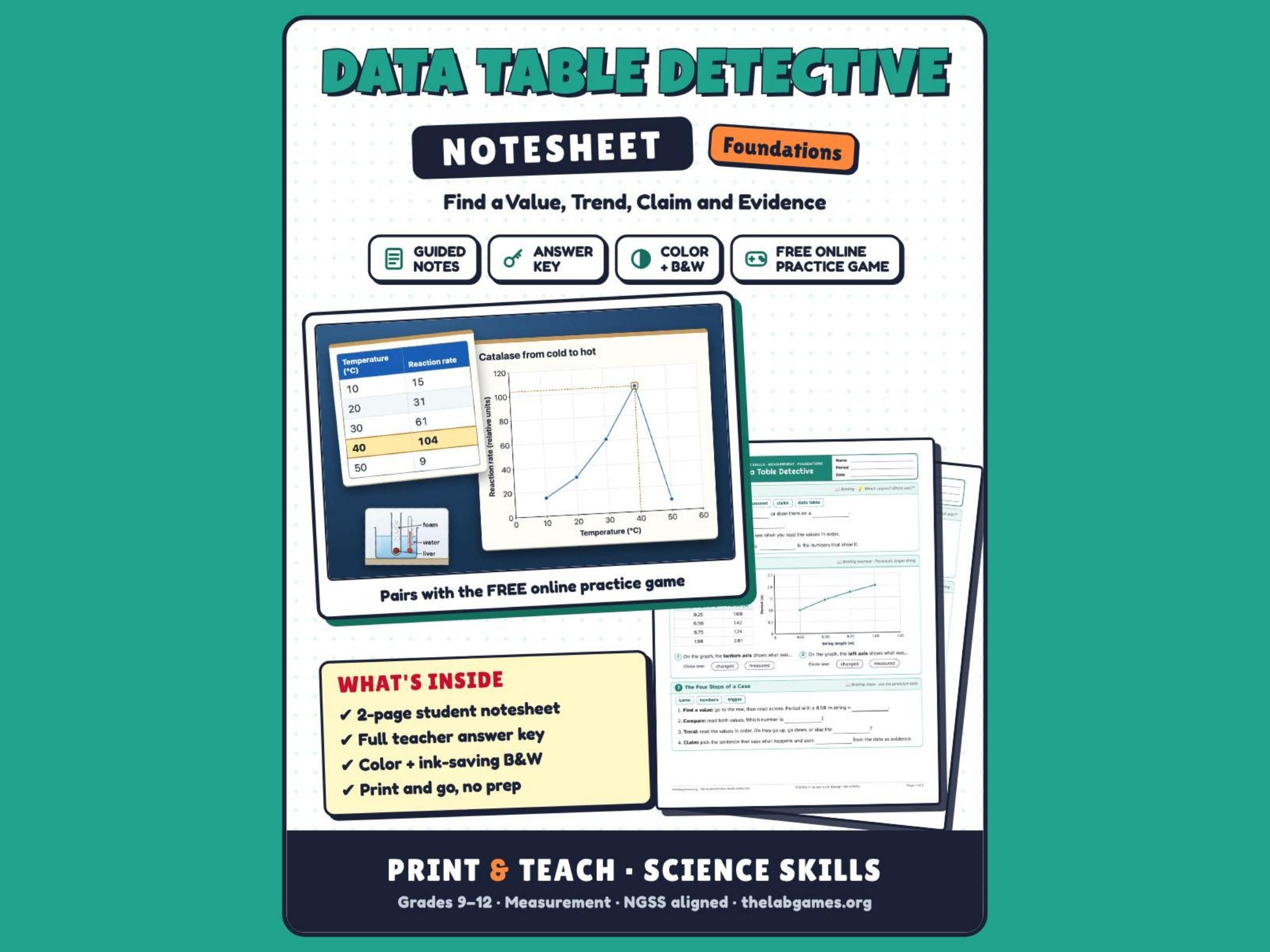
Turn students into careful data detectives. In this roomy, picture-first 2-page notesheet, students fill in short sentences on data tables, graphs, trends, claims and evidence, then see the same pendulum data as a table and as a line graph and decide which column and axis show what was changed and what was measured. They learn the four steps of every case (find a value, compare, describe the trend, pick the best claim with evidence). On page 2 students work two real cases: catalase reaction rate at four temperatures (a table) and dissolved oxygen in warmer water (a graph). Every question has at most three choices.
It pairs with Data Table Detective, a free online practice game at thelabgames.org where students solve data cases one step at a time using model data from the site’s own labs. It fits any science class. Use it in class, for absent-student makeups, or on sub days. A complete teacher key is included.
What’s Included
- Student notesheet (2 pages) in full color AND black & white
- Teacher answer key (red answers) in full color AND black & white
What Students Do
- Background fill-in: data table, graph, what was measured, trend, claim and evidence
- Same Data, Two Ways: compare a pendulum table with its graph and identify what was changed and what was measured
- The Four Steps of a Case: find a value from the table, then fill in how to compare, find a trend and pick a claim
- Case 1 (table): find a value, compare two temperatures, describe the trend and choose the best claim for catalase reaction rate
- Case 2 (graph): read a value, describe the trend and choose the best claim for dissolved oxygen vs. water temperature
- My Runs: a log for tracking practice scores
Skills & Standards
- Reading data tables and line graphs, independent and dependent variables, finding and comparing values, trends, claims supported by evidence, enzyme activity, gas solubility, pendulums
- Supports NGSS SEP 4 (Analyzing and Interpreting Data)
- Grades 9–12 Biology, Chemistry, Physics and Earth Science (Foundations level: picture-first on-ramp)
Great For
- The first weeks of any science course
- Building CER skills
- Students who need a picture-first start
- Absent-student makeups
- Sub plans
Something went wrong, please try again later.
This resource hasn't been reviewed yet
To ensure quality for our reviews, only customers who have purchased this resource can review it
Report this resourceto let us know if it violates our terms and conditions.
Our customer service team will review your report and will be in touch.
$2.49