pptx, 1.59 MB
pptx, 1.59 MB
PNG, 274.32 KB
PNG, 274.32 KB

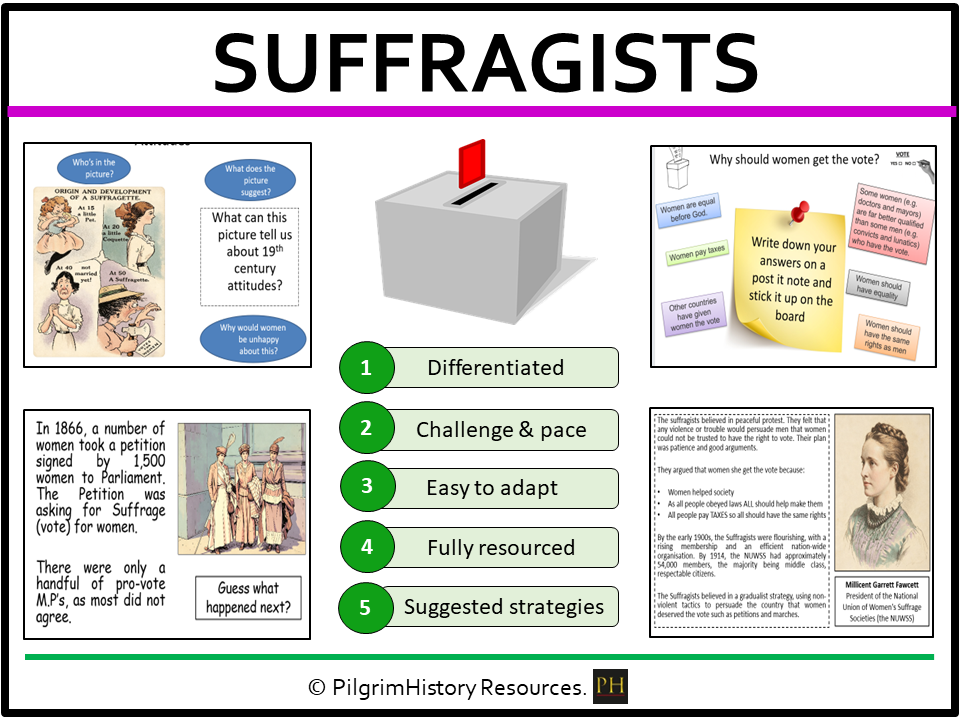
This lesson focuses on the main differences between the Suffragists and Suffragettes, but also examines their similarities in their aim of votes for women.

Students are asked as to why women wanted the vote and how were they going to achieve it?

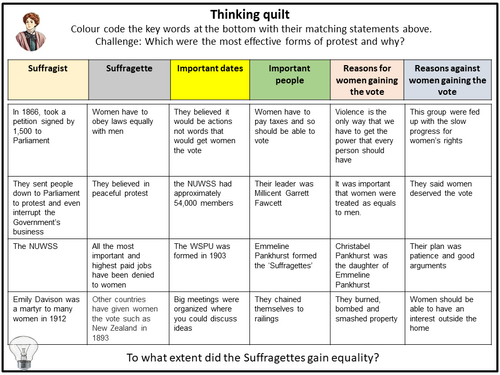
Further into the lesson, students have to analyse the various methods used by both groups (peaceful protest vs militant tactics) and have to question, prioritise and justify their effectiveness in women’s rights campaign history.

A differentiated plenary questions and checks their understanding of the lesson and the aims of Emmeline Pankhurst and Millicent Fawcett.

The lesson is enquiry based with a key question using a lightbulb posed at the start of the lesson and revisited to show the progress of learning.

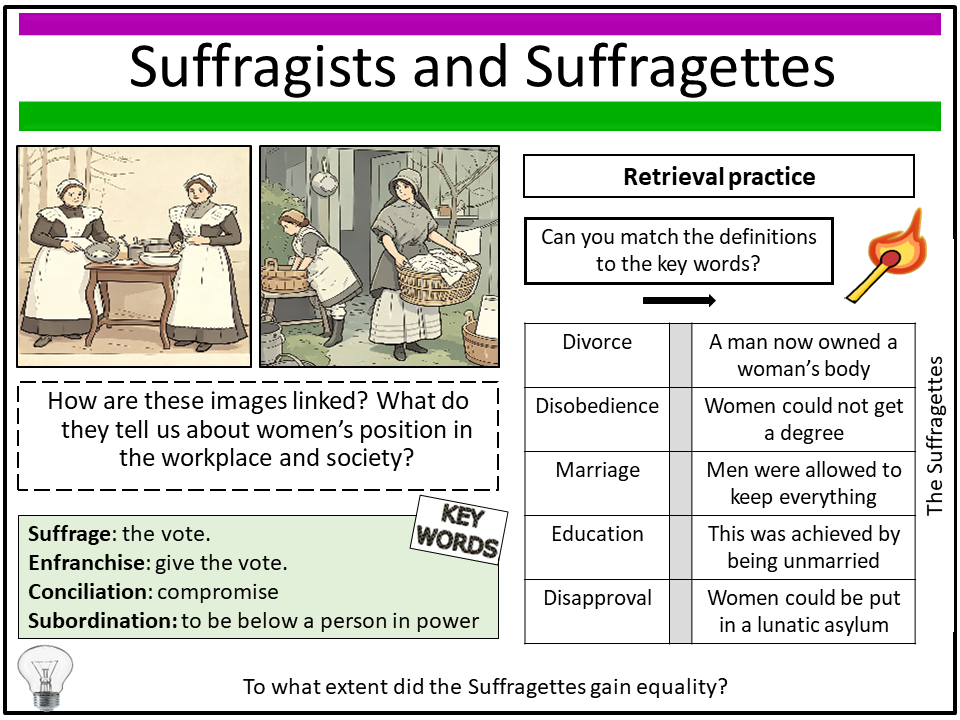
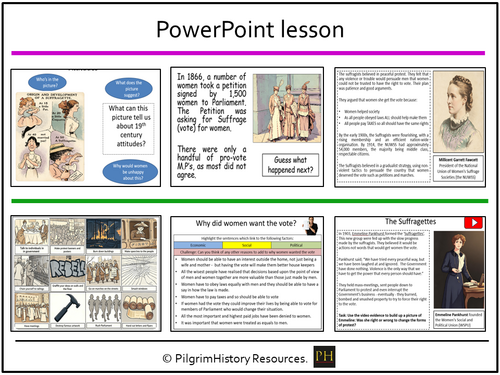
The resource includes suggested teaching strategies, retrieval practice, differentiated materials and comes in PowerPoint format if there is a wish to adapt and change.

Get this resource as part of a bundle and save up to 25%

A bundle is a package of resources grouped together to teach a particular topic, or a series of lessons, in one place.

Bundle

KS3 History Suffragettes and Women's Rights Complete Bundle

This fully resourced KS3 scheme of work explores the development of women’s rights in Britain, from early resistance and social change through to the Suffragette movement and its lasting impact. It has been designed as a coherent narrative unit as it takes students on a structured journey through change and continuity, helping them understand how and why women gained the right to vote. It is also ideal preparation for GCSE Britain Power & the People / Modern British depth studies. These 10 fully resourced lessons include: * PowerPoints for every lesson * Differentiated tasks * Key historical skills progression * GCSE adaptable * Ready to teach From the Middle Ages and the Renaissance to the controversy of universal suffrage and the franchise, this bundle of lessons addresses how women have been treated throughout society. The Suffragette Bundle also focuses on the 19th Century and the questionable suicide of Emily Davison to the militant actions of the Suffragettes including the Cat and Mouse Act, the use of Propaganda and their involvement in World War 1. Moreover this bundle addresses key historical skills: * How did World War 1 show change and continuity for women? * How different were the lives of Medieval and Renaissance women? * What were the causes and consequences of the industrial revolution on universal suffrage? * What were the similarities and differences in the actions of the Suffragists of Millicent Fawcett and Suffragette 'Deeds not words' of Emmeline Pankhurst? * What was significant about the imprisonment of the Suffragettes and force feeding or the death of Emily Davison? These 10 fully resourced lessons include: PowerPoints for every lesson Differentiated tasks Key historical skills progression KS3 + GCSE adaptable The lessons are as follows: L1 Medieval women L2 Renaissance women L3 Dying for the vote (free lesson) L4 An introduction to the Suffragettes L5 Suffragists and Suffragettes L6 Emily Davison – martyr or fool? L7 Propaganda and the Cat and Mouse Act of 1913 L8 The impact of World War 1 on women’s rights L9 The Roaring Twenties L10 How far have women gained equality? (+ Key Word History Display) Each resource comes PowerPoint format if there is a wish to adapt and change. I have also included suggested teaching strategies to deliver the lesson and there are differentiated materials included.

£22.50

Reviews

Something went wrong, please try again later.

This resource hasn't been reviewed yet

To ensure quality for our reviews, only customers who have purchased this resource can review it

Report this resourceto let us know if it violates our terms and conditions.
Our customer service team will review your report and will be in touch.