


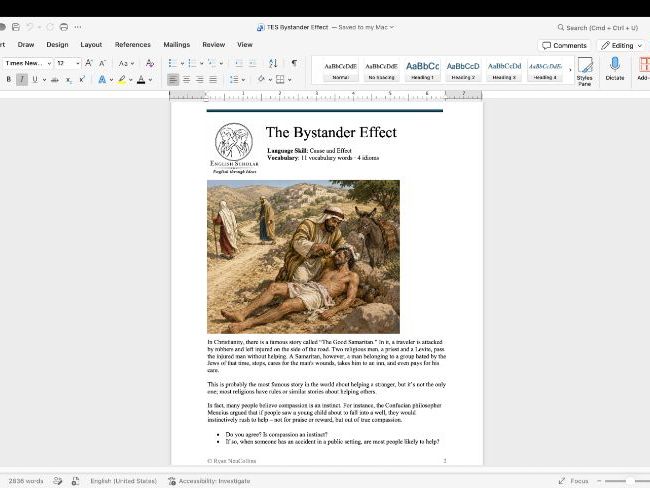
The Bystander Effect | CEFR B2–C1
Explore why ordinary people sometimes fail to help in emergencies while developing advanced English through academic vocabulary, reading, discussion, cause-and-effect writing, comparison, and critical thinking.
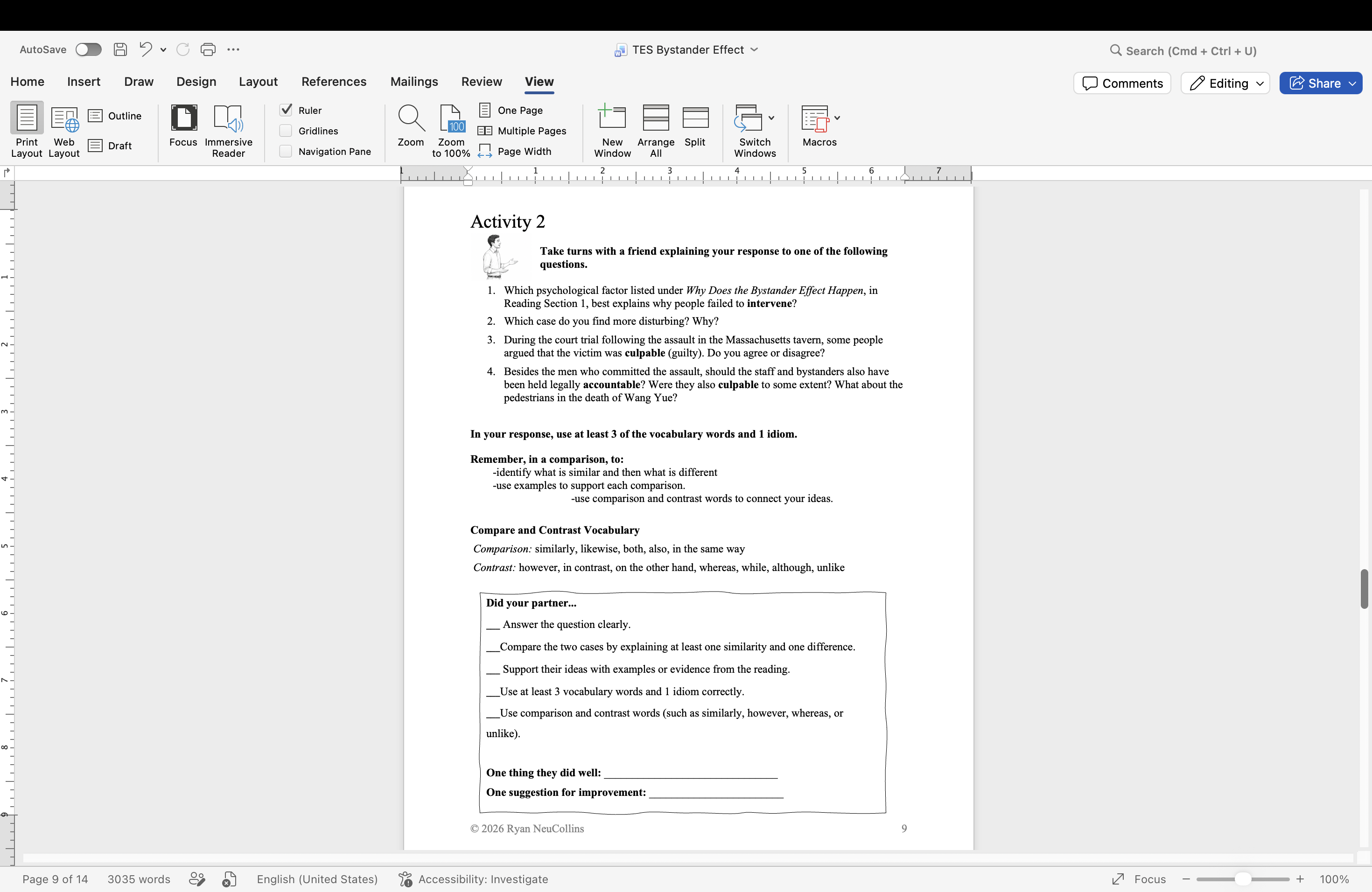
Using authentic case studies from psychology, students examine the factors behind the bystander effect, debate questions of responsibility and accountability, compare real-world incidents, and discuss practical ways to encourage intervention. Along the way, they strengthen reading comprehension, academic discussion, evidence-based speaking, cause-and-effect writing, comparison skills, and ethical reasoning through a sequence of structured activities.
This printable lesson includes:
4 student handouts
11 academic vocabulary words
4 useful idioms
Multiple vocabulary activities
Three reading passages
Cause-and-effect writing instruction and guided practice
Comparison and discussion activities
Authentic case studies, including Wang Yue and the Massachusetts tavern case
Critical-thinking and ethical discussion questions
Answer key and model responses
Designed for upper-intermediate and advanced English learners (CEFR B2–C1), this resource is suitable for adult ESL/EFL classes, high school English learners, university language programs, conversation courses, intensive English programs, and exam preparation.
Skills:
Reading • Reading Comprehension • Academic Vocabulary • Speaking • Academic Discussion • Cause-and-Effect Writing • Compare and Contrast • Critical Thinking • Ethical Reasoning • Psychology
Something went wrong, please try again later.
This resource hasn't been reviewed yet
To ensure quality for our reviews, only customers who have purchased this resource can review it
Report this resourceto let us know if it violates our terms and conditions.
Our customer service team will review your report and will be in touch.
$6.00