


Children have thoughts all day long – but understanding what a thought actually is can be an important first step in helping them make sense of their experiences.
Understanding Thoughts is a psychology-informed emotional literacy and ELSA resource for children aged 8–11, helping them understand what thoughts are, notice their own thoughts and begin exploring how thoughts can connect with feelings and behaviour.
Using the simple, child-friendly explanation “Thoughts are the words and pictures our brains make”, the toolkit introduces thoughts without labelling them as positive or negative, helpful or unhelpful, right or wrong.
Children explore thoughts that might show up in everyday situations before becoming curious about their own experiences. The aim is not to teach children to replace thoughts with more positive ones, but to help them develop the awareness and language to notice and talk about what their brain is doing.
Understanding Thoughts provides a foundation for later conversations about feelings, behaviour, worry, anxiety and other experiences. Activities encourage curiosity rather than looking for a single “right” answer, with space for each child to describe their own experience.
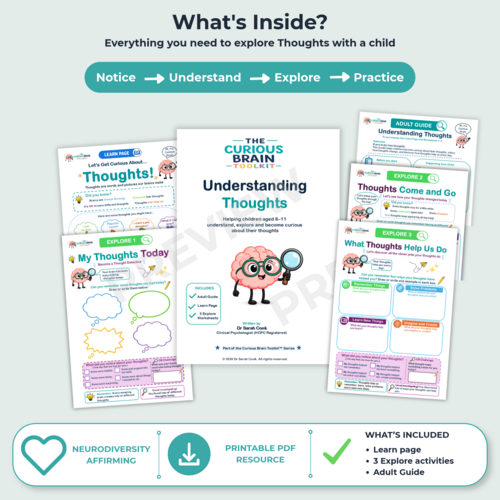
WHAT’S INCLUDED
• 1 illustrated Learn page introducing what thoughts are
• 3 Explore activities helping children recognise and explore thoughts in everyday situations and their own experiences
• Adult Guide with practical guidance for introducing and using the resource
FLEXIBLE FOR SCHOOL-BASED SUPPORT
Designed to be practical and easy to use in busy school settings. The toolkit does not need to be completed all at once or in a particular order.
ELSAs, SENCOs and pastoral staff can use an individual activity within a session, select the pages that fit the child they are supporting, or explore the ideas gradually over several sessions.
No specialist psychology knowledge is required.
USEFUL FOR
• ELSA sessions
• SEND and pastoral support
• Emotional literacy and emotional understanding
• Helping children distinguish thoughts from feelings and other experiences
• Anxiety and worry support
• 1:1 or small-group work
• Supportive or therapeutic conversations
Designed primarily for children aged 8–11, using clear visual explanations, practical activities and a curious, non-judgemental approach.
The resource is psychology-informed and neurodiversity-affirming, with an emphasis on helping children understand their own experience rather than teaching them how they should think or feel.
Created by Dr Sarah Cook, HCPC Registered Clinical Psychologist.
Understanding Thoughts is part of The Curious Brain Toolkit™ – practical, child-friendly psychology resources that help children and the adults supporting them notice, understand and get curious about their experiences.
Something went wrong, please try again later.
This resource hasn't been reviewed yet
To ensure quality for our reviews, only customers who have purchased this resource can review it
Report this resourceto let us know if it violates our terms and conditions.
Our customer service team will review your report and will be in touch.
£4.50