


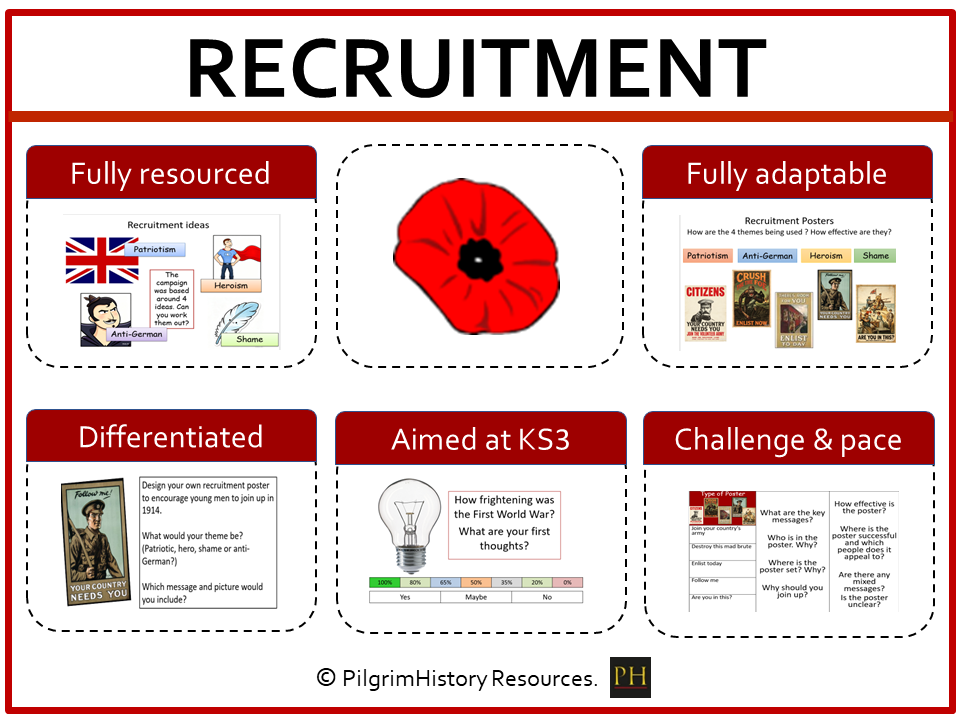
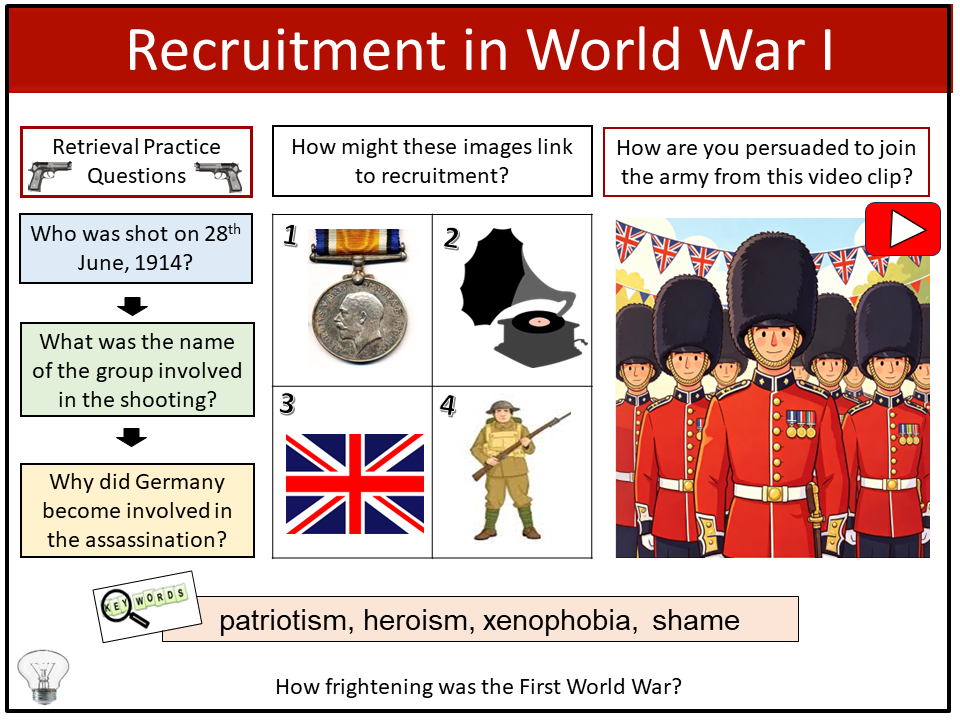
The lesson aims to investigate why so many young men volunteered to fight in the First World War in 1914.
It also investigates how successfully the British government and recruitment campaigns persuaded men to enlist.
Students explore the different factors that encouraged volunteering, including patriotism, heroism, shame, anti-German feeling and pressure from wider society.
Students investigate the famous recruitment campaign led by Lord Kitchener and consider how the government attempted to influence public opinion and encourage men to join the British Army. They explore how powerful images, slogans and emotional messages were used to present military service as patriotic, heroic and necessary.
Using video footage, government propaganda posters and an extract from Private Peaceful, students analyse the methods used to encourage recruitment. They consider how propaganda targeted emotions and how ideas about duty, masculinity, patriotism and fear of Germany could influence the decisions of young men in 1914.
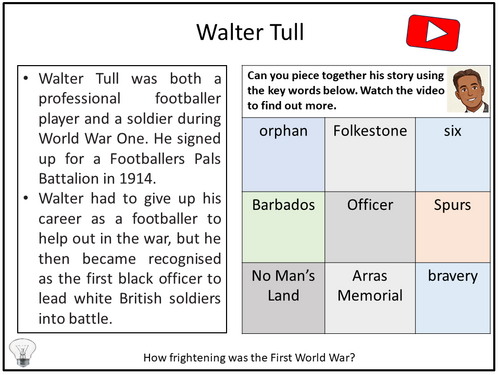
Students then explore the growth of the Pals Battalions, investigating how men from the same towns, workplaces and communities were encouraged to enlist together. They examine examples including the Footballers’ Battalion and consider the contribution of soldiers from across the British Empire, including Walter Tull and men recruited from the Caribbean and India.
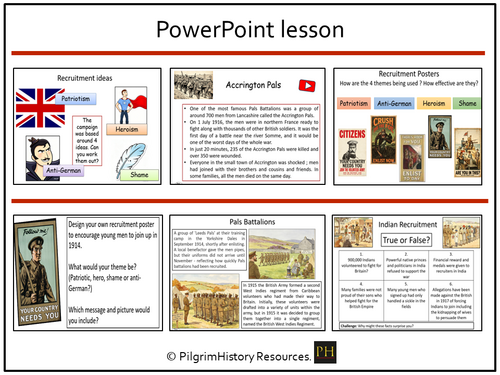
Students then investigate the consequences of the Pals Battalion system, focusing on the tragic experience of the Accrington Pals during the Battle of the Somme in 1916. They consider how the decision to enlist alongside friends, relatives and colleagues could have devastating consequences for entire communities when battalions suffered heavy casualties.
The lesson encourages students to consider whether young men volunteered because they genuinely wanted to fight, because they were persuaded by government propaganda or because they experienced pressure from their families, friends and communities. Students use evidence from the different activities to reach a balanced judgement about why volunteering was so successful in 1914.
The lesson is enquiry based, with a key question introduced at the start and revisited throughout the lesson. Students are encouraged to use evidence from propaganda, video and historical examples to develop their understanding and reach a reasoned judgement about why so many young men volunteered to fight.
Included in this lesson:
Fully editable PowerPoint
Reasons why men volunteered in 1914
Propaganda using patriotism, heroism, shame and anti-German feeling
Government recruitment posters
Extract from Private Peaceful
Source and propaganda analysis activities
The growth of the Pals Battalions
Retrieval practice activities
Differentiated materials suitable for mixed-ability classes
Suggested teaching strategies
PLease review the resource. It would be gratefully appreciated.
Something went wrong, please try again later.
Excellent resource - really well thought through lesson structure. Source work is well designed and linked to great poster work; also links to GCSE style questions. Good differentiated activity at the end - well worth the money.
Report this resourceto let us know if it violates our terms and conditions.
Our customer service team will review your report and will be in touch.
£3.50