pptx, 2.36 MB
pptx, 2.36 MB

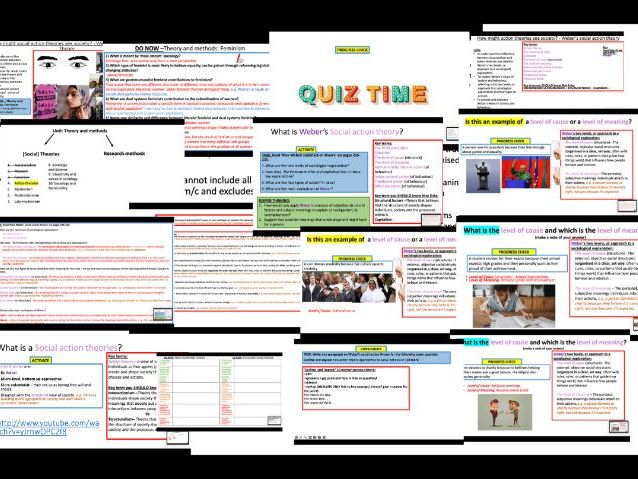
Detailed lesson with lots of scaffolding based on adaptive teaching that help students to understand the difference between structuralism and action theories and identify Weber’s two levels, or approach to a sociological explanation, and explain, analyse and evaluate Weber’s views of society and behaviour, referring to his two levels, or approach to a sociological explanation and four types of actions.​

Covers the following key terms:

Action theory​

The Protestant ethic​

Calvinism ​

The level of cause

The level of meaning ​

Instrumentally rational action ​

Value-rational action​

Traditional action​

Affectual action

Covers the following sociologists:

Weber

Makes reference to the following key terms students might know: Interactionism Vs Structuralism – Structural factors – Capitalism –

RESOURCES CAN BE FOUND AT THE END OF PPT

Activities require pages from the AQA A Level Sociology Book Two by Rob Webb, Hal Westergaard, Keith Trobe, Annie Townend

INCLUDES 10 marker

ANSWERS TO MAIN ACTIVITY INCLUDED

INCLUDES KEY TERM SHEET WITH DEFINITIONS FOR THE LESSON

INCLUDES A TEACHING TO ALL ACTIVITY

STARTER ACTIVITY RECAPS FEMINIST THEORIES OF SOCIETY FROM THEORY AND METHODS UNIT.

Get this resource as part of a bundle and save up to 25%

A bundle is a package of resources grouped together to teach a particular topic, or a series of lessons, in one place.

Bundle

AQA A-level Sociology Theory and methods: Theory - Action theories (LESSON BUNDLE)

**L1 AQA A-level Sociology Theory and methods: Theory - Action theories (Social Action Theory)** Detailed lesson with lots of scaffolding based on adaptive teaching that help students to understand the difference between structuralism and action theories and identify Weber’s two levels, or approach to a sociological explanation, and explain, analyse and evaluate Weber’s views of society and behaviour, referring to his two levels, or approach to a sociological explanation and four types of actions.​ Covers the following key terms: Action theory​ The Protestant ethic​ Calvinism ​ The level of cause The level of meaning ​ Instrumentally rational action ​ Value-rational action​ Traditional action​ Affectual action Covers the following sociologists: Weber Makes reference to the following key terms students might know: Interactionism Vs Structuralism – Structural factors – Capitalism – RESOURCES CAN BE FOUND AT THE END OF PPT Activities require pages from the AQA A Level Sociology Book Two by Rob Webb, Hal Westergaard, Keith Trobe, Annie Townend INCLUDES 10 marker ANSWERS TO MAIN ACTIVITY INCLUDED INCLUDES KEY TERM SHEET WITH DEFINITIONS FOR THE LESSON INCLUDES A TEACHING TO ALL ACTIVITY STARTER ACTIVITY RECAPS FEMINIST THEORIES OF SOCIETY FROM THEORY AND METHODS UNIT. **L2 AQA A-level Sociology Theory and methods: Theory - Action theories (Symbolic interactionism)** Detailed lesson with lots of scaffolding based on adaptive teaching that help students to define symbolic interactionism and the key terms and concepts used by the theory,​ explain the different symbolic interactionist views of society using their key terms and concepts. and analyse and evaluate them. Covers the following key terms: Symbolic interactionism ​ Symbols​ Taking the role of the other​ The definition of the situation​ The looking glass self​ Dramaturgical model ​ Roles Covers the following sociologists: Mead ​​ Blumer​​ Labelling theorists​​ Goffman Makes reference to the following key terms students might know: Action theory - ​Labelling theory - InteractionismVs Structuralism – Structural factors – Capitalism – Instincts – Nature vs nurture – Impression management RESOURCES CAN BE FOUND AT THE END OF PPT Activities require pages from the AQA A Level Sociology Book Two by Rob Webb, Hal Westergaard, Keith Trobe, Annie Townend INCLUDES 10 marker INCLUDES KEY TERM SHEET WITH DEFINITIONS FOR THE LESSON **L3 AQA A-level Sociology Theory and methods: Theory - Action theories (Phenomenology​)** Detailed lesson with lots of scaffolding based on adaptive teaching that help students understand phenomenologists phenomenologists’ views of society and the key terms they use to illustrate these. Covers the following key terms: Phenomenology ​ Typifications​ Recipe Knowledge ​ The natural attitude ​ Inter-subjectivity (extension) ​ Intra-subjectivity (extension) RESOURCES CAN BE FOUND AT THE END OF PPT Activities require pages from the AQA A Level Sociology Book Two by Rob Webb, Hal Westergaard, Keith Trobe, Annie Townend INCLUDES 10 marker INCLUDES TEACHING TO ALL ACTIVITY KEY TERM AND DEFINITION SHEET FOR THE LESSON INCLUDED SOME LECTURE-STYLE SLIDES **L4 AQA A-level Sociology Theory and methods: Theory - Action theories (Ethnomethodology)** Detailed lesson with lots of scaffolding based on adaptive teaching that help students to identify and define the key terms used by ethnomethodology to explain society and use them to explain ethnomethodologist views of society and human behaviour. Covers the following key terms: Ethnomethodology (EM)​ Indexicality ​ Reflexivity Covers the following sociologists: Garfinkel RESOURCES CAN BE FOUND AT THE END OF PPT Activities require pages from the AQA A Level Sociology Book Two by Rob Webb, Hal Westergaard, Keith Trobe, Annie Townend INCLUDES 10 marker NO STARTER ACTIVITY SOME LECTURE SLIDES INCLUDES A TEACHING TO ALL ACTIVITY SOME ANSWERS INCLUDED

£18.00

Reviews

Something went wrong, please try again later.

This resource hasn't been reviewed yet

To ensure quality for our reviews, only customers who have purchased this resource can review it

Report this resourceto let us know if it violates our terms and conditions.
Our customer service team will review your report and will be in touch.