


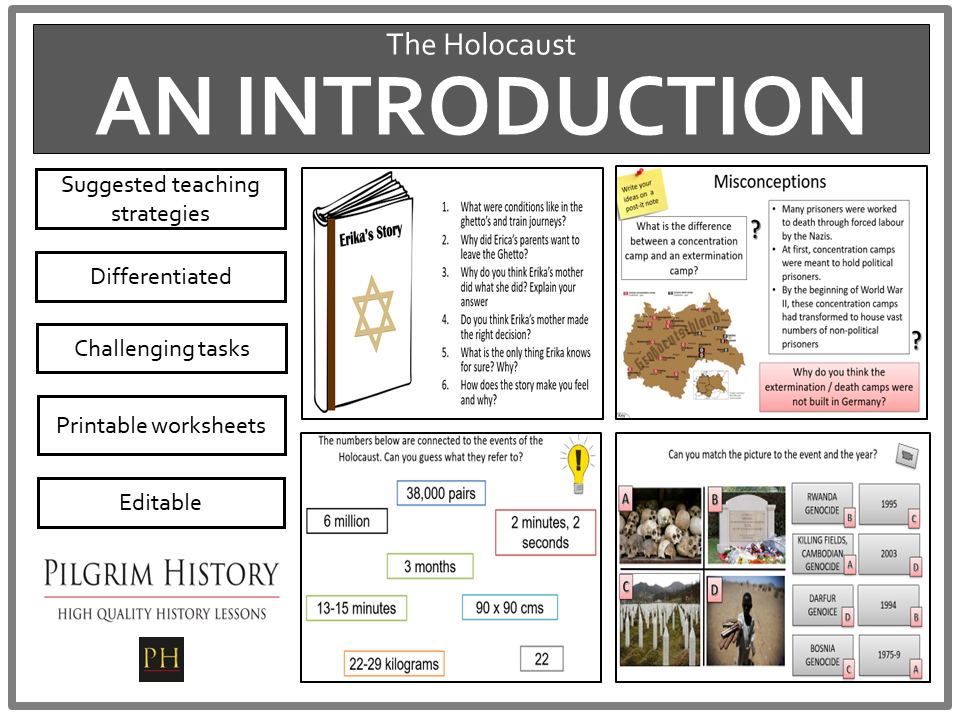
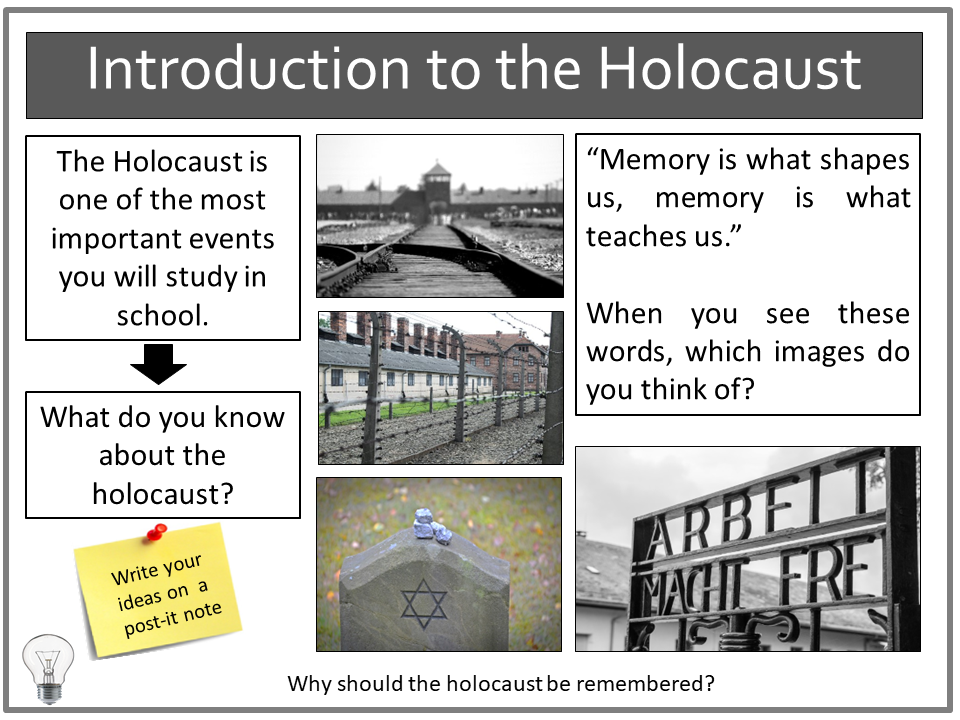
The aim of this lesson is to explore why the Holocaust must be remembered and why its legacy remains so important today.
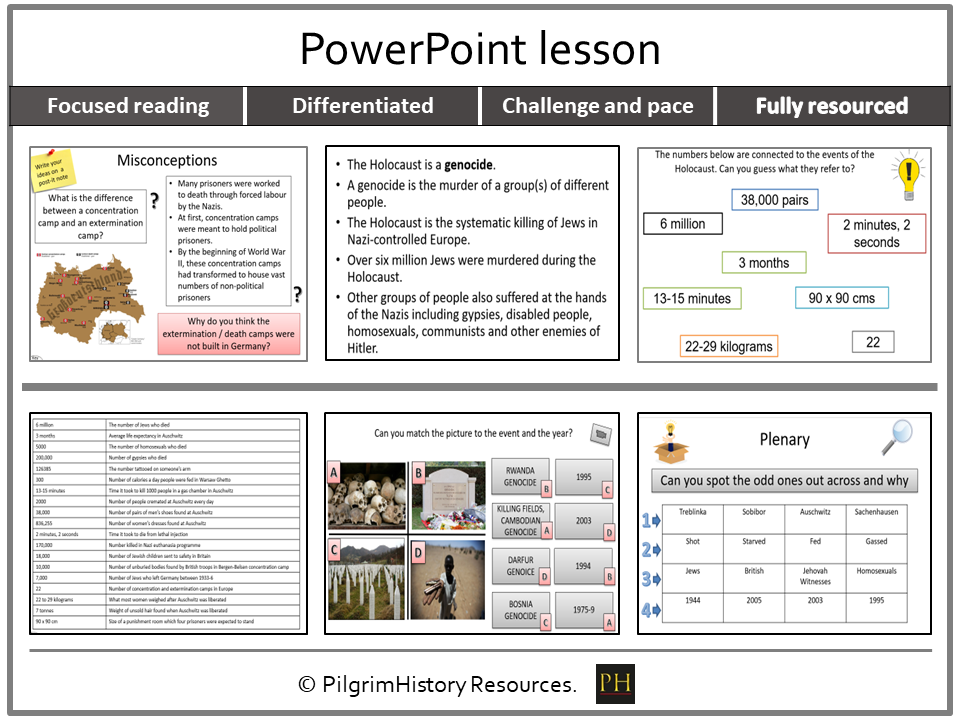
The lesson begins by challenging common misconceptions about the Holocaust, including what the term actually means and the important differences between concentration camps and extermination camps. Students develop their understanding of these key concepts before considering why accurate historical knowledge is essential when studying the Holocaust.
A numeracy activity challenges students to interpret and discuss the significance of key figures connected to the Holocaust. Numbers ranging from 6 million to 2 minutes and 2 seconds, and 90cm by 90cm, are used to help students consider the scale, human impact and significance of the Holocaust in different ways.
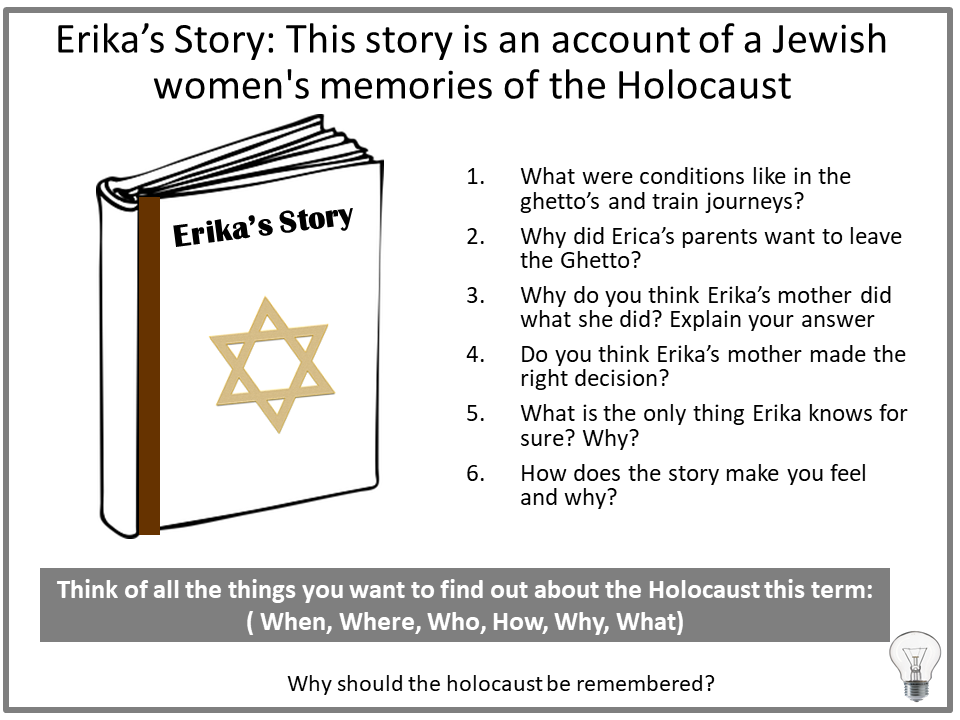
The lesson concludes with the deeply moving story of Erica, a baby thrown from a train by her parents before reaching Auschwitz. This provides an opportunity for students to reflect on identity, memory, survival and why individual stories remain such an important part of remembering the Holocaust.
A reflective plenary uses odd one out activities and references to more recent genocides to reinforce the importance of remembrance and historical awareness today. Video footage is also used throughout to enhance engagement, discussion and understanding.
The lesson is enquiry based, with the key question introduced using a lightbulb activity at the beginning and revisited at the end, allowing students to demonstrate how their thinking and understanding have developed.
The resource includes suggested teaching and learning strategies, retrieval practice, differentiated materials, video footage and a range of activities designed to encourage discussion, reflection and critical thinking.
Included in this lesson:
Fully editable PowerPoint
The legacy of the Holocaust
Holocaust misconceptions
Holocaust numeracy activity
The story of Erica
Odd one out activities
More recent genocides
Retrieval practice
Suggested teaching strategies
Differentiated materials
Please leave a review, which would be gratefully received.
Something went wrong, please try again later.
This resource hasn't been reviewed yet
To ensure quality for our reviews, only customers who have purchased this resource can review it
Report this resourceto let us know if it violates our terms and conditions.
Our customer service team will review your report and will be in touch.
£3.00