


Study skills unit on how learning happens: memory, attention and cognitive overload. Lessons with PowerPoint, student workbook and teacher guide.
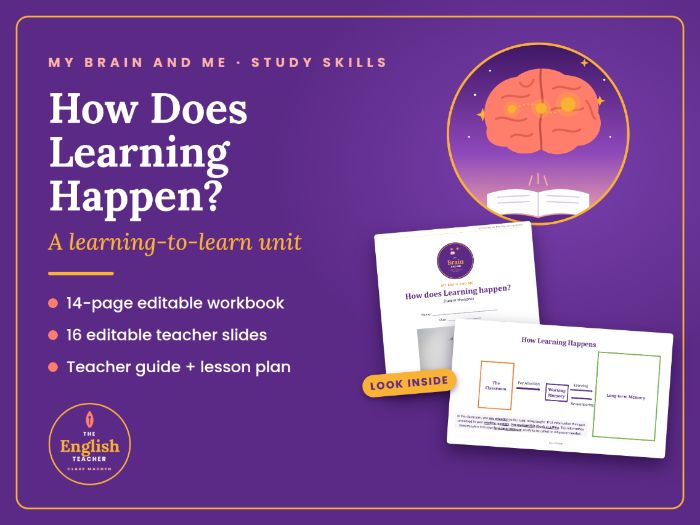
Help students understand what’s happening in their brains when they learn, and why learning sometimes doesn’t happen. This stand-alone study skills unit gives students one simple, memorable model of learning, based on cognitive science, that they can use in every subject.
The core idea
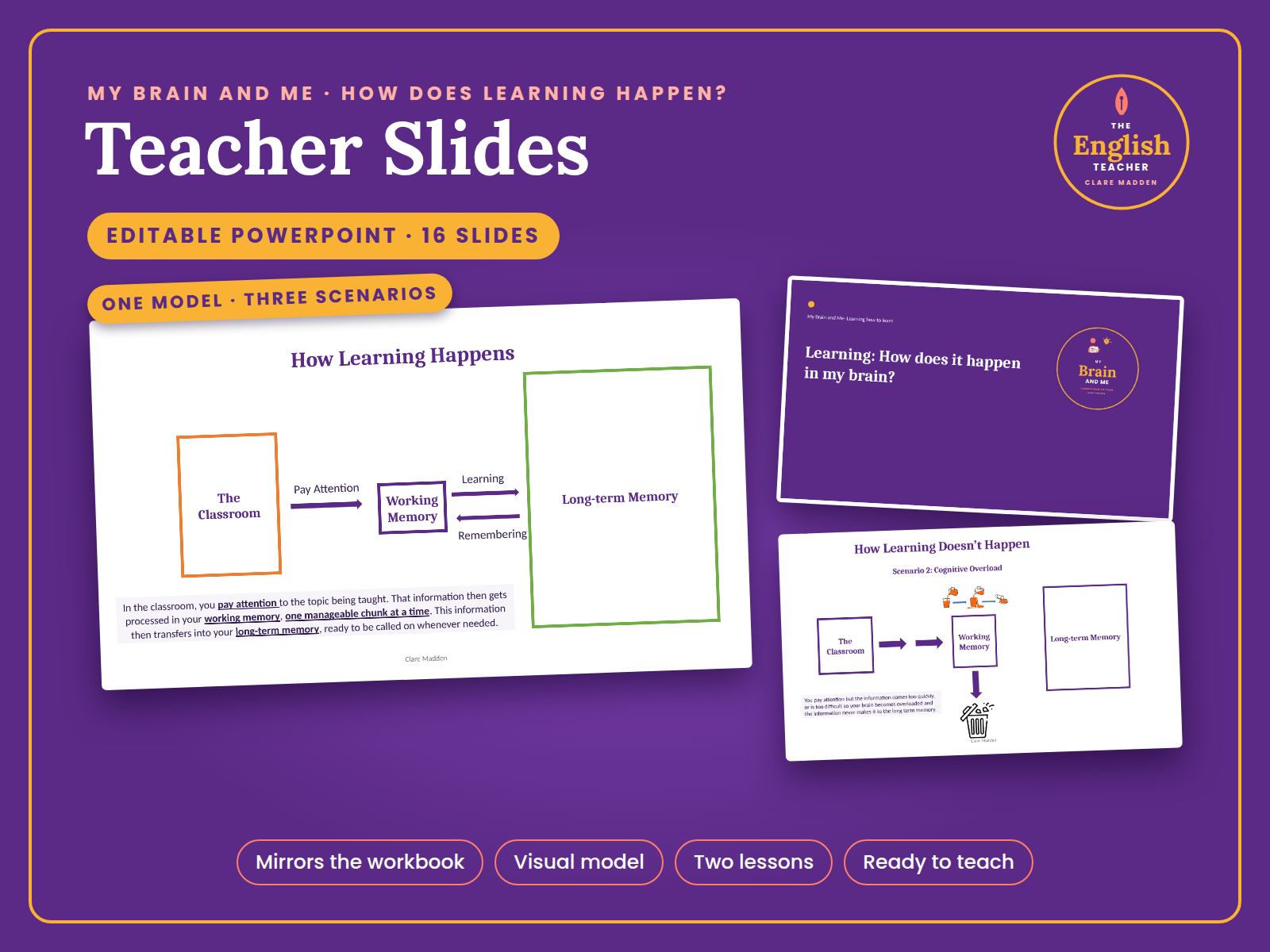
Information only becomes learning when a student pays attention to it, processes it in working memory and transfers it to long-term memory. Students then look at three ways this process breaks down, using the same diagram each time so they can see exactly where each one happens:
Scenario 1: Paying attention. If a student is distracted, the information never reaches working memory.
Scenario 2: Cognitive overload. If the information comes too fast or is too hard, working memory overflows.
Scenario 3: Information decay. Something learned successfully fades without review.
What’s included
PowerPoint (16 slides): the learning model and all three scenarios, each with its own diagram, plus discussion prompts, reflection activities, a retrieval task and the end-of-unit project brief
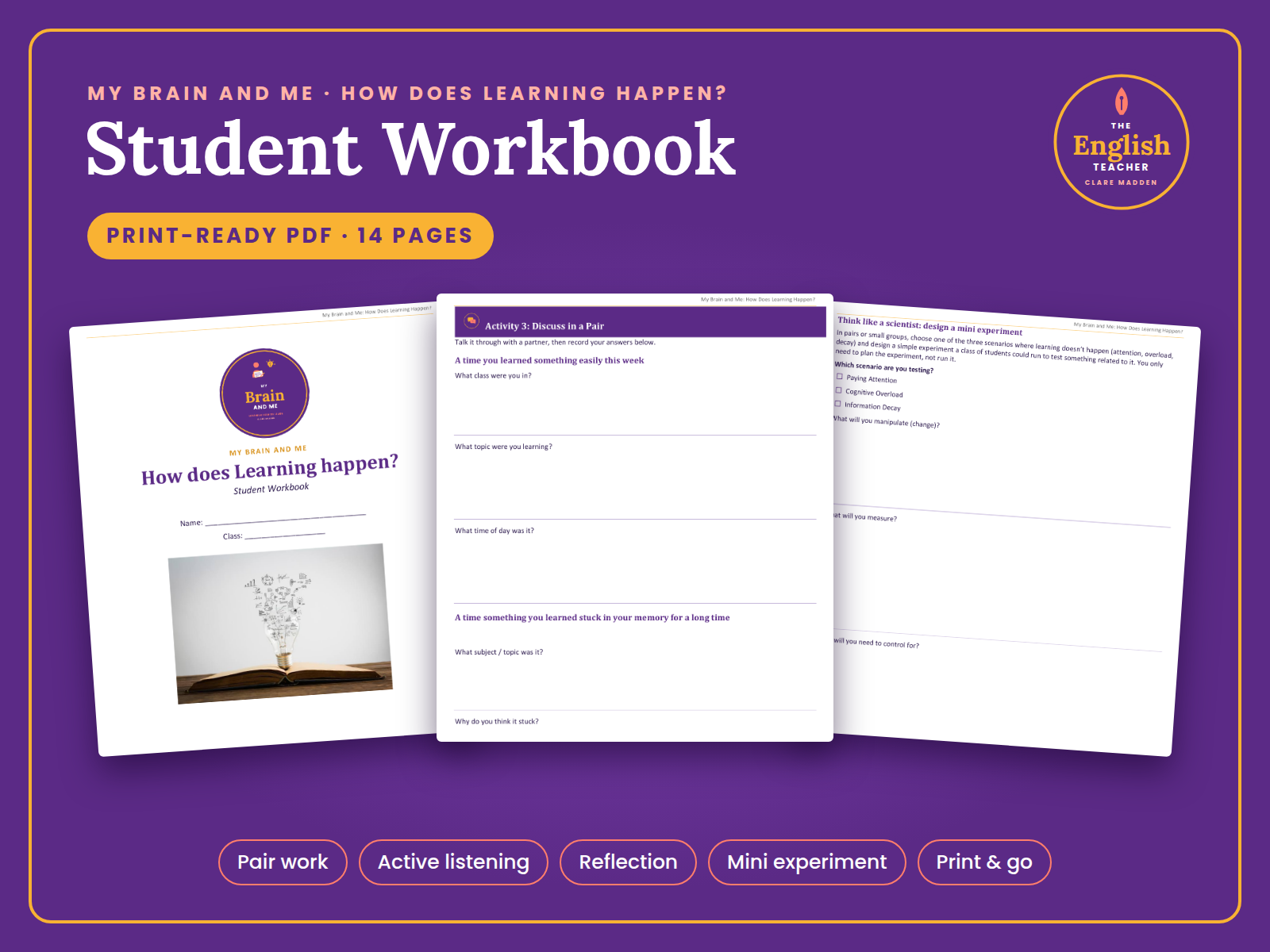
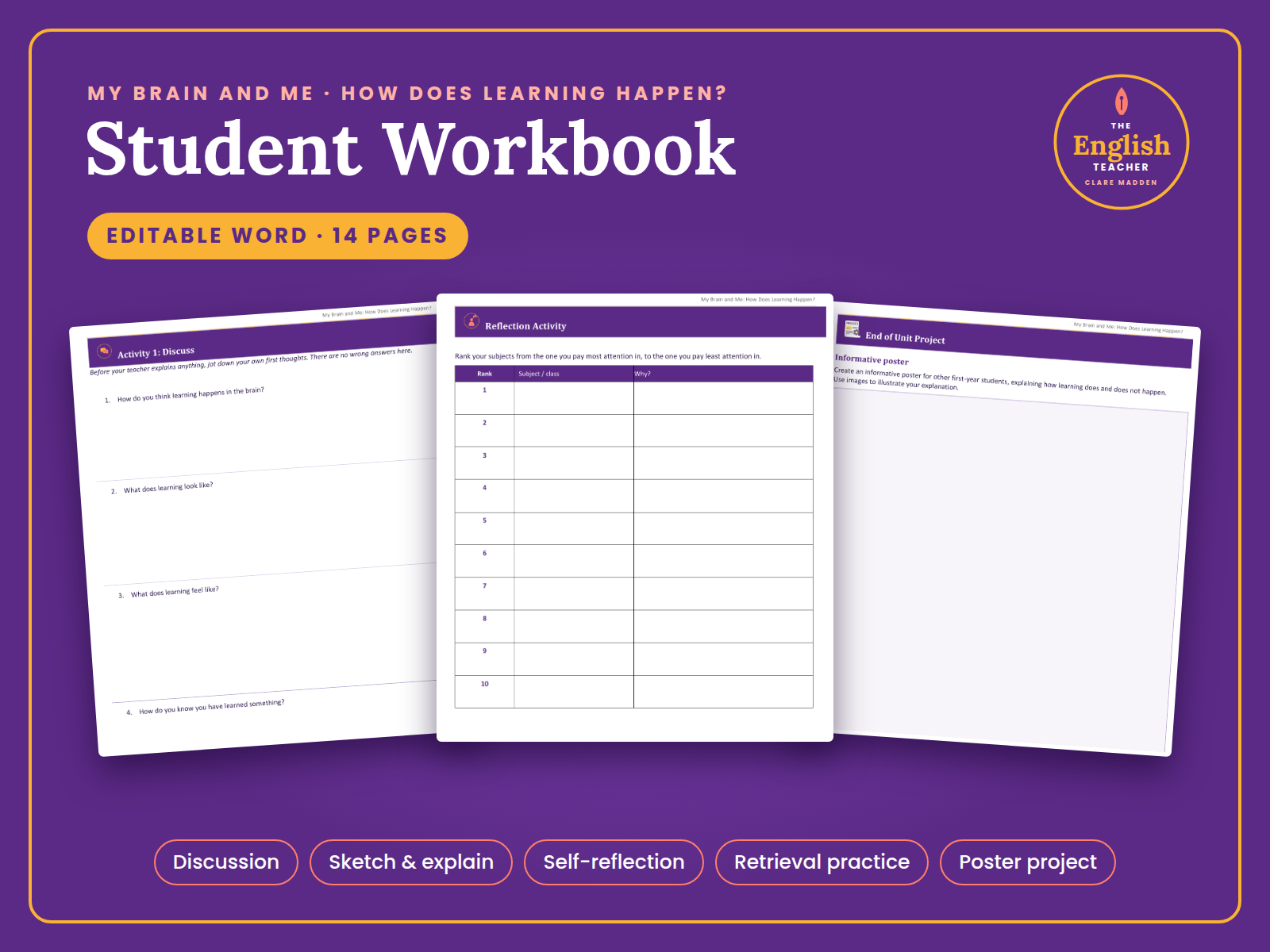
Student workbook (14 pages, PDF and Word Doc): printable pages for every activity, with space to sketch, rank, reflect and plan
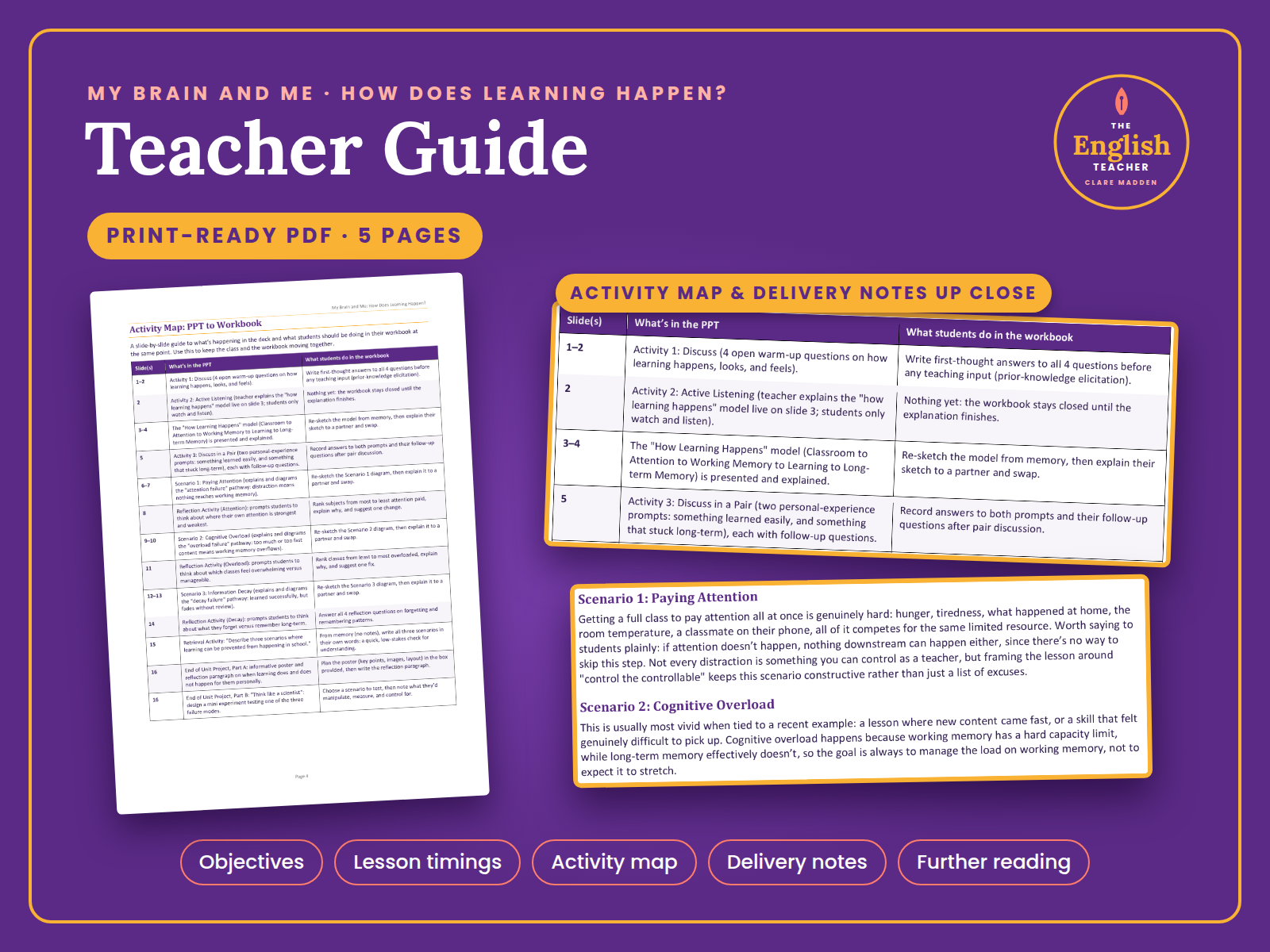
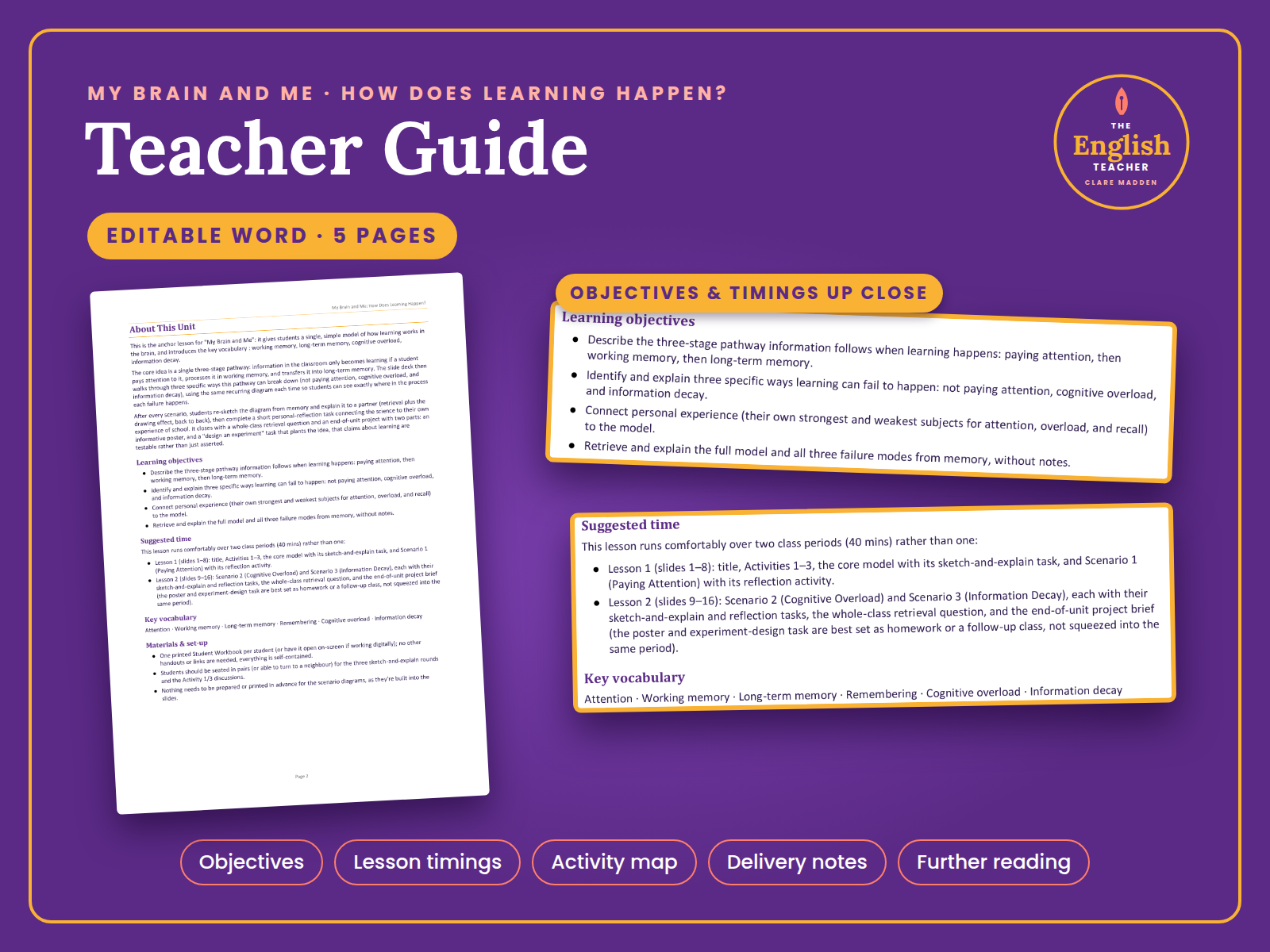
Teacher guide (5 pages, PDF and word Doc): learning objectives, a two-lesson plan, key vocabulary, a slide-by-slide guide matching the PowerPoint to the workbook, delivery notes for each scenario, and recommended further reading on the cognitive science
Activities students complete
Warm-up questions on what learning looks and feels like
Active listening, then drawing the model from memory and explaining it to a partner. These rounds use retrieval practice and the drawing effect, two techniques shown to improve memory.
Reflection tasks where students rank their own subjects by attention, overload and forgetting, and suggest one change for each
A low-stakes retrieval check, written without notes
End-of-unit project: an informative poster explaining how learning works, a reflection paragraph, and a “think like a scientist” task where students design a mini experiment to test one of the three scenarios
Why teachers will like it
It takes two hour long lessons, with the project suitable for homework
It needs no preparation: everything is self-contained and the diagrams are built into the slides
It’s ideal for students starting secondary school, and it also works well in Wellbeing, SPHE, PSHE, tutor time and study skills programmes, or before exams
It’s based on cognitive load theory and retrieval practice, and students can use the vocabulary across all their subjects: attention, working memory, long-term memory, cognitive overload, information decay
Created by Clare Madden, an English and History teacher with over 15 years’ experience and a special interest in how students learn.
Something went wrong, please try again later.
This resource hasn't been reviewed yet
To ensure quality for our reviews, only customers who have purchased this resource can review it
Report this resourceto let us know if it violates our terms and conditions.
Our customer service team will review your report and will be in touch.
£4.00