


KS2/KS3/Home-Ed/Home-school/Self-study/Computing/Coding/Computer Science
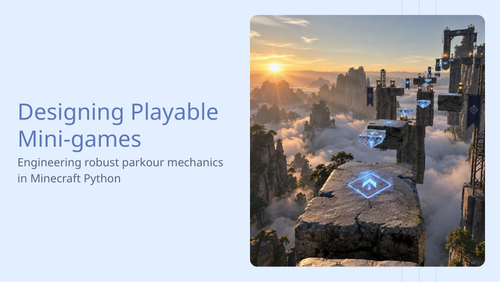
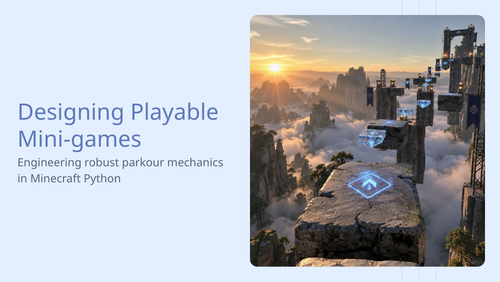
Lesson 14. Designing Playable Mini-games
-
Brief recap of event handlers and a starter quiz on trigger conditions
-
Introduction to game design principles: mechanics, dynamics, and player experience
-
Case study analyzing obstacle courses (obbie games) in multiplayer spaces
-
Teacher modelling: using code to generate dynamic parkour platforms automatically
-
Guided practice: writing scripts for disappearing blocks and timed hazards
-
Student task: design the core mechanics for a multi-stage obstacle track
-
Discussion on user accessibility, difficulty curves, and clear win conditions
-
Check for understanding: evaluating game mechanic proposals against usability criteria
-
Independent building: coding hazard triggers and checkpoint systems in Python
-
Peer feedback: playtesting early mechanic prototypes and recording usability notes
-
Iterative refinement of parkour code based on initial playtest feedback
-
Lesson review summarizing game loop mechanics and usability principles
Something went wrong, please try again later.
This resource hasn't been reviewed yet
To ensure quality for our reviews, only customers who have purchased this resource can review it
Report this resourceto let us know if it violates our terms and conditions.
Our customer service team will review your report and will be in touch.
£3.00