


L’Étranger – The Chaplain
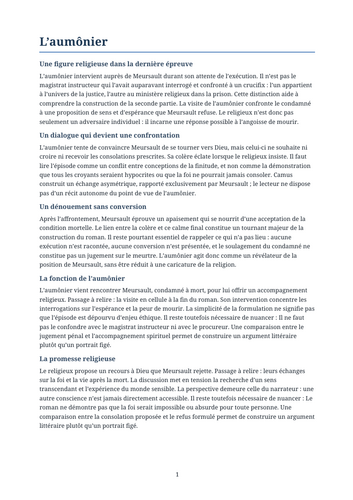
A comprehensive French-language character study of the chaplain in Albert Camus’s L’Étranger, examining his religious role, his confrontation with Meursault and his structural importance near the end of the novel. It explores spiritual consolation, faith, mortality, limited focalisation and the movement from anger to lucidity while carefully distinguishing the chaplain from the examining magistrate and avoiding simplistic claims about religion.
Key features:
- Detailed analysis of the chaplain’s role as a spiritual visitor to a condemned prisoner, clearly distinguished from the earlier legal questioning by the examining magistrate
- Focused study of the religious consolation he offers, including God, hope, transcendence and the possibility of life after death
- Examination of Meursault’s refusal of conversion, showing the clash between religious meaning and his commitment to lived experience
- Analysis of the limits of first-person focalisation, since the reader encounters the chaplain only through Meursault’s perspective
- Detailed treatment of Meursault’s violent outburst, which breaks with much of his earlier narrative restraint
- Exploration of the movement from revolt to lucidity, including Meursault’s acceptance of mortality without supernatural hope
- Careful consideration of the chaplain’s structural function in the final chapter, where the confrontation prepares Meursault’s last reflections
- Ten substantial exercise sections, detailed answers and a developed dissertation plan on how the chaplain dramatises the refusal of religious consolation and the emergence of lucidity without reducing the character to a caricature of faith
Something went wrong, please try again later.
This resource hasn't been reviewed yet
To ensure quality for our reviews, only customers who have purchased this resource can review it
Report this resourceto let us know if it violates our terms and conditions.
Our customer service team will review your report and will be in touch.
£1.50