


This lesson is designed for the NEW AQA Physics GCSE, particularly the ‘Light’ SoW.
For more lessons designed to meet specification points for the NEW AQA Trilogy specifications for Biology, Chemistry and Physics please see my shop: https://www.tes.com/teaching-resources/shop/SWiftScience
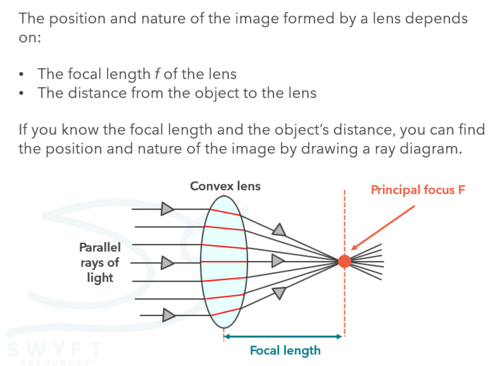
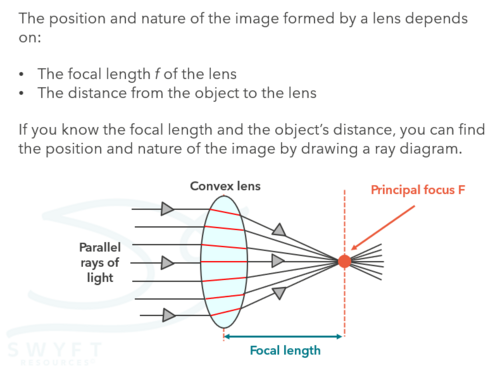
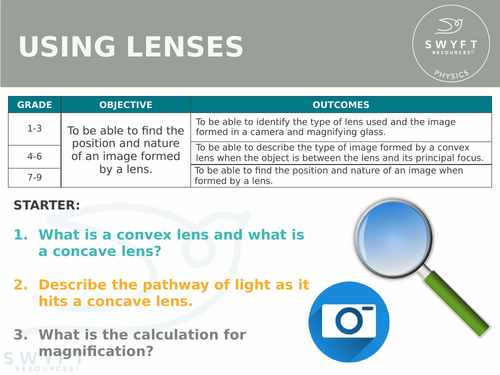
This lesson is a deeper dive into using lenses, and how convex and concave lenses are used to produce either real or virtual images. The lesson starts with an explanation that the position and nature of the image formed by a lens depends on: - The focal length, f, and the distance from the object to the lens.
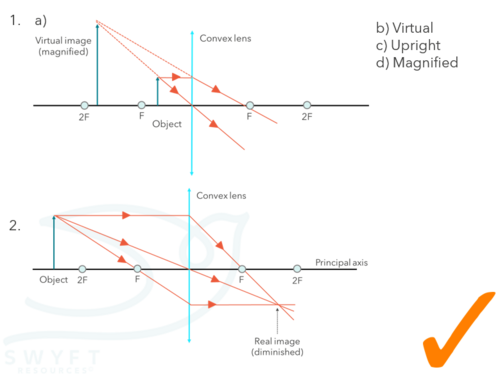
If you know the focal length and the object’s distance, you can find the position and nature of the image by drawing a ray diagram.
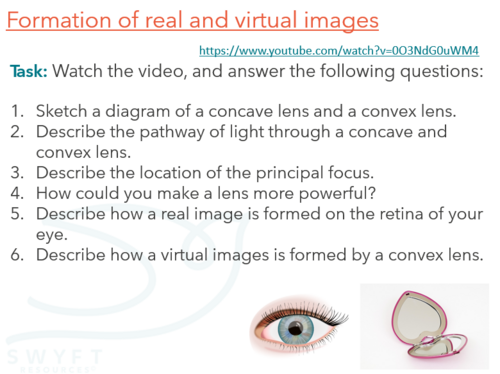
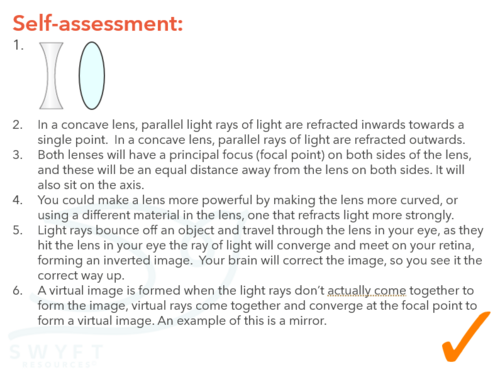
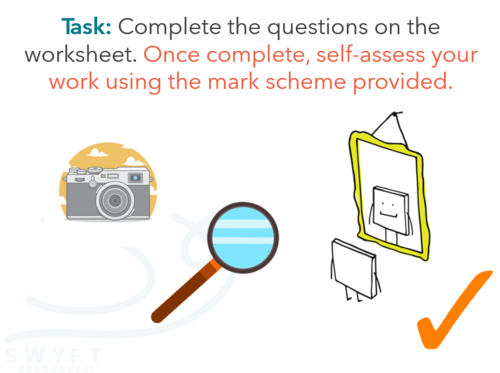
Students will now watch a video which explains the difference between the formation of real vs. virtual images. Whilst watching the video, students will answer a set of questions and they can assess their work on this task once it is complete.
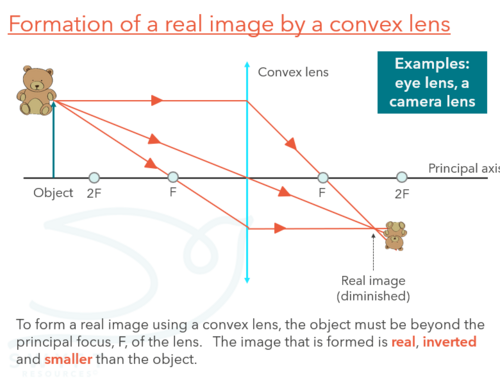
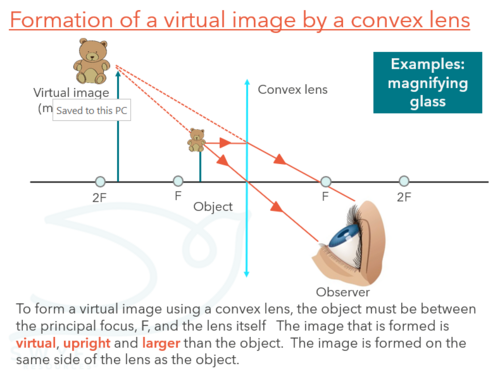
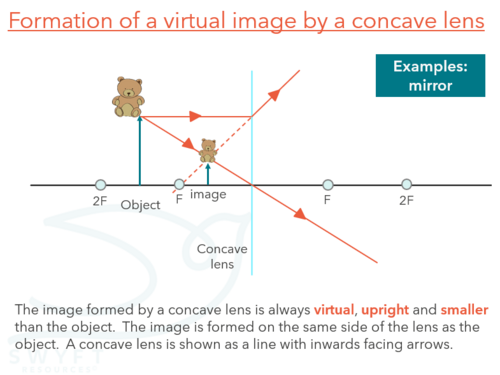
After this activity, the next two slides shows detailed diagrams of how a real image and a virtual image is formed by a convex lens, and how a virtual image is formed by a concave lens. The slides give a description of the type of image formed in each case, in terms of whether it is virtual/real, upright/inverted, bigger or smaller than the object. It is also gives examples of where these type of lenses are used.
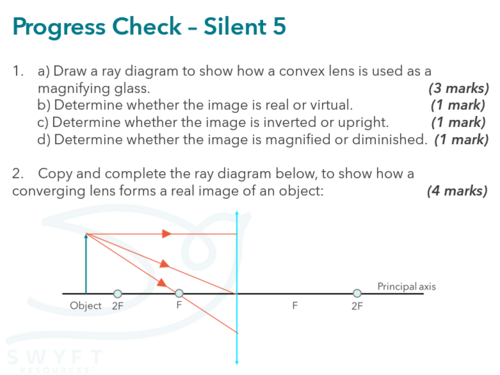
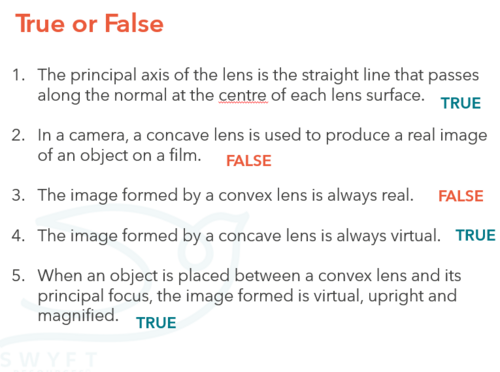
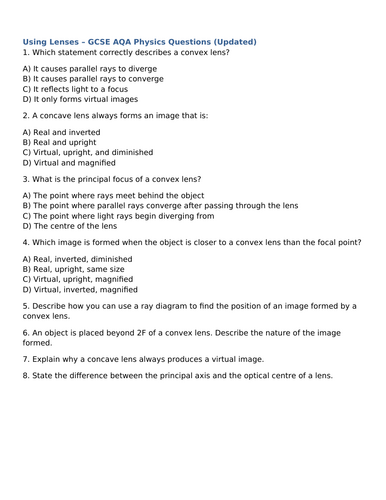
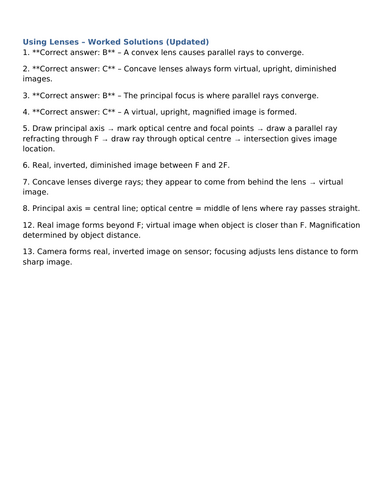
Students will now complete a quick check task, to assess their understanding of the content of the lesson so far. After this, there will be a set of exam-style questions for students to complete on the topic of the lesson, the mark scheme for this task is included in the resources for students to either self-assess or peer-assess their work once it is complete. The final activity, is a true or false task to summarise the main concepts from the lesson.
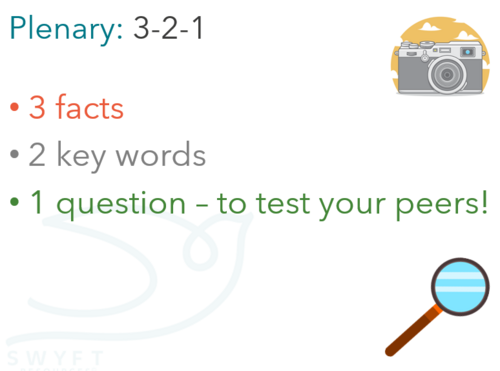
The plenary activity requires students to write three facts, two key words and one question to test your peers.
All resources are included. Thanks for looking, if you have any questions please let me know at swyftresources@gmail.com.
Something went wrong, please try again later.
This resource hasn't been reviewed yet
To ensure quality for our reviews, only customers who have purchased this resource can review it
Report this resourceto let us know if it violates our terms and conditions.
Our customer service team will review your report and will be in touch.
£3.00