


-Early identification checklist
-Attendance-pattern analysis — not just the overall attendance percentage
-Pupil voice questionnaire
-0–10 anxiety / difficulty scales
-School-day difficulty map covering mornings, journey, entry, lessons, corridors, -break and lunch
-Parent / carer voice form
-A structured formulation page looking at precipitating, perpetuating and protective factors
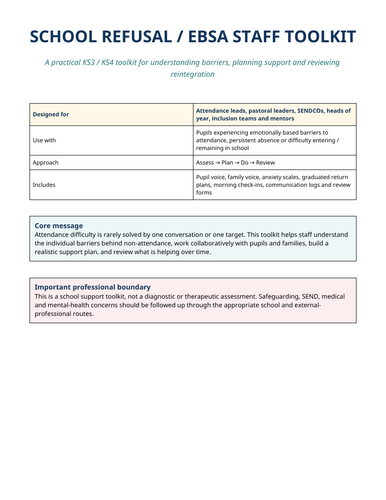
-Assess → Plan → Do → Review framework
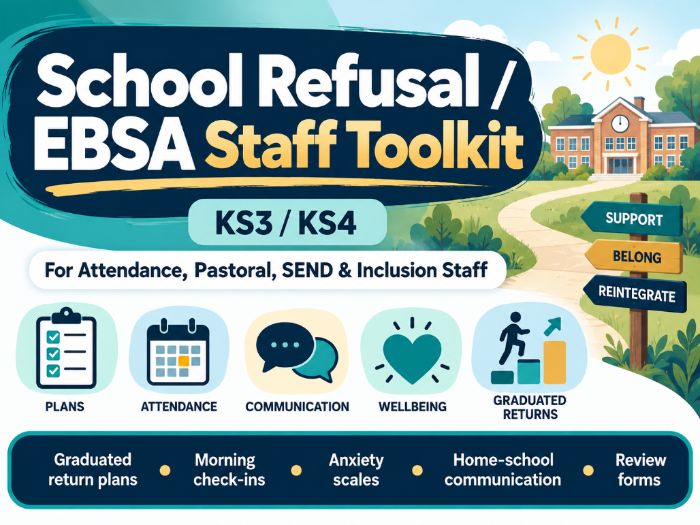
-Individual EBSA support plan
-Practical adjustment/support menu
-Graduated return / reintegration ladder
-Morning check-in and end-of-day check-out sheet
-Difficult Morning Plan
-Home-school communication plan
-Home-school communication log
-Staff Consistency Plan so pupils aren’t getting completely different responses from different adults
-Weekly review sheet
-Pupil weekly review
-SEND / neurodiversity considerations
-Safeguarding and escalation checklist
-Multi-agency meeting record
-2-week review
-6-week review
-Step-down / closing plan
-Staff quick-reference guide
-Full implementation checklist
-References and professional-use notes
The document makes clear that it is a planning tool rather than permission to create informal long-term reduced timetables, and that schools still need to follow their statutory attendance, safeguarding and local procedures.
The toolkit also deliberately measures things such as morning distress, lesson engagement, confidence, use of support and recovery after difficult moments, rather than judging success only by an attendance percentage. That fits well with the personalised, graduated approach used in current EBSA resources.
Something went wrong, please try again later.
This resource hasn't been reviewed yet
To ensure quality for our reviews, only customers who have purchased this resource can review it
Report this resourceto let us know if it violates our terms and conditions.
Our customer service team will review your report and will be in touch.
£5.99