



A visual teaching, learning and revision companion for A Level Philosophy, Religious Studies, IB Philosophy and introductory undergraduate Ethics.
Visualising Utilitarianism
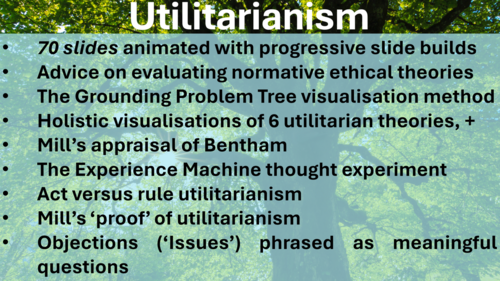
This resource has been developed to support the teaching and study of Utilitarianism through conceptual visualisation, structured explanation and carefully sequenced slide builds.
Designed for teachers, students and tutors, the resource aims to help learners move beyond memorisation towards genuine philosophical understanding.
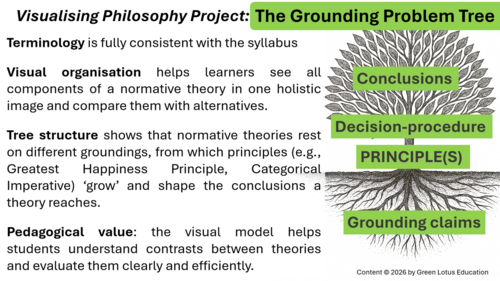
Rather than relying primarily on philosopher biographies, stock imagery and bullet-point summaries, the resource uses visual models, explanatory frameworks and conceptual mapping to help students understand:
• what utilitarian theories claim
• why they make those claims
• how moral decisions are justified
• how different forms of utilitarianism compare
• how philosophical evaluation can be developed
The resource is intended to complement teaching, textbooks, primary-source reading and independent study rather than replace them.
Contents
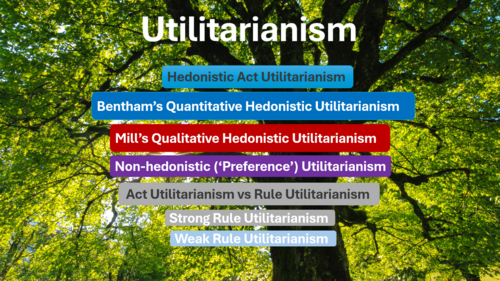
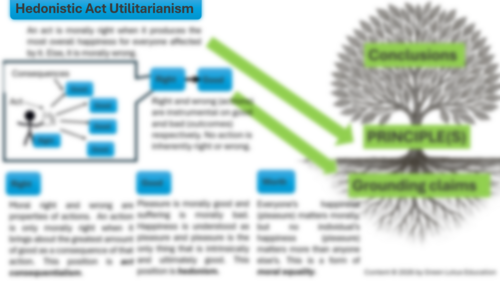
Hedonistic Act Utilitarianism
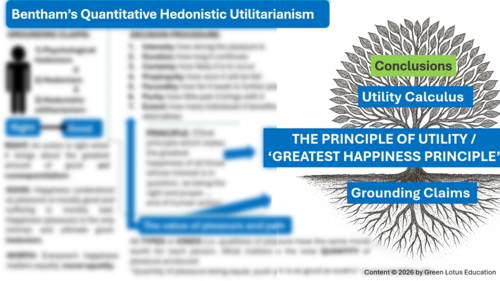
Bentham’s Quantitative Utilitarianism
• Psychological Hedonism
• The Principle of Utility
• The Utility Calculus
• Quantitative Hedonism
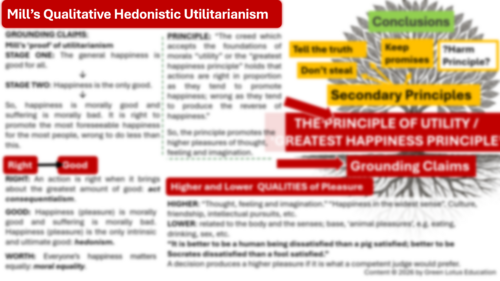
Mill’s Qualitative Utilitarianism
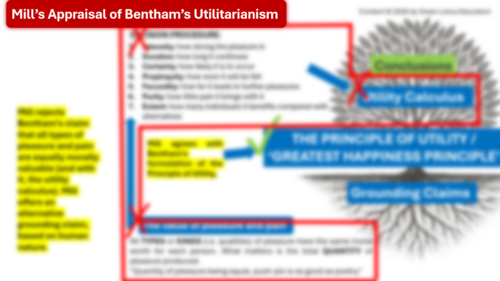
• Mill’s Appraisal of Bentham’s Utilitarianism
• Higher and Lower Pleasures
• Competent Judges
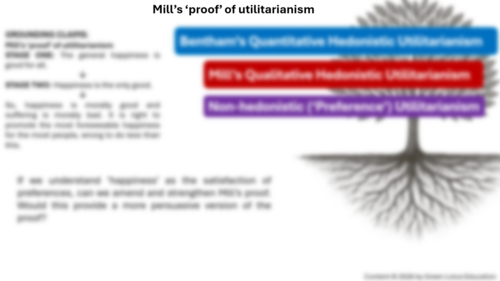
• Mill’s Proof of Utilitarianism
• Secondary Principles
Preference Utilitarianism
Rule Utilitarianism
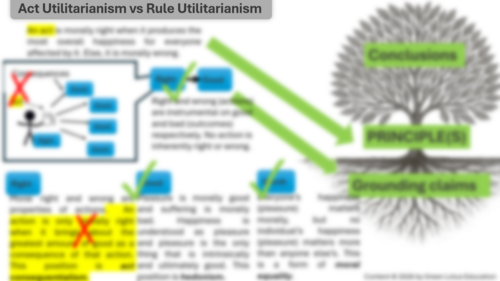
• Act Utilitarianism versus Rule Utilitarianism
• Strong Rule Utilitarianism
• Weak Rule Utilitarianism
Evaluation
• The Experience Machine
• Criticisms and evaluation presented as meaningful philosophical questions
Distinctive Features
Visualising Philosophy
Abstract concepts are presented through:
• conceptual maps
• visual models
• structured comparisons
• progressive slide builds
rather than relying solely on text-heavy explanations.
Meaningful Animation
Animations are used pedagogically rather than decoratively. Ideas, arguments and conceptual relationships are revealed progressively to help students follow philosophical reasoning one stage at a time.
Suitable For
• A Level Philosophy
• A Level Religious Studies
• IB Philosophy
• Access and Foundation Courses
• Introductory Undergraduate Ethics
• Tutors and independent learners
Green Lotus Education
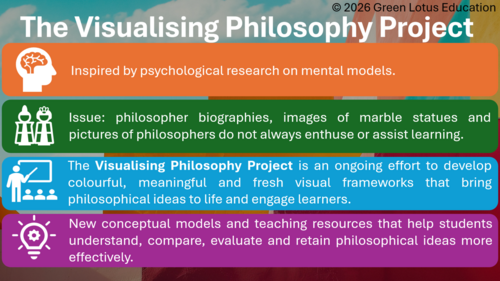
This resource forms part of the Visualising Philosophy Project: an ongoing effort to develop visual frameworks, conceptual models and teaching resources that help students understand, compare and evaluate philosophical ideas more effectively.
Related resources include:
• Visualising Utilitarianism: An Introduction
• Visualising Kantian Ethics
• Visualising Aristotelian Virtue Ethics
• Visualising Normative Ethics Bundle
Something went wrong, please try again later.
This resource hasn't been reviewed yet
To ensure quality for our reviews, only customers who have purchased this resource can review it
Report this resourceto let us know if it violates our terms and conditions.
Our customer service team will review your report and will be in touch.
£11.99