


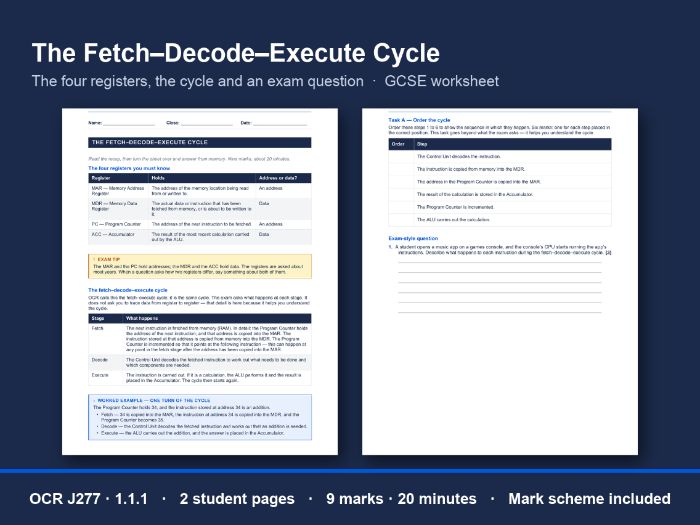
A GCSE worksheet on the fetch-decode-execute cycle and the CPU’s registers for OCR J277 1.1.1: 9 marks in 20 minutes, with a full mark scheme.
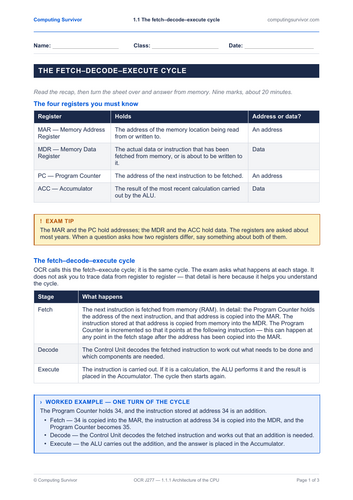
One double-sided sheet. The front is a recap of the four registers and the three stages of the cycle, with a worked example of one turn. Students read it, turn the sheet over and answer from memory.
What’s inside (3 pages, PDF and editable Word)
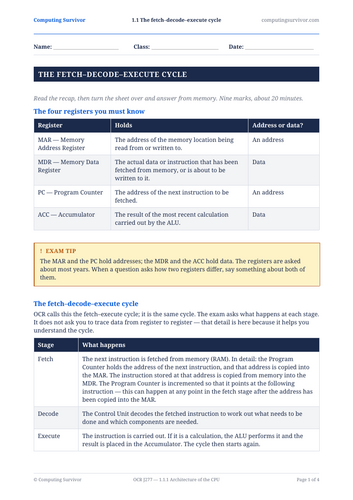
- A recap page (page 1): what the MAR, MDR, PC and accumulator hold, and which hold an address and which hold data; what happens at fetch, decode and execute; one turn of the cycle worked through.
- A task page (page 2), on the back of the recap.
- A full mark scheme (page 3), with what to accept and what not to accept. It is on an odd page, so a double-sided print keeps it off the back of a student sheet.
The tasks
- Order the cycle: six steps to put in order, four of them at register level. The recap and the task both say this goes beyond what OCR examines; it is there because it helps students understand the cycle.
- An exam-style question: describe what happens to each instruction during the cycle, for three marks.
Why it works in a real classroom
- It is honest about the exam. OCR asks what happens at each stage, not how data moves from register to register, and the recap says so. The extra detail is labelled as extra.
- It marks what examiners mark. The scheme rejects “the program is fetched” and “information is processed”, two phrases examiners call inaccurate, and ignores a wrong register detail the specification does not require.
- Editable. The Word version is included, so you can change a name, a number or a scenario to suit your class.
- Nothing to set up. Print, hand out, collect. There is nothing to install and nothing to log in to.
You need: one double-sided copy of pages 1 and 2 per student. For a strictly closed-book version, print the two pages single-sided and collect the recap first. Keep page 3 back; a cut line marks the mark scheme.
Good for: part of a lesson on CPU architecture, homework after teaching 1.1.1, a cover lesson, or Year 11 revision before Paper 1.
Made by a practising computing teacher. The answers are written out in full and checked. If you use it, a review helps other teachers find it.
Something went wrong, please try again later.
This resource hasn't been reviewed yet
To ensure quality for our reviews, only customers who have purchased this resource can review it
Report this resourceto let us know if it violates our terms and conditions.
Our customer service team will review your report and will be in touch.
£1.99