


This powerpoint fully covers the following criteria –
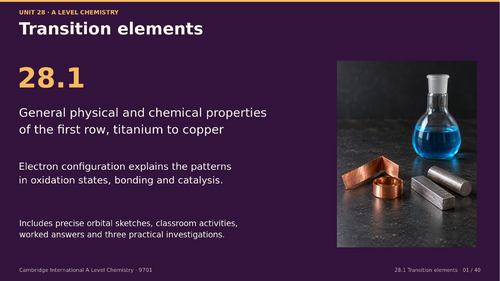
28.1 General physical and chemical properties of the first row of transition elements, titanium to copper
Learning outcomes
Candidates should be able to:
-
define a transition element as a d-block element which forms one or more stable ions with incomplete d orbitals
-
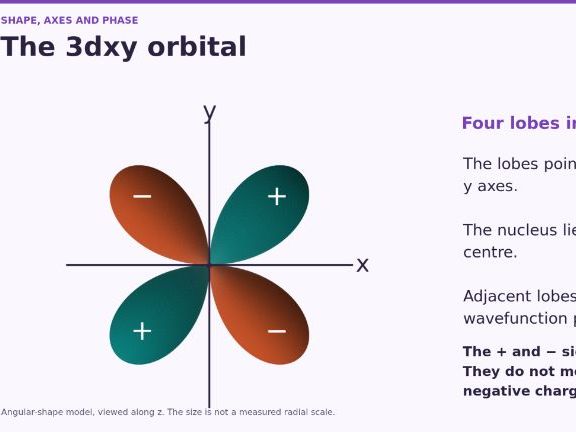
sketch the shape of a 3dxy orbital and 3dz² orbital
-
understand that transition elements have the following properties:
(a) they have variable oxidation states
(b) they behave as catalysts
© they form complex ions
(d) they form coloured compounds -
explain why transition elements have variable oxidation states in terms of the similarity in energy of the 3d and the 4s sub-shells
-
explain why transition elements behave as catalysts in terms of having more than one stable oxidation state, and vacant d orbitals that are energetically accessible and can form dative bonds with ligands
-
explain why transition elements form complex ions in terms of vacant d orbitals that are energetically accessible
Thank you sincerely for your support
Something went wrong, please try again later.
This resource hasn't been reviewed yet
To ensure quality for our reviews, only customers who have purchased this resource can review it
Report this resourceto let us know if it violates our terms and conditions.
Our customer service team will review your report and will be in touch.
£5.00