



Can higher wages solve England’s social care staffing shortage, or is there more to the problem?
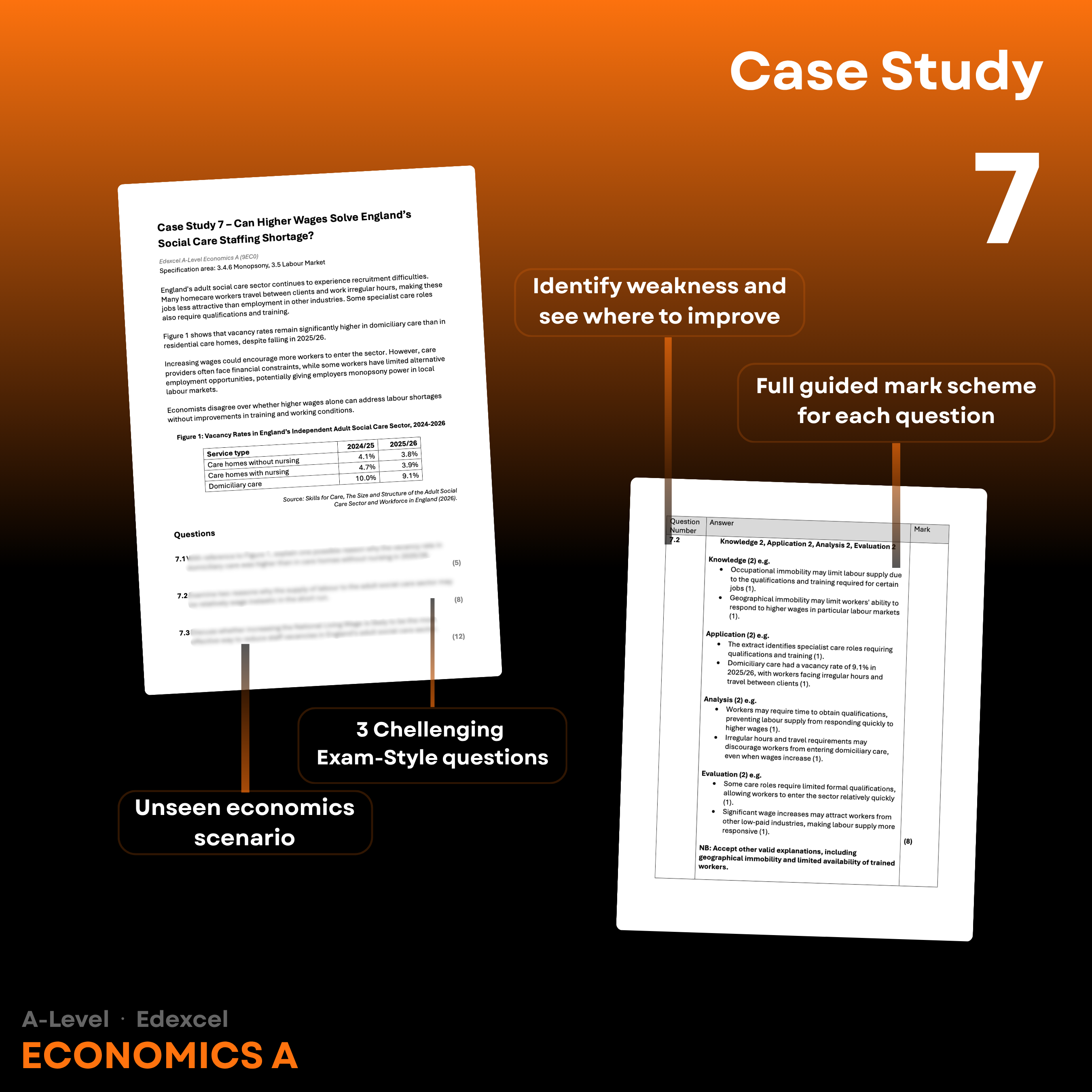
This Edexcel A-Level Economics A (9EC0) case study explores labour shortages in England’s adult social care sector, using real vacancy data from Skills for Care.
Students will investigate why some care providers struggle to recruit workers, how wages and working conditions affect labour supply, and whether increasing the National Living Wage is the best way to tackle staffing shortages.
What’s included:
- A one-page case study with a short, accessible extract and real UK social care vacancy data.
- Three original Edexcel-style questions worth 5, 8 and 12 marks (25 marks in total).
- A full mark scheme showing the economic points students could make.
- Clear assessment objective allocations and level descriptors for the extended response.
Specification coverage:
- 3.4.6 Monopsony
- 3.5 Labour Market
The questions give students practice explaining differences in vacancy rates, examining why labour supply may be wage inelastic and evaluating the effectiveness of minimum wage increases.
This resource is ideal for classroom activities, homework, timed exam practice or independent revision. It helps students apply labour market theory to a real economic problem while developing stronger analysis and evaluation skills.
Suitable for Edexcel A-Level Economics A students preparing for the 2027 exams.
Part of our 10-case-study Edexcel Economics A bundle, providing focused exam practice across the specification.
Something went wrong, please try again later.
This resource hasn't been reviewed yet
To ensure quality for our reviews, only customers who have purchased this resource can review it
Report this resourceto let us know if it violates our terms and conditions.
Our customer service team will review your report and will be in touch.
£3.00