



pdf, 74.38 KB
pdf, 74.38 KB
docx, 47.81 KB
docx, 47.81 KB
pages, 865.13 KB
pages, 865.13 KB
docx, 77.49 KB
docx, 77.49 KB
pages, 5.89 MB
pages, 5.89 MB
docx, 74.39 KB
docx, 74.39 KB
pages, 5.85 MB
pages, 5.85 MB
png, 2.82 MB
png, 2.82 MB
pdf, 125.98 KB
pdf, 125.98 KB
pdf, 185.12 KB
pdf, 185.12 KB
pdf, 173.96 KB
pdf, 173.96 KB
key, 2.66 MB
key, 2.66 MB
pptx, 9.84 MB
pptx, 9.84 MB
html, 3.52 KB
html, 3.52 KB

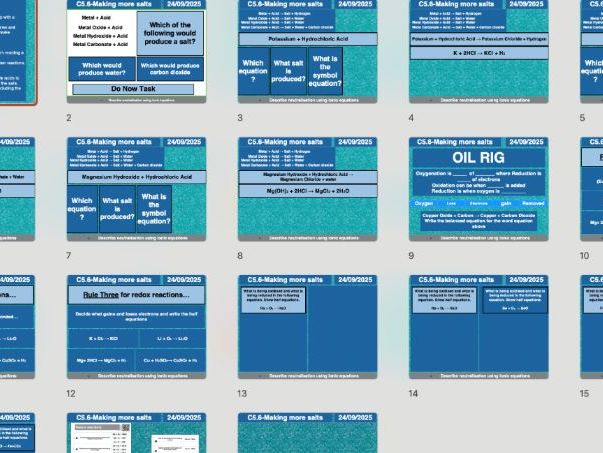
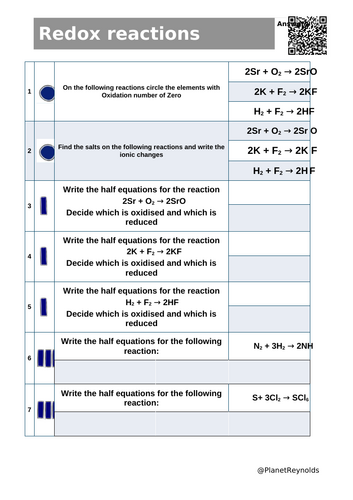
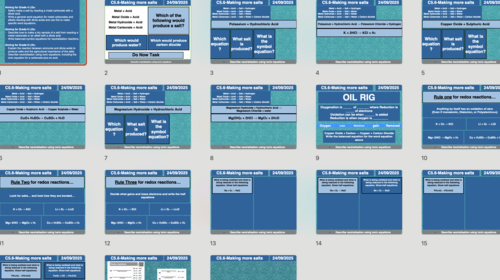
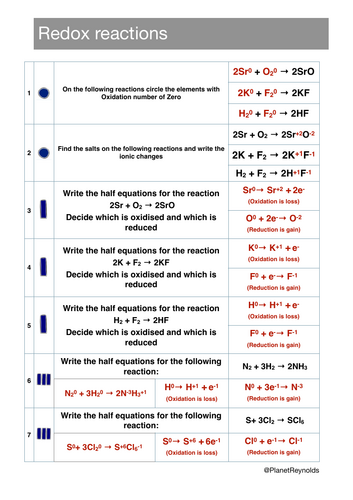
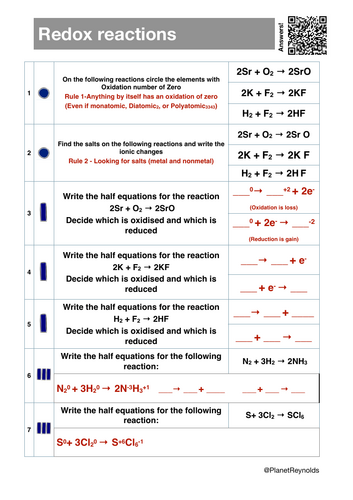
Fully editable C5.6 Making More Salts lesson for AQA GCSE Chemistry (Triple & Combined Science).
This high-quality resource teaches students how to prepare a wide range of salts using different types of acid reactions. The lesson includes clear PowerPoints, scaffolded worksheets, retrieval practice and exam-style questions, all written precisely to the AQA specification and ready to teach immediately.

Includes Free AI Long-Answer Marking , where students can submit extended-response answers online and receive instant, AQA-aligned feedback to strengthen method writing, reasoning and scientific communication.

What’s Included:

Fully editable PowerPoint (reaction types, methods, worked examples).

Printable & editable worksheets (Foundation → Higher tier).

Exam-style questions with mark schemes & model answers.

Retrieval starter, AfL checkpoints, exit ticket.

Homework / revision quiz (PDF/print ready).

Method sheets for preparing salts using metals, bases and carbonates.

Comprehensive answer keys for all activities.

Bonus: Free AI Long-Answer Marking – instant, detailed AQA-style feedback for students’ extended responses.

Topics Covered (C5.6 – Making More Salts):

What a salt is and how to name it correctly.

Choosing the appropriate preparation method depending on:

metals

metal oxides

metal hydroxides

metal carbonates

Word and balanced symbol equations for each reaction type.

Recognising observable changes: effervescence, temperature increase, colour change.

How to prepare a pure, dry salt (filter → evaporate → crystallise).

Why excess base is used and why filtration is essential.

Links to prior content: acids, neutralisation & reactivity.

Exam-style method questions, reasoning and application tasks.

Curriculum-true: perfectly aligned to AQA GCSE Chemistry (8462 & 8464).

Exam-success focused: builds strong, structured method writing and equation fluency.

Differentiated: includes scaffolded support and Higher-tier challenge questions.

Practical and engaging: ideal for consolidating all salt-preparation methods before C6 electrolysis.

Format:

PPTX slide deck | DOCX/PDF worksheets & assessments | Fully editable | Print-friendly

Spec & Tiers:
AQA GCSE Chemistry (8462)
AQA Combined Science Trilogy (8464)
Suitable for Foundation and Higher Tier.

Get this resource as part of a bundle and save up to 15%

A bundle is a package of resources grouped together to teach a particular topic, or a series of lessons, in one place.

Bundle

AQA GCSE Chemistry – C5 Metals, Reactivity, Acids & Neutralisation FULL UNIT (C5.1–C5.8) | PPTs, Worksheets, Practicals & Answers + Free AI Marking

A complete C5 Unit for AQA GCSE Chemistry (Triple & Combined Science) covering C5.1–C5.8 with fully editable PowerPoints, worksheets, required practical-style methods, retrieval tasks and exam-style questions. Perfect for teachers and departments who want a polished, ready-to-teach unit with every resource prepared for them. Every lesson is sequenced for clarity, dual-coded for accessibility, and includes differentiated practice, AfL checkpoints, and model answers. Includes Free AI Long-Answer Marking , where students can submit extended responses online and receive instant AQA-style feedback to build exam confidence and written communication skills. What’s Included (C5.1–C5.8): C5.1 – The Reactivity Series Reactivity of metals, observations, displacement links. C5.2 – Displacement Reactions Predicting outcomes using reactivity series; ionic equations. C5.3 – Extracting Metals Reduction with carbon, ores, sustainability, and real-world industry. C5.4 – Salts from Metals Acid–metal reactions, hydrogen release, balanced equations. C5.5 – Salts from Insoluble Bases Filtering, excess base, crystallisation, method-writing. C5.6 – Making More Salts Choosing correct methods (metals/oxides/hydroxides/carbonates), observations & equations. C5.7 – Neutralisation & the pH Scale Acids, alkalis, H⁺/OH⁻ ions, pH scale, indicators & neutralisation equations. C5.8 – Strong & Weak Acids Degree of ionisation, pH changes, strength vs concentration (major exam misconception). Bundle Features: Full set of editable PowerPoints (clear explanations, diagrams & examples). Printable & editable worksheets for every lesson (Foundation → Higher tier). Exam-style questions with mark schemes & model answers. Retrieval practice starters for every lesson. AfL checkpoints, hinge questions, mini-whiteboard tasks. Exit tickets for quick assessment. Homework / revision quizzes included. Practical method sheets (crystallisation, salt prep, displacement). Comprehensive answer keys for every worksheet and assessment. Differentiation built in – scaffolds, challenge tasks, extension problems. Free AI Long-Answer Marking – students receive instant written feedback. Why Teachers Love This Bundle: Complete, consistent and curriculum-true to AQA GCSE Chemistry (8462/8464). Saves hours of planning and guarantees high-quality, exam-focused teaching. Supports both Foundation and Higher tiers. Perfect as a departmental resource, cover-ready lesson set, or revision sequence. Includes real-world contexts, dual coding and accessible layout. Format: PPTX PowerPoints | DOCX/PDF worksheets | Model answers | Practical method sheets | Fully editable Spec & Tiers: AQA GCSE Chemistry (8462) AQA Combined Science Trilogy (8464) Suitable for Foundation and Higher (clearly signposted)

£16.99

Reviews

Something went wrong, please try again later.

This resource hasn't been reviewed yet

To ensure quality for our reviews, only customers who have purchased this resource can review it

Report this resourceto let us know if it violates our terms and conditions.
Our customer service team will review your report and will be in touch.